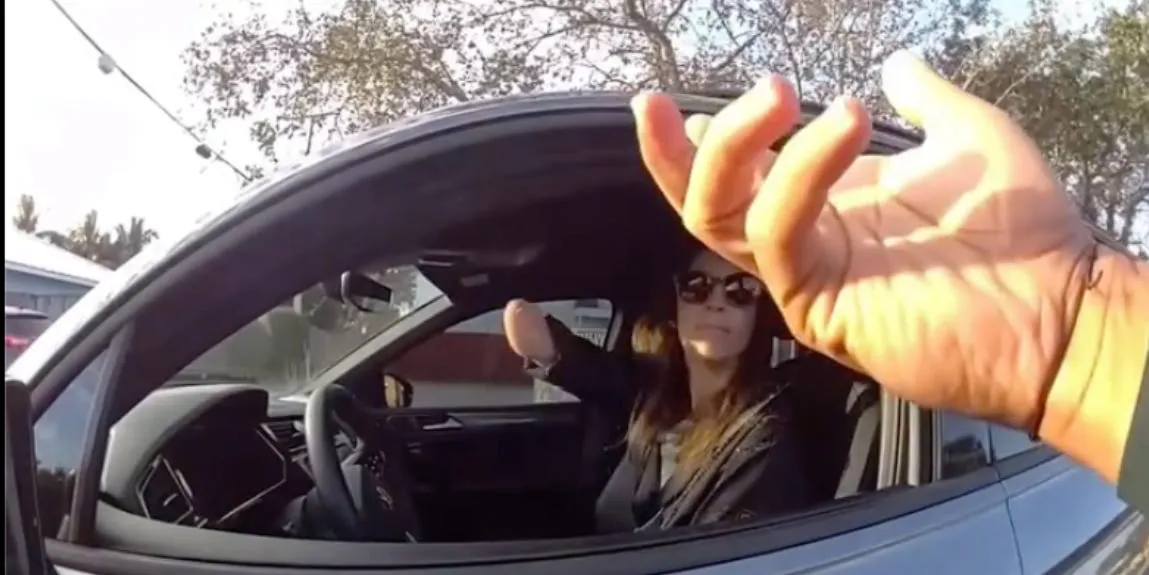
In an incident that has become a viral sensation, a Florida woman, Kathleen Thomas, was issued a citation for allegedly using her cellphone with her right hand while driving. The peculiar nature of the citation, however, lies in a detail that rendered it impossible: Thomas does not possess a right hand. The traffic stop, which occurred in Lake Worth, Florida, in February, was documented by a deputy from the Palm Beach Sheriff's Office and has since gained widespread attention after Thomas shared the bodycam footage on her social media platforms.
The bodycam footage reveals the deputy informing Thomas that the stop was part of an operation focused on reducing distracted driving, citing that she was observed operating a cell phone with her right hand. Thomas's immediate response was to demonstrate that she lacks a right hand, a fact apparent from her physical presentation. She expressed disbelief, suggesting the matter could be resolved given the obvious impossibility of the accusation. 
The Deputy's Persistence and the Court's Verdict
An Unwavering Accusation
Despite Thomas's clear explanation and visual proof, the deputy maintained his assertion, claiming he witnessed her using a phone with her right hand. Thomas reiterated that such an action was physically impossible for her. The deputy continued to press the issue, questioning if she had used the phone with her hand and even asking her to swear on her life that she did not have a phone in her hand, while she raised her right arm, which, as established, has no hand. He then requested her driver's license, registration, and insurance, which she provided.
Subsequently, Thomas was issued a ticket for using a handheld device. The situation, characterized by its absurdity, highlights potential oversights in traffic enforcement protocols. While the deputy's actions might stem from a rigid adherence to procedure, the outcome was a citation based on an observation that defied basic physical reality.
Legal Resolution and Public Reaction
Kathleen Thomas, an adaptive athlete who was born without her lower right arm, approached the situation with remarkable composure and a sense of humor. She shared the incident on her Instagram and TikTok accounts, where the videos quickly gained traction due to their almost surreal quality, resembling a comedic sketch rather than a law enforcement interaction. 
When Thomas appeared in court to address the citation, the case was ultimately dismissed. The court found insufficient evidence to support the charge, recognizing the factual impossibility of the alleged offense. The dismissal underscores the importance of thorough observation and due diligence in law enforcement, particularly when issuing citations for traffic violations.
Impact Analysis
This incident, while seemingly a minor traffic stop, brings to light critical issues in law enforcement training and the potential for errors in judgment, especially during heightened enforcement operations. It serves as a stark reminder that technology and operational procedures, while essential, must be complemented by careful human observation and critical thinking. The viral nature of the story also underscores the power of social media in bringing attention to perceived injustices or absurdities in everyday life, potentially influencing public perception of law enforcement practices.