

Deep Dive: Engineering & Performance of Cooker Hood Components
Motor and Fan Assemblies: The Heart of Extraction
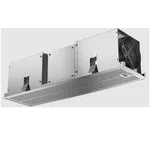
The motor and fan assembly is the paramount component determining a cooker hood's efficacy. Typically comprising a shaded-pole or capacitor-start induction motor driving a centrifugal fan (squirrel cage) or an axial fan, its design dictates airflow capacity (CFM or m³/h) and noise output. Centrifugal fans are common in ducted systems, offering higher static pressure capabilities to overcome ducting resistance, while axial fans are often found in simpler, recirculating models. Key specifications include motor wattage, current draw, rotational speed (RPM), and the number of fan speeds. The integration of advanced brushless DC (BLDC) motors is increasing, offering superior energy efficiency, quieter operation, and precise speed control, albeit at a higher initial cost. Thermal overload protection is a critical safety feature, preventing motor burnout under stress.
Filtration Systems: Guardians Against Grease and Odor
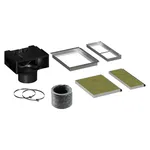
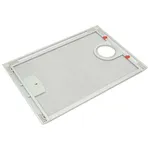
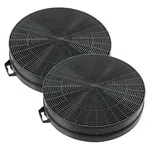
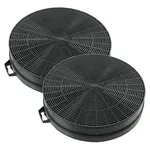
Cooker hood filtration systems are bifurcated into grease filters and odor filters. Grease filters, primarily multi-layered aluminum mesh or stainless steel baffle filters, are designed to capture airborne grease particles before they can coat internal components or escape into the kitchen. Baffle filters, with their intricate pathways, are particularly effective in commercial settings or high-volume residential use due to their superior grease separation capabilities and often dishwasher-safe design. Odor filters, predominantly activated carbon or charcoal filters, are essential for recirculating hoods. These filters employ adsorption, where the porous structure of activated carbon traps volatile organic compounds (VOCs) and cooking odors. The lifespan of carbon filters is finite and highly dependent on cooking frequency and intensity, requiring periodic replacement to maintain effectiveness. Some advanced systems now integrate plasma filters or electrostatic precipitators for enhanced odor and particulate removal, offering longer service intervals but demanding higher initial investment.
Ducting and Venting Solutions: Optimizing Airflow Dynamics
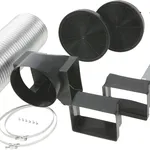
Effective ventilation is heavily reliant on the quality and configuration of the ducting system. Ducting, typically constructed from rigid metal (galvanized steel, aluminum) or flexible aluminum foil, transports extracted air outdoors. The diameter of the ducting (e.g., 6-inch/150mm, 8-inch/200mm) is critical; undersized ducts restrict airflow, increasing noise and reducing extraction efficiency. Smooth-walled rigid ducts offer significantly less airflow resistance compared to flexible, corrugated ducts. Minimizing bends, ensuring smooth transitions, and maintaining optimal duct length are crucial for maximizing the cooker hood's specified CFM. Backdraft dampers, usually gravity-activated or spring-loaded, prevent cold air ingress when the hood is not in operation, contributing to energy efficiency. Proper sealing of all ducting joints prevents air leakage and maintains system pressure.
Control Boards and User Interfaces: The Brain and Face of the Hood
Modern cooker hoods incorporate sophisticated electronic control boards that manage motor speed, lighting, timer functions, and filter saturation indicators. These PCBs (Printed Circuit Boards) often feature microcontrollers, relay switches, and sensor inputs. User interfaces range from simple push-button controls to advanced touch-sensitive panels with LED displays or even integrated Wi-Fi connectivity for smart home integration. Replacing control boards requires careful attention to electrical compatibility, pin configurations, and sometimes specific software flashing. LED lighting, often dimmable and color-temperature adjustable, has largely replaced halogen or incandescent bulbs due to its superior energy efficiency, longer lifespan, and minimal heat emission.