

An In-Depth Technical Guide to Hand Mixer Performance and Features
Understanding Hand Mixer Core Mechanics
Motor Specifications and Power Delivery
The core of any hand mixer is its electric motor, which determines its power and efficiency. Most modern hand mixers utilize permanent magnet DC motors, favored for their compact size, high torque at low speeds, and relatively quiet operation. The motor's wattage rating, typically ranging from 150W to 350W, directly correlates to its ability to handle different consistencies; higher wattage mixers excel at thicker batters, stiff doughs, and prolonged use without overheating. Effective power delivery also relies on the gearbox mechanism, which translates the motor's rotational energy into the appropriate speed and torque for the attachments, ensuring consistent performance across varying loads.
Advanced Speed Control and Ergonomics
Precision speed control is a critical technical feature. Advanced hand mixers often incorporate electronic speed control, which maintains consistent speed even as resistance from the mixture changes, preventing motor bogging. A "soft start" feature gradually increases speed to prevent ingredients from splattering, a significant user comfort improvement. Ergonomics extend beyond mere handle design; it encompasses weight distribution, button placement for single-hand operation, and materials used for the grip. Many designs now feature rubberized handles for improved grip security, and vents are strategically placed to ensure adequate motor cooling without drawing ingredients into the housing.
Essential Attachments and Material Science
Versatile Attachment Systems
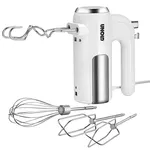
The utility of a hand mixer is greatly enhanced by its attachment suite. Standard beaters are typically made from chrome-plated steel or stainless steel, with the latter offering superior durability and rust resistance. Whisk attachments, often balloon-shaped, are designed to incorporate air for light, fluffy textures in creams and egg whites. Dough hooks, a less common but valuable attachment for hand mixers, are engineered to handle small batches of yeast dough, typically light to medium consistency, by mimicking a gentle kneading action. Some premium models include specialized liquid blenders or immersion blender shafts, significantly expanding their functional versatility.
Durability and Safety Features
Material science plays a crucial role in both the performance and longevity of hand mixers. The housing is typically constructed from high-impact ABS plastic, chosen for its durability, lightweight properties, and ease of cleaning. Stainless steel is preferred for all food-contact attachments due to its hygienic properties, resistance to corrosion, and robustness. Internally, components like gears are often made from hardened steel or robust composites to withstand the significant mechanical stress. Safety features include thermal overload protection, which automatically shuts off the motor to prevent damage from overheating, and secure attachment locking mechanisms to prevent accidental detachment during operation. Cord management, such as a swivel cord or retractable design, also contributes to both user convenience and product safety by reducing entanglement risks.