

Deep Dive: Understanding Freezer Technologies and Types
Freezer Types and Their Operational Characteristics
Chest Freezers
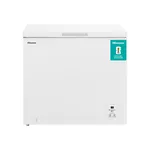
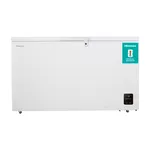
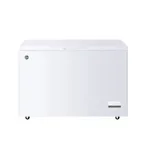
Chest freezers are characterized by a hinged top-opening lid and a deep, single storage compartment. Their design, with the cold air naturally sinking and remaining contained when the lid is opened, contributes to their superior energy efficiency compared to upright models. This thermal stability makes them ideal for long-term storage of bulk items, minimizing temperature fluctuations. However, their internal organization can be challenging, often requiring the retrieval of multiple items to access those at the bottom. They are typically available in a wide range of capacities, from compact units for supplementary storage to very large models for extensive freezing needs.
Upright Freezers
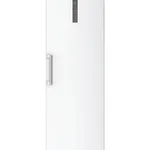
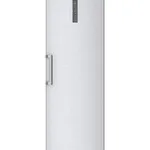
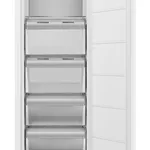
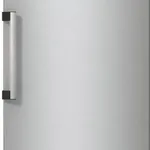
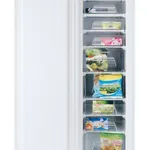
Upright freezers resemble traditional refrigerators, featuring a front-opening door and multiple shelves, drawers, and door bins. This configuration offers excellent organization and accessibility, allowing users to quickly locate and retrieve items without extensive searching. Many upright models feature frost-free technology, which employs a heating element to periodically melt frost accumulation, evaporating the water, thus eliminating manual defrosting. While convenient, this process is generally less energy-efficient than manual defrost systems and can lead to minor temperature fluctuations and freezer burn if not managed properly. Upright freezers are often chosen for their smaller footprint relative to their capacity when compared to chest freezers, making them suitable for kitchens or utility rooms with limited floor space.
Drawer Freezers
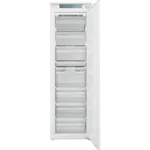
Drawer freezers are designed for seamless integration into kitchen cabinetry, offering a sophisticated and space-saving solution. They typically feature one or more pull-out drawers, providing convenient access to frozen goods while maintaining a flush aesthetic with surrounding kitchen decor. These units are often smaller in capacity, serving as supplementary freezing options for specific items or high-traffic ingredients. Their design prioritizes ergonomics and often includes specialized compartments for optimal organization.
Portable and Compact Freezers
Portable and compact freezers, often referred to as mini-freezers or compact chest freezers, are designed for specific, often temporary or space-constrained applications. These units range from small countertop models suitable for dorm rooms or offices to robust portable freezers for recreational vehicles or camping. They prioritize mobility and a small footprint, typically offering basic freezing capabilities. While not intended for extensive bulk storage, they provide convenient access to frozen items in locations where a full-sized freezer would be impractical.
Core Technologies and Features
Refrigeration System and Refrigerants
The heart of any freezer is its refrigeration system, typically a vapor-compression cycle involving a compressor, condenser, expansion valve, and evaporator. Modern freezers predominantly utilize high-efficiency compressors. Refrigerants like R600a (isobutane) and R134a (tetrafluoroethane) are common, chosen for their thermodynamic properties and environmental impact, with R600a being a natural hydrocarbon with a very low Global Warming Potential (GWP), gaining preference in many regions.
Frost Management Systems
Freezers employ two primary frost management strategies. Manual defrost freezers require periodic shutdown and thawing to remove accumulated ice, which is critical for maintaining efficiency and storage capacity. These units are generally more energy-efficient due to the absence of a defrost heater. In contrast, "No-Frost" or "Frost-Free" systems utilize an automatic defrost cycle, typically engaging a heating element to melt frost off the evaporator coil at regular intervals. The meltwater is then evaporated. While highly convenient, this process can lead to slight temperature fluctuations and a higher energy draw.
Insulation and Cabinet Construction
Effective insulation is paramount for energy efficiency. Polyurethane foam is the standard insulating material, injected into the cabinet walls and door during manufacturing to create a dense, thermal barrier. The thickness and quality of this insulation directly impact the freezer's ability to maintain low temperatures with minimal energy input. Cabinet construction also considers robust door seals, often magnetic, to prevent cold air leakage and warm air infiltration, which would otherwise necessitate more frequent compressor operation.
Temperature Control and Monitoring
Temperature control can be managed via mechanical thermostats or advanced electronic digital controls. Digital controls offer greater precision, allowing users to set specific temperatures and often providing real-time temperature displays. Features like "Fast Freeze" or "Super Freeze" rapidly lower the internal temperature to quickly freeze newly added items, minimizing the formation of large ice crystals and preserving food quality. Audible and visual temperature alarms are critical safety features, alerting users to abnormal temperature rises due to power failures or open doors.
Energy Efficiency Standards
Energy efficiency is rated through standards such as Energy Star in North America or specific energy labels in other regions. These ratings reflect a freezer's annual energy consumption under standardized testing conditions. Factors contributing to higher energy efficiency include advanced inverter compressors, thicker insulation, vacuum insulation panels (VIPs) in premium models, and optimized defrost cycles for frost-free units. Choosing an energy-efficient model not only reduces operational costs but also lowers the environmental footprint.