




A Deep Dive into Modern Night Light Technology and Applications
Understanding Light Emission and Efficiency
LED Technology and Lumens
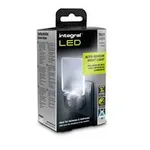
Modern night lights overwhelmingly utilize Light Emitting Diode (LED) technology due to its inherent advantages in energy efficiency, longevity, and compact form factor. Unlike traditional incandescent bulbs, LEDs convert a significantly higher percentage of electrical energy into light, drastically reducing power consumption—often to less than 2 watts. The luminous flux, measured in lumens, quantifies the total amount of visible light emitted. For night lights, this typically ranges from a subtle 5 lumens for ambient guidance to around 50 lumens for more pronounced illumination in areas like hallways. Evaluating the lumens per watt specification provides a clear indicator of a device's efficiency, while the L70 rating indicates the projected lifespan until the light output degrades to 70% of its initial value, commonly exceeding 25,000 hours for quality units.
Color Temperature and Spectral Output
The color temperature, expressed in Kelvin (K), is a critical factor influencing user comfort and physiological responses. Warm white light (2700K-3000K) is favored for bedrooms and nurseries as its lower blue light content is less disruptive to melatonin production, aiding natural sleep cycles. Cooler white light (4000K-5000K) or daylight hues (5000K+) can offer better visual clarity but are generally less suitable for sleep-adjacent environments. Advanced night lights may offer adjustable color temperatures or full RGB capabilities, allowing users to select specific hues for various purposes, from a calming red light for infants to a dynamic color cycle for ambiance, all controlled via integrated electronics.
Sensor Integration and Automation
Photocell (Ambient Light Sensor) Operation
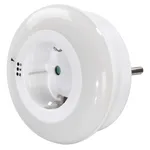
Photocell sensors are a cornerstone of autonomous night light functionality. These photoresistors or photodiodes continuously monitor ambient light levels, automatically activating the night light as natural light diminishes below a predefined threshold and deactivating it when sufficient light returns. This "dusk-to-dawn" operation ensures the light is only on when needed, maximizing energy savings and user convenience by eliminating manual intervention. The sensitivity of the photocell and its activation threshold are often calibrated during manufacturing to optimize performance in typical indoor lighting conditions.
Passive Infrared (PIR) Motion Detection
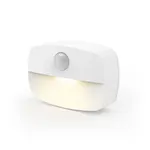
Passive Infrared (PIR) sensors detect changes in infrared radiation, typically emitted by the human body, within their field of view. When a warm body moves into the sensor's range, it triggers the night light, providing temporary illumination. This is particularly useful for areas requiring intermittent light, such as bathrooms, stairwells, or closets, where constant illumination is unnecessary. Key specifications for PIR sensors include detection angle (e.g., 90-120 degrees), detection range (e.g., 3-5 meters), and adjustable illumination duration, allowing the light to remain on for a set period (e.g., 15-60 seconds) after motion ceases. Advanced algorithms can differentiate between human and pet movement to reduce false triggers.
Power Management and Smart Features
Energy Consumption and Power Sources
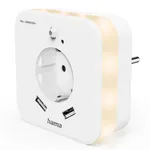
Night lights are designed for minimal energy draw, often consuming less than 1W, contributing negligibly to household electricity bills. They typically operate directly from an AC wall outlet, though battery-powered models (using AA/AAA or rechargeable lithium-ion cells) offer portability for hallways or emergency use. USB-rechargeable options combine flexibility with reduced waste. Efficiency extends beyond active illumination; advanced power management circuits ensure minimal parasitic draw (standby power) when the light is off but still plugged in or waiting for sensor activation. Compliance with energy efficiency standards like ENERGY STAR indicates a product's commitment to reduced environmental impact.
Connectivity and Smart Home Integration
The advent of the Internet of Things (IoT) has led to night lights with sophisticated connectivity options. Wi-Fi enabled models allow for remote control via smartphone applications, enabling users to adjust brightness, color, schedules, and sensor sensitivities from anywhere. Bluetooth offers localized control, often suitable for portable units. Zigbee or Z-Wave compatibility facilitates integration into broader smart home ecosystems, allowing the night light to participate in complex automation routines, such as turning on when a smart door sensor detects entry or coordinating with other smart lighting. This level of programmability transforms a simple night light into an intelligent component of a connected home environment.