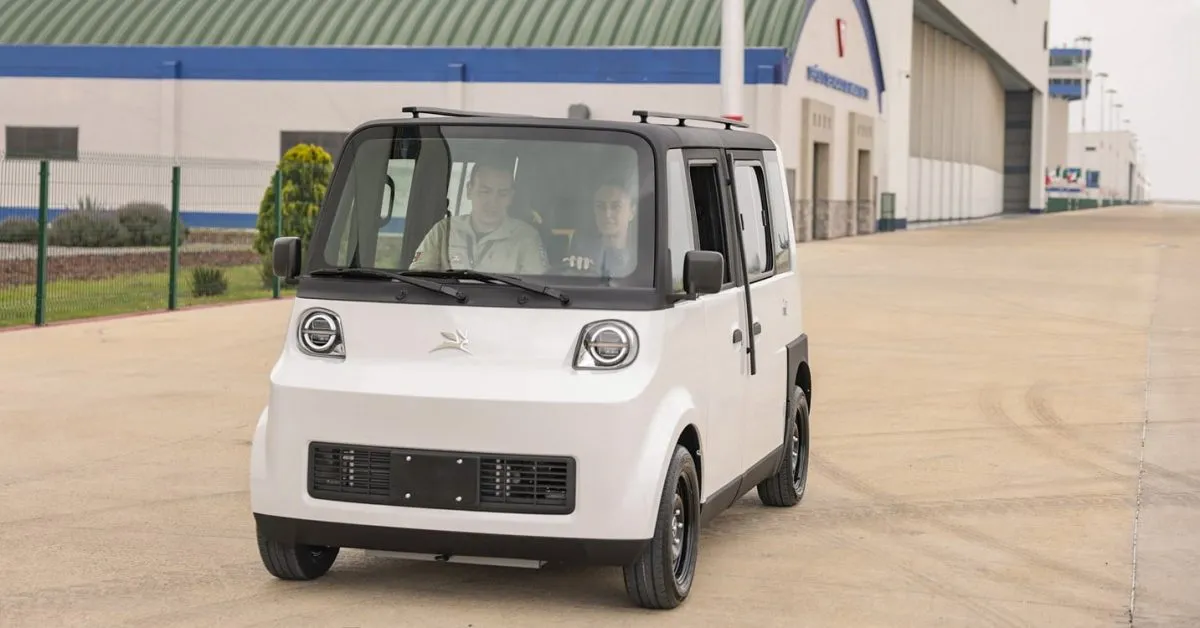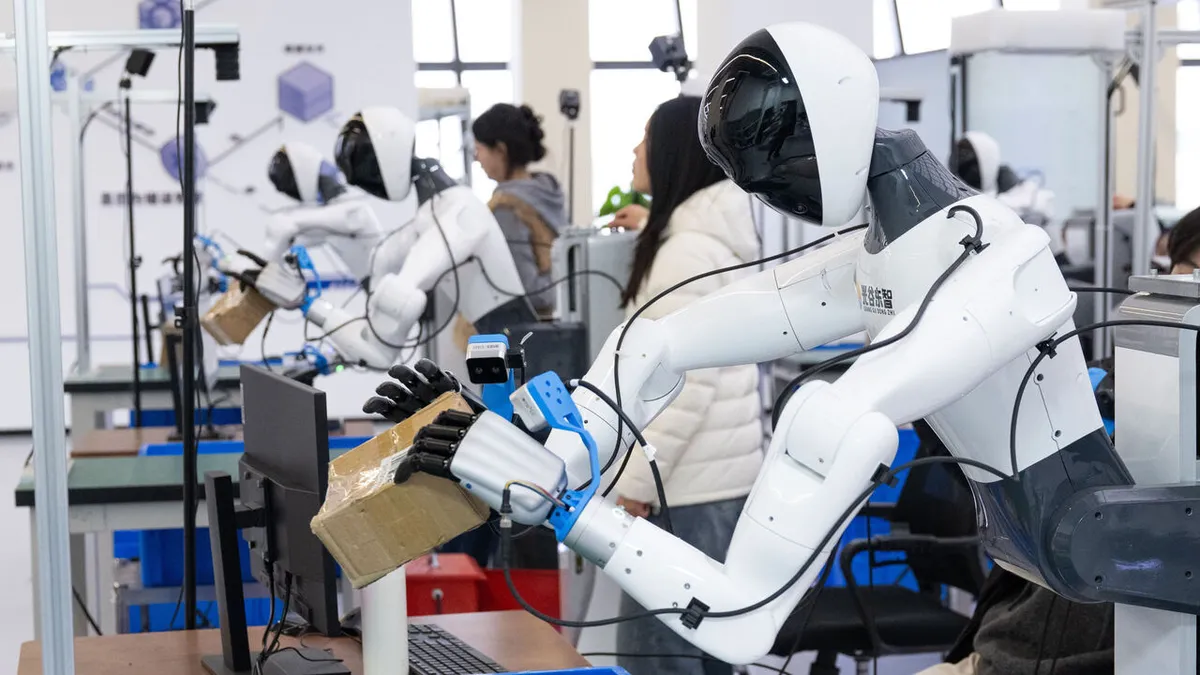
In Yingtan, a city nestled in China's Jiangxi province, a striking juxtaposition unfolds where cutting-edge technological advancement coexists with a palpable economic backwardness. The cityscape seamlessly blends traditional open-air markets and modest street-side eateries, evoking the atmosphere of a typical rural town in China's interior. Yet, just a stone's throw away, a modern industrial park hums with activity, housing numerous companies dedicated to advancing industrial digitization. Complementing this, a national communications laboratory has established a state-of-the-art research facility in the vicinity, underscoring the region's commitment to high-tech development.
This duality mirrors a broader trend across China, where rapid innovation in specific sectors, particularly in advanced technologies, is occurring simultaneously with significant economic challenges. The nation's economic engine, which has powered decades of unprecedented growth, is now facing headwinds from various sources, including demographic shifts, global economic uncertainties, and structural reforms aimed at rebalancing the economy. The question of which force—the dynamic drive for innovation or the persistent economic inertia—will ultimately shape China's future trajectory is a critical one for both domestic policymakers and the global economy.
The Paradox of Chinese Economic Performance
China's economic landscape presents a complex paradox. On one hand, the nation continues to be a global leader in technological innovation, pushing boundaries in fields such as artificial intelligence, renewable energy, electric vehicles, and advanced manufacturing. Government initiatives and substantial private investment have fostered vibrant ecosystems for research and development, leading to breakthroughs that have global implications. These advancements are not confined to major urban centers but are increasingly visible in secondary cities and industrial zones, as exemplified by Yingtan's burgeoning tech scene.
On the other hand, many traditional sectors of the economy are grappling with slower growth, overcapacity, and significant debt burdens. The property market, once a major driver of economic expansion, has experienced a slowdown, impacting related industries and consumer confidence. Furthermore, the global geopolitical climate and trade tensions have introduced new layers of complexity, affecting export-oriented industries and foreign investment. This creates a bifurcated reality where technological optimism coexists with anxieties about broader economic stability and employment.
Driving Forces of Technological Advancement
Several key factors fuel China's impressive technological progress. The government has strategically prioritized key industries, providing significant funding, policy support, and incentives for research and development. This top-down approach has accelerated progress in areas deemed critical for national competitiveness. Furthermore, a vast domestic market provides a fertile ground for the testing and scaling of new technologies, allowing companies to refine their products and services rapidly.
The nation's rapidly growing pool of highly educated talent, including engineers and scientists trained both domestically and abroad, is another crucial component. This human capital is essential for driving innovation and adapting to new technological paradigms. Collaborations between industry, academia, and research institutions, often facilitated by government grants and programs, create a dynamic environment for knowledge creation and dissemination, pushing the frontiers of scientific discovery and technological application.
Challenges to Sustained Economic Growth
Despite its innovative strides, China faces substantial hurdles in maintaining robust economic growth. Demographic shifts, including an aging population and a declining birth rate, pose long-term challenges to the labor force and consumption patterns. The transition from an investment- and export-led growth model to one driven by domestic consumption and services is proving to be a complex and gradual process, requiring significant structural adjustments.
Moreover, the global economic environment presents ongoing risks. Protectionist trade policies in other major economies, supply chain disruptions, and inflationary pressures can impact China's export performance and access to key international markets. Internally, efforts to deleverage the corporate sector and manage financial risks, particularly in the real estate sector, require careful calibration to avoid triggering broader economic instability.
The Interplay Between Innovation and Economic Health
The relationship between China's technological prowess and its overall economic health is intricate. While innovation can create new growth engines and improve productivity, it cannot single-handedly overcome systemic economic weaknesses. The success of high-tech industries, such as electric vehicles and renewable energy, is partly dependent on a stable and growing domestic economy that can absorb these new products and services. Similarly, the financial health of traditional sectors can impact the availability of capital for investment in new technologies.
Policy decisions play a pivotal role in navigating this dichotomy. Balancing the promotion of technological innovation with the need for broad-based economic stability, addressing income inequality, and managing debt levels are critical tasks for Chinese policymakers. The effective integration of technological advancements into the broader economy, ensuring that benefits are widely shared and that growth is sustainable, will be key to determining the nation's future economic trajectory.
Impact Analysis
The divergent paths of innovation and economic malaise in China have profound implications. For the global economy, China's continued technological leadership, particularly in strategic sectors like green technology and AI, could drive global productivity gains and address pressing environmental challenges. However, its economic slowdown could dampen global demand and create volatility in international markets. Policymakers worldwide will need to carefully monitor these developments, seeking opportunities for collaboration while managing potential risks associated with China's evolving economic model and its role in the global supply chain.