

Deep Dive into Fax Machine Technology and Contemporary Applications
The Enduring Relevance of Fax Technology
In an increasingly digital landscape, the fax machine (دستگاه فکس) continues to hold significant value across various sectors, particularly where the legal integrity, security, and verifiable transmission of documents are paramount. Industries such as healthcare, legal, finance, and government agencies often rely on fax technology for its perceived security, immutability, and compliance with regulations like HIPAA or GDPR, which often require robust audit trails for document exchange. While email and digital document sharing are prevalent, fax offers a non-repudiable method of communication, generating a transmission report that serves as proof of delivery.
Evolution from Analog to Digital Faxing
Early fax machines operated purely on analog signals over standard telephone lines. The transition from Group 1 and 2 to the widespread Group 3 fax protocol, leveraging digital compression and modulation techniques, significantly boosted transmission speeds and quality. Today, Group 3 remains dominant for PSTN-based faxing. However, the rise of Voice over IP (VoIP) networks introduced challenges, as traditional analog fax signals are prone to packet loss and jitter in IP environments. This led to the development of T.38, an ITU-T standard for "Fax over IP" (FoIP). T.38 converts analog fax signals into an IP-friendly digital format, ensuring reliable fax transmission across data networks and enabling integration with modern unified communications systems. This allows businesses to maintain fax capabilities without dedicated analog lines, reducing infrastructure costs.
Core Components and Operational Mechanics
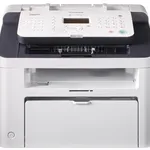
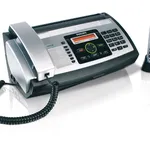
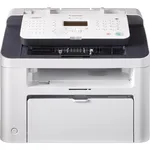
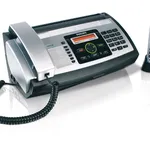
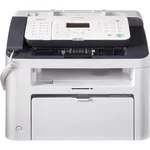
A typical fax machine integrates several key components to perform its function. The scanner digitizes physical documents, converting images into a binary data stream. A modem then modulates this data for transmission over a telephone line or, in the case of FoIP, encapsulates it into IP packets. Memory modules are essential for storing incoming faxes if the paper tray is empty or for queuing outgoing faxes, especially during busy periods or for broadcast transmissions. On the receiving end, a reverse process occurs: the modem demodulates the signal, and a printer renders the document onto paper. Modern multifunction fax machines incorporate advanced printing technologies, often laser-based, offering high-resolution output and fast printing speeds, along with features like automatic document feeders (ADF) for efficient handling of multi-page documents.
Advanced Features and Security Considerations
Contemporary fax machines come equipped with a suite of advanced features designed to enhance efficiency and security. Automatic document feeders (ADF) streamline the process of sending multiple pages, while large paper capacities reduce the frequency of refills. Memory storage, sometimes expandable, ensures no critical faxes are missed due to paper outages or toner depletion. PC Faxing functionality allows users to send and receive faxes directly from their computers, eliminating the need to print documents first, thereby saving paper and time. Security is increasingly vital; features like junk fax blocking, caller ID, and secure receive functions help manage unwanted faxes. For highly sensitive transmissions, some advanced systems offer encrypted faxing, although this is more common in specialized FoIP solutions or integrated secure communication platforms. Network connectivity (Ethernet, Wi-Fi) enables sharing a single fax machine across multiple users or departments, further optimizing resource utilization and workflow efficiency within an organization.