

Deep Dive into Card Reader Technologies and Deployment
Understanding Core Card Reader Technologies
Card reader technology fundamentally revolves around specialized sensors and interfaces designed to interpret data from various physical card formats. Magnetic Stripe Readers (MSRs) operate by scanning the ferrous particles on a card's magnetic stripe, detecting changes in magnetism to decode tracks one, two, and three, typically conforming to ISO/IEC 7811 standards. The coercivity of the stripe (HiCo or LoCo) dictates the magnetic field strength required for encoding and reading, impacting data durability and reader compatibility. Modern MSRs often integrate bidirectional reading capabilities and advanced error correction to enhance reliability.
Smart Card and EMV Readers
Smart card readers, particularly those compliant with EMV (Europay, MasterCard, and Visa) specifications, represent a significant leap in secure transaction processing. These devices interact with integrated circuits (chips) embedded within the card. Contact smart card readers establish a physical connection to the chip via contact pads, adhering to ISO/IEC 7816 standards for electrical and protocol specifications, facilitating secure data exchange, cryptographic operations, and authentication. The reader acts as a terminal interface device (IFD), managing the communication link with the card's secure element.
Contactless smart card readers, often utilizing Near Field Communication (NFC) or RFID technologies, operate based on inductive coupling to communicate with EMV chips or other RFID tags (e.g., MiFare, FeliCa). Governed by ISO/IEC 14443 and ISO/IEC 15693 standards, these readers generate an electromagnetic field to power the card's chip and exchange data over short distances. The security of contactless transactions is maintained through advanced cryptographic protocols, often leveraging public key infrastructure (PKI) for mutual authentication between the card and the terminal.
Data Security and Regulatory Compliance
In the context of sensitive data handling, the security architecture of card readers is paramount. Readers deployed in payment environments must comply with stringent regulations like the Payment Card Industry Data Security Standard (PCI DSS). Key security features include Point-to-Point Encryption (P2PE), which encrypts cardholder data immediately upon capture at the reader head, rendering it unintelligible until it reaches a secure decryption environment. Derived Unique Key Per Transaction (DUKPT) is a common key management scheme used in P2PE, ensuring that a unique encryption key secures each transaction, significantly mitigating the risk of data compromise.
Furthermore, tamper detection mechanisms are critical for preventing physical manipulation of the reader. These features range from physical seals to embedded sensors that trigger data erasure or device deactivation upon detection of unauthorized access. Secure firmware updates, signed by the manufacturer, are also essential to prevent malicious code injection and maintain the integrity of the reader's operating software, ensuring continuous compliance and protection against evolving threats.
Integration and Connectivity Protocols
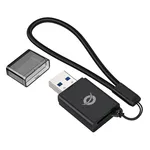
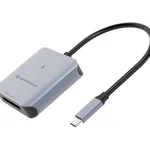
The integration of card readers into diverse host systems relies heavily on their connectivity interfaces and software development kits (SDKs). Universal Serial Bus (USB) remains the most prevalent interface, with readers often presenting as Human Interface Devices (HID) for basic input or as Chip Card Interface Devices (CCID) for smart card functionality. CCID provides a standardized protocol for smart card communication, simplifying driver development and ensuring broad compatibility across operating systems.
For specialized or industrial applications, serial interfaces like RS-232 offer robust, point-to-point communication, though at lower data rates than USB. Networked card readers, utilizing Ethernet or Wi-Fi, enable remote management and data aggregation, suitable for distributed environments or unattended kiosks. These often incorporate built-in processors and secure network protocols (e.g., TLS) for encrypted data transmission to back-end systems. Comprehensive SDKs provide developers with APIs to control reader functions, manage card events, and integrate cryptographic modules, facilitating seamless application development and deployment.