

Deep Dive: Technical Specifications and Functional Design of Kitchen Islands and Carts
Understanding Kitchen Island & Cart Typologies
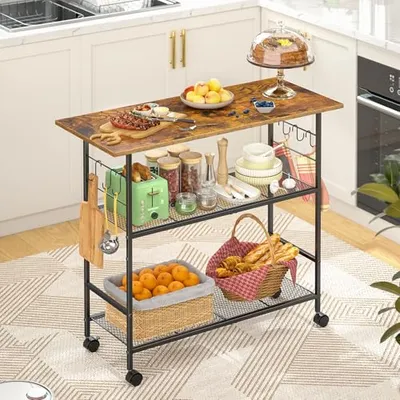
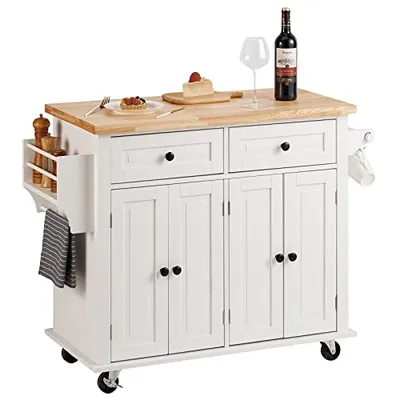
Kitchen islands are broadly categorized into fixed and mobile units, each serving distinct functional and spatial requirements. Fixed islands, often plumbed and wired, are permanent installations that can host sinks, cooktops, dishwashers, and integrated power outlets, effectively extending the kitchen's core utility. Their robust construction and substantial presence make them ideal for large kitchens where significant additional workspace and appliance integration are desired. Conversely, kitchen carts are characterized by their mobility, typically featuring locking casters that allow for flexible repositioning. These units excel in smaller kitchens or as supplementary prep and serving stations, providing adaptable storage and surface area without the commitment of a permanent fixture.
Material Science and Construction Integrity
The longevity and performance of a kitchen island or cart are intrinsically linked to its construction materials and manufacturing quality. Hardwoods like oak, maple, and cherry are favored for their durability, aesthetic appeal, and ability to withstand heavy use, especially when treated with food-safe finishes for butcher block surfaces. Stainless steel offers a highly hygienic, corrosion-resistant, and industrial-grade surface, ideal for professional-grade environments or contemporary designs. Engineered wood products, such as MDF or particle board with laminates or veneers, provide cost-effective solutions while mimicking the appearance of solid wood, though they may lack the same impact resistance and moisture resilience. Countertop materials further diversify options, ranging from natural stones like granite or marble for heat resistance and luxury, to quartz for engineered consistency and low maintenance, or even resilient polymers for specific applications.
Advanced Features and Ergonomic Design
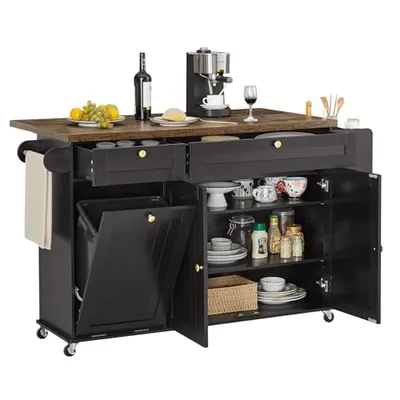
Modern kitchen islands and carts often incorporate a suite of features designed to maximize utility and ergonomic efficiency. Integrated storage solutions are paramount, encompassing soft-close drawers for utensils, deep pull-out shelves for pots and pans, and adjustable open shelving for cookbooks or decorative items. Specialized compartments, such as wine racks or pull-out waste bins, enhance organization. Many units include built-in power strips or USB charging ports, addressing the modern need for device connectivity in the kitchen. Ergonomic considerations extend to height adjustability, allowing the surface to adapt for various users or tasks, and the inclusion of overhangs for comfortable bar-style seating. Casters on mobile units should be heavy-duty, smooth-rolling, and feature reliable locking mechanisms to ensure stability during use. Towel bars, spice racks, and knife blocks are common accessories that add to the functional convenience, ensuring essential tools are always within easy reach. The design should also account for appropriate clearance distances for ease of movement around the island, generally recommending at least 36 to 42 inches of aisle space.