


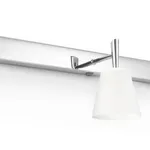
In-Depth Technical Guide to Wall Light Performance and Integration
Core Photometric Properties of Wall Lights
The fundamental measure of a wall light's brightness is its lumen output, representing the total visible light emitted. For effective illumination, it is crucial to consider the luminaire’s efficacy, expressed in lumens per watt (lm/W), which quantifies how efficiently electrical power is converted into light. Higher efficacy directly correlates with lower energy consumption and reduced operational costs over the product's lifespan. Modern LED wall lights often exceed 100 lm/W, significantly outperforming traditional incandescent or fluorescent alternatives.
Color Rendering Index (CRI) and Correlated Color Temperature (CCT)
Color Rendering Index (CRI) assesses a light source's ability to accurately reveal the colors of objects compared to a natural light source. A CRI of 80 or higher is generally recommended for residential and commercial spaces, with specialty applications like art galleries often requiring CRI 90+. Correlated Color Temperature (CCT), measured in Kelvin (K), defines the apparent warmth or coolness of the light. Common CCTs include 2700K-3000K for warm white, ideal for creating a cozy ambiance; 3500K-4000K for neutral white, suitable for task lighting or general office environments; and 5000K+ for cool daylight, often used in commercial or security applications where high visibility is paramount.
Environmental and Mechanical Design
Ingress Protection (IP) Ratings Explained
The Ingress Protection (IP) rating system, defined by IEC standard 60529, indicates a wall light's resistance to solids and liquids. The first digit signifies protection against solid objects (e.g., 0-6), while the second digit indicates protection against liquids (e.g., 0-8). For indoor damp locations like bathrooms, an IP44 rating is typically sufficient, offering protection against splashing water. For outdoor installations exposed to rain and dust, a minimum of IP65 is recommended, providing full protection against dust ingress and low-pressure water jets. Extreme conditions or submerged applications require even higher ratings like IP67 or IP68.
Material Durability and Heat Dissipation
The selection of materials for wall light construction directly impacts its durability, aesthetic longevity, and heat management. Common materials include aluminum, stainless steel, brass, and tempered glass. Aluminum, often anodized or powder-coated, offers excellent corrosion resistance and heat dissipation, vital for extending LED lifespan. Stainless steel, particularly marine-grade 316, is preferred for coastal or highly corrosive environments due to its superior resistance. Proper heat dissipation, facilitated by finned heat sinks or internal thermal management systems, is critical for LED luminaires as excessive heat accelerates lumen degradation and color shift, thereby shortening the fixture's operational life.
Electrical and Control Systems
Power Consumption and Driver Compatibility
Understanding a wall light's power consumption, measured in watts, is essential for energy management and electrical load calculations. LED wall lights require an LED driver, which converts AC mains voltage to the low-voltage DC required by the LEDs. Compatibility between the luminaire and its driver, particularly concerning voltage and current requirements, is critical for stable operation and longevity. Integrated drivers simplify installation, while remote drivers offer flexibility in placement and sometimes better thermal management. Ensure the driver matches the luminaire's power specifications and desired dimming capabilities.
Advanced Dimming Protocols
Modern wall lights often incorporate sophisticated dimming capabilities beyond basic on/off functionality. Common dimming protocols include TRIAC (phase-cut), 0-10V, and DALI (Digital Addressable Lighting Interface). TRIAC dimming is widely used in residential settings but may lead to flicker or limited dimming range with incompatible LED drivers. 0-10V dimming offers smoother, flicker-free dimming down to very low levels, suitable for many commercial applications. DALI is a more advanced, two-way communication protocol enabling individual fixture control, scene setting, and energy monitoring, making it ideal for complex architectural lighting systems where precise and flexible control is paramount.