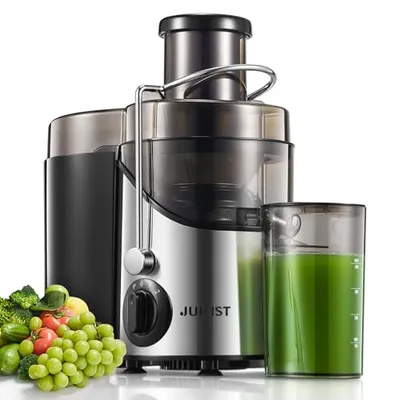
Juicer classification refers to the systematic categorization of juicing appliances based on their mechanical operation, extraction methodology, and intended output. This technical taxonomy is critical for understanding performance metrics, material compatibility, energy efficiency, and suitability for specific botanical matrices. Primary distinctions often lie in the method of mastication or expression, such as centrifugal force, auger-based pressing (slow juicing), or hydraulic pressing. Each classification dictates the resultant juice quality, including nutrient retention (particularly heat-sensitive vitamins and enzymes), fiber content, pulp dryness, and potential for oxidation. Advanced classifications may further delineate based on material construction (e.g., BPA-free plastics, stainless steel components), motor type (AC/DC, horsepower), decibel output, and specific safety certifications required for commercial or domestic use.
The technical specifications underpinning juicer classification are essential for both manufacturers and consumers. Manufacturers leverage this framework for product development, marketing, and regulatory compliance, ensuring products meet predefined performance benchmarks. Consumers and professional users (e.g., in food processing, health and wellness industries) rely on classification to make informed purchasing decisions, aligning appliance capabilities with their specific operational requirements and desired juice characteristics. Understanding these classifications allows for a nuanced appreciation of the engineering trade-offs inherent in juicer design, from cost-effectiveness and ease of cleaning to maximum yield and shelf-life of the extracted liquid.
Mechanism of Action
Centrifugal Juicers
Centrifugal juicers operate by rapidly spinning a feed basket containing a cutting disc against a mesh sieve. The high rotational speed (typically 1,000-10,000 RPM) generates centrifugal force, flinging the pulverized produce through the sieve. The liquid juice is collected, while the drier pulp is expelled into a separate container. This method is generally faster but can introduce more heat and oxidation due to the high RPM and aeration, potentially degrading certain heat-sensitive nutrients. The cutting disc design and sieve aperture significantly influence pulp fineness and juice clarity.
Masticating (Slow) Juicers
Masticating juicers, often referred to as 'slow juicers' or 'auger juicers', utilize a rotating auger (screw mechanism) to crush and press fruits and vegetables against a stationary screen. The auger's slow rotation speed (typically 40-120 RPM) minimizes heat generation and oxidation. This low-speed, high-torque action effectively breaks down cell walls, leading to a higher juice yield and a drier pulp. These juicers are superior for leafy greens and fibrous produce. Variations include single-auger and twin-auger designs, with twin-auger models generally offering higher efficiency and pulp separation.
Hydraulic Press Juicers
Hydraulic press juicers, often considered the most efficient for commercial applications, employ a two-stage process. First, produce is ground into a pulp. Second, this pulp is placed into a cloth bag and subjected to intense hydraulic pressure (often thousands of pounds per square inch). This method extracts the maximum possible liquid with minimal oxidation and heat, producing exceptionally high-quality juice. They are typically large, expensive, and slower to operate due to the manual or semi-automated pressing stages.
Industry Standards and Specifications
While no single universal standard solely defines 'juicer classification' across all regulatory bodies, several industry-related standards and technical parameters are consistently applied:
Material Safety and Food Grade Compliance
Components in contact with food must comply with relevant food safety regulations, such as FDA (U.S. Food and Drug Administration) standards for food-grade plastics (e.g., BPA-free designation) and stainless steel alloys (e.g., 304 grade). Certifications like NSF/ANSI ensure materials do not leach harmful substances into the juice.
Electrical Safety and Performance
Appliances must meet electrical safety standards like UL (Underwriters Laboratories) or CE (Conformité Européenne) marking, ensuring protection against electrical shock and fire hazards. Motor power (measured in Watts or Horsepower), voltage, frequency, and energy consumption (kWh) are key performance metrics.
Performance Metrics
Key quantifiable metrics include:
| Metric | Description | Typical Range/Units |
|---|---|---|
| Juice Yield | Percentage of liquid extracted from raw produce by weight. | 65-95% (varies by produce type and juicer type) |
| Pulp Dryness | Residual moisture content in expelled pulp. | Low moisture indicates high efficiency. |
| Oxidation Level | Indicator of oxygen exposure and nutrient degradation. | Measured via Dissolved Oxygen (DO) or antioxidant retention. |
| Nutrient Retention | Percentage of key vitamins (e.g., Vitamin C) and enzymes preserved. | High in slow juicers and hydraulic presses. |
| Operating Speed (RPM) | Rotational speed of cutting/pressing mechanisms. | Centrifugal: 1,000-10,000 RPM; Masticating: 40-120 RPM. |
| Noise Level | Audible output during operation. | Measured in decibels (dB). |
Ease of Cleaning (EoC)
Though subjective, aspects like the number of removable parts, dishwasher-safe components, and design features minimizing crevices contribute to classification for user convenience.
Evolution and Technological Advancements
Early juicers were primarily manual presses or basic centrifugal designs. The introduction of electric motors in the mid-20th century revolutionized domestic juicing. The late 20th and early 21st centuries saw significant advancements with the development of high-torque, low-speed auger mechanisms, leading to the 'slow juicer' category. Innovations continue in motor efficiency (brushless DC motors for quieter operation and durability), improved filtration systems for pulp control, intuitive user interfaces, and integrated smart features for monitoring performance or cleaning cycles.
Applications
Juicer classification is relevant across various sectors:
- Domestic Use: Home kitchens for personal health and wellness beverages.
- Commercial Food Service: Cafes, juice bars, restaurants requiring high-volume, high-quality juice production.
- Health and Wellness Industry: Supplementation, therapeutic juice regimens.
- Food Processing: Industrial extraction of fruit and vegetable juices for shelf-stable products.
- Research and Development: Studying nutrient extraction efficiency and juice stability.
Pros and Cons by Classification
Centrifugal Juicers
- Pros: Fast operation, generally lower cost, easier to clean (in many models).
- Cons: Higher heat and oxidation, lower juice yield compared to masticating types, less effective for leafy greens.
Masticating (Slow) Juicers
- Pros: Superior nutrient retention, higher juice yield, excellent for leafy greens and fibrous produce, produces less heat and foam.
- Cons: Slower operation, typically higher cost, can be more complex to clean due to more parts.
Hydraulic Press Juicers
- Pros: Highest juice yield, minimal oxidation and heat, superior juice quality.
- Cons: Very high cost, large footprint, slower throughput (per unit), complex operation.
Practical Implementation and User Considerations
When selecting a juicer, users must consider the classification relative to their primary needs. For quick, daily smoothies or juices from soft fruits, a centrifugal juicer might suffice. For maximizing nutrient intake from a diverse range of produce, including hardy greens and root vegetables, a masticating juicer is preferable. For professional settings demanding the absolute highest quality and yield, a hydraulic press system, despite its cost and complexity, becomes the standard. Factors like motor durability, warranty, availability of spare parts, and design ergonomics also play crucial roles in practical implementation.
Conclusion
Juicer classification is a multifaceted technical framework essential for delineating the operational capabilities, output quality, and suitability of juicing appliances. The distinction between centrifugal, masticating, and hydraulic pressing mechanisms fundamentally dictates juice characteristics such as nutrient integrity, yield, and oxidation levels. Adherence to material safety, electrical, and performance standards ensures product reliability and user safety. As technology advances, future developments will likely focus on further optimizing efficiency, user experience, and sustainable material integration within these established classification paradigms, thereby refining the engineering and application of juicing technology.