


Deep Dive into Multimeter Technology and Applications
Understanding Multimeter Fundamentals
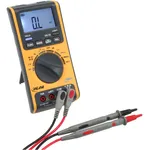
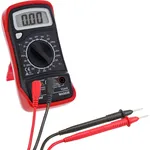
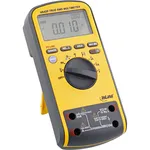
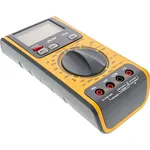
Multimeters serve as the cornerstone of electrical diagnostics, offering a unified platform for measuring a broad spectrum of electrical parameters. At their core, these devices combine the functions of a voltmeter for potential difference, an ammeter for current flow, and an ohmmeter for electrical resistance. Modern digital multimeters (DMMs) have largely superseded analog models due to their enhanced precision, direct digital readout, and the integration of advanced features. The fundamental principle involves converting analog electrical signals into digital data via an analog-to-digital converter (ADC), which is then processed and displayed. This digital conversion provides significantly higher accuracy and resolution, crucial for contemporary electronics troubleshooting.
Key Measurement Functions Explained
Measuring DC voltage is straightforward, involving the direct measurement of potential difference across two points in a direct current circuit. AC voltage measurement, however, is more complex due to the sinusoidal nature of the signal; True RMS functionality is critical here for non-sinusoidal waveforms, as average-responding meters can provide significantly inaccurate readings under such conditions. Current measurement, whether AC or DC, typically requires breaking the circuit to insert the meter in series, or utilizing a clamp meter for non-invasive AC current sensing based on electromagnetic induction. Resistance measurement involves applying a small, known voltage and measuring the resulting current to determine resistance using Ohm's Law. Continuity testing is a specialized resistance measurement that quickly identifies unbroken paths with very low resistance, often indicated by an audible beep.
Advanced Features and Their Significance
Beyond the basic trio, many DMMs offer a suite of advanced capabilities. Capacitance measurement is vital for diagnosing capacitors in power supplies and motor control circuits, while frequency measurement is essential for analyzing AC signals and digital clock frequencies. Diode testing provides a quick way to check the forward voltage drop of diodes and transistor junctions, indicating their health. Temperature measurement, often via a K-type thermocouple, is invaluable for thermal diagnostics in electronics and HVAC systems. Data logging capabilities allow for long-term monitoring of electrical parameters, enabling technicians to identify intermittent faults or track performance trends over time. Auto-ranging simplifies operation by automatically selecting the appropriate measurement range, preventing incorrect readings or potential damage from over-range conditions. The input impedance of a multimeter, particularly for voltage measurements, is a critical specification; a high input impedance (typically 10 MΩ or more) ensures that the meter itself does not significantly draw current from or load the circuit under test, preserving the integrity of the measurement, especially in sensitive control circuits or low-power electronics.