

Advanced Technical Guide to Conduit Fitting Specifications and Applications
Understanding the Diverse Landscape of Conduit Fittings
Conduit fittings represent a critical, yet often underestimated, segment of electrical infrastructure. Their primary role extends beyond simply joining sections of conduit; they are instrumental in creating pathways that protect electrical conductors from physical damage, moisture, corrosive agents, and electromagnetic interference, while simultaneously facilitating system modifications and expansions. The selection of an appropriate fitting is dictated by the conduit material, the environment of installation, the specific electrical load, and adherence to stringent regulatory standards such as the National Electrical Code (NEC).
Material Science and Environmental Considerations
The material composition of conduit fittings is a paramount technical specification. Common materials include galvanized steel, aluminum, PVC (Polyvinyl Chloride), and specialized alloys. Galvanized steel fittings, renowned for their robustness and electromagnetic shielding capabilities, are often employed with Rigid Metal Conduit (RMC) and Intermediate Metal Conduit (IMC) in industrial and outdoor settings where mechanical protection is a priority. Aluminum fittings offer a lighter-weight, corrosion-resistant alternative, particularly suited for applications where weight is a concern or in environments where non-ferrous metals are preferred. PVC fittings are extensively used with PVC conduit, providing excellent chemical resistance and moisture protection, making them ideal for underground, wet, or corrosive environments. Specialized materials like stainless steel are specified for highly corrosive or hygienic applications, such as food processing plants or marine environments, where standard galvanized steel would quickly degrade, necessitating superior material performance.
Types of Fittings and Their Functional Specifics
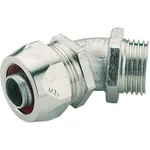
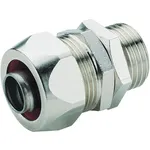
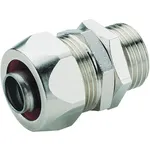
A comprehensive understanding of fitting types is crucial for effective system design. Couplings are designed to connect two lengths of conduit, ensuring a continuous raceway; these can be set-screw, compression, or threaded, each optimized for different conduit types and installation requirements. Connectors are used to secure conduit to enclosures, junction boxes, or other electrical equipment, providing strain relief and maintaining electrical continuity. Elbows and bends facilitate changes in direction within the conduit run, available in various radii to accommodate conductor bending limitations and prevent insulation damage. Reducers are employed to transition between conduits of different trade sizes. Sealing fittings, such as sealing hubs or hazardous location fittings, are engineered to prevent the passage of flammable gases, vapors, or dust into or out of classified areas, a critical safety feature in environments requiring intrinsic safety or explosion-proof enclosures. These fittings often incorporate specific sealing compounds or diaphragms to maintain the integrity of the containment, upholding safety protocols.
Installation Best Practices and Code Compliance
Proper installation of conduit fittings is as critical as their selection. All connections must be made securely, often requiring specific torque values for threaded fittings or proper tightening for set-screw and compression types, to ensure mechanical integrity and electrical continuity. Grounding and bonding aspects are integral; fittings must maintain the equipment grounding conductor path throughout the raceway system, preventing hazardous voltages from reaching exposed metallic parts. Compliance with NEC articles governing raceway systems (e.g., Article 344 for RMC, Article 358 for EMT) is non-negotiable. Furthermore, environmental considerations such as expansion and contraction for long conduit runs in varying temperatures necessitate the use of expansion fittings to prevent undue stress on the system and maintain structural integrity. The correct application of thread sealants for NPT connections in wet or hazardous locations ensures long-term protection against ingress and maintains the classified rating of the installation, proving crucial for system longevity and safety.