

Understanding the Mechanics and Security Protocols of EAS Detachers
EAS Detacher Technologies and Operational Principles
Electronic Article Surveillance (EAS) detachers are specialized tools indispensable for retailers utilizing hard tags to protect merchandise. The fundamental principle behind most detachers involves overcoming the internal locking mechanism within the security tag itself. This mechanism typically consists of a clutch system with a pin that expands into a secured housing, preventing unauthorized removal. Detachers apply either a powerful magnetic field or a precise mechanical force to retract the clutch and release the pin, allowing the tag to be safely separated from the item.
Magnetic Detachers: The Industry Standard
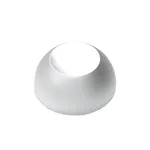
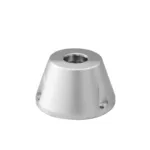
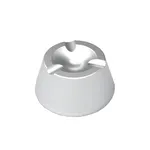
Magnetic detachers represent the most common category, widely deployed across retail sectors. These devices contain high-strength permanent magnets, often Neodymium Iron Boron (NdFeB), engineered to generate a specific magnetic field intensity, measured in kilogauss (kGS). When a compatible hard tag is placed over the detacher, the powerful magnetic force acts upon small metal ball bearings or a metallic plate within the tag's clutch, pulling them away from the locking pin. This retraction disengages the pin from its locked position, freeing the merchandise. Magnetic detachers are highly effective for a broad range of standard security tags, including pencil tags, golf tags, and square tags, offering rapid and reliable removal.
The strength of a magnetic detacher is a critical specification; higher kGS ratings indicate a stronger magnetic field capable of disengaging more robust or specialized tags. Retailers must match their detacher's kGS rating with the requirements of their security tags to ensure consistent performance. Furthermore, magnetic detachers are typically passive devices, requiring no external power, which simplifies installation and reduces operational costs. Variations include countertop detachers, which are static and often recessed for a flush finish, and handheld versions, offering portability for specific applications like oversized items or inventory checks.
Mechanical and Specialized Detachers
While magnetic detachers dominate, other specialized detaching methods exist for unique tag types. Mechanical detachers, for instance, are employed for tags that do not rely on a magnetic clutch system, such as some ink tags or specific bottle tags. These often use a lever-action or clamping mechanism to apply direct physical force to release the tag. Infrared (IR) detachers represent another advanced category, primarily used for "superlock" or specialized high-security tags that integrate an internal electronic release mechanism, activated by an encoded IR signal from the detacher. These systems offer enhanced security as they cannot be defeated by simple magnets.
Regardless of the underlying technology, proper detacher usage is crucial to prevent damage to merchandise or the tags themselves. Operators must be trained on correct tag placement and removal techniques. Regular inspection of detachers for wear, especially the magnetic surface or mechanical components, ensures optimal performance and prevents system inefficiencies or tag retention issues. The choice of detacher technology directly impacts the security efficacy and operational flow of a retail environment, requiring careful consideration of tag types in use, security threat levels, and staff workflow.