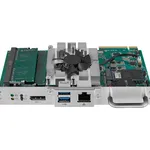
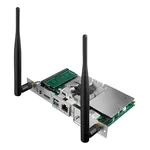
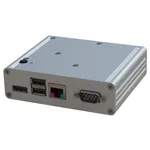
The Sharp MPi4 Box Gen2 emerges as a dedicated solution for digital signage applications, designed to power dynamic advertising displays with reliability and efficiency. In a market saturated with general-purpose computing devices, this specialized media player distinguishes itself through its focus on stable content playback, remote management capabilities, and seamless integration into commercial display ecosystems. Its robust build and optimized software environment suggest a product engineered for the demanding conditions of continuous operation often found in retail, hospitality, and public spaces.
This second-generation iteration likely builds upon its predecessor's foundation, aiming to offer enhanced performance and connectivity essential for modern digital signage. The ability to consistently deliver high-definition content, manage multiple displays, and receive over-the-air updates are critical factors for businesses relying on impactful visual communication. The MPi4 Box Gen2 positions itself as a professional-grade tool, moving beyond basic playback to facilitate sophisticated content strategies and reduce the total cost of ownership through its tailored feature set and operational resilience.
Key Features and Performance Analysis
While specific processor and memory details are not provided, the MPi4 Box Gen2's designation as a digital signage media player implies an architecture optimized for smooth video decoding and graphics rendering. Its primary function is to reliably play back digital content, ranging from static images and presentations to high-definition video streams, without the performance hiccups often associated with consumer-grade devices. The inclusion of necessary ports for display connectivity (likely HDMI) and network integration (Ethernet and potentially Wi-Fi) are fundamental expectations for such a device, enabling straightforward setup and content delivery.
Remote management is a cornerstone of efficient digital signage operations. The MPi4 Box Gen2 is expected to support centralized control, allowing users to schedule content, monitor playback status, and push updates remotely. This capability is crucial for businesses managing a network of displays across multiple locations, significantly reducing the need for on-site technician visits. The device's internal storage or support for external storage solutions will dictate the complexity and duration of content playlists it can handle, while its operating system, though unspecified, is presumed to be tailored for stability and security in a commercial context.