

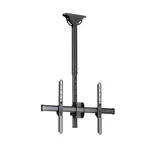
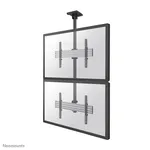
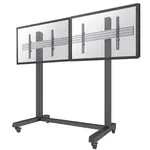
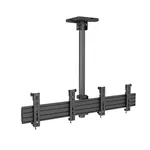
Deep Dive into Advanced Signage Mount Engineering
The Engineering of Secure Display Integration
The robust engineering of signage display mounts extends far beyond mere structural support; it encompasses precise material science, advanced mechanical design, and adherence to rigorous safety standards. These mounts are fabricated to withstand static and dynamic loads, often utilizing high-strength steel alloys or aerospace-grade aluminum to achieve optimal strength-to-weight ratios and ensure long-term integrity in demanding commercial environments.
VESA Standards and Universal Compatibility
At the core of display mount compatibility lies the VESA Mounting Interface Standard (MIS). This globally recognized standard dictates the precise horizontal and vertical distances between mounting holes on the rear of flat-panel displays, commonly categorized as MIS-D, MIS-E, and MIS-F. Adhering to these specifications ensures that a VESA-compliant mount can universally interface with a wide array of displays from different manufacturers, streamlining installation and reducing potential compatibility issues.
Technical specifications for VESA compliance include patterns such as 75x75mm, 100x100mm, 200x200mm, up to 1000x800mm and beyond for very large format displays. Engineers meticulously design mount plates with these patterns to distribute the display's weight evenly across the mounting interface, minimizing stress concentrations and maximizing stability.
Structural Integrity and Load Dynamics
The load-bearing capacity of a signage mount is a critical specification, quantified by its maximum permissible display weight. This rating is derived from extensive finite element analysis (FEA) and physical stress testing, often incorporating a significant safety factor (typically 2x to 4x the stated capacity) to account for potential overloading, seismic activity, or impact forces. Materials like cold-rolled steel are frequently chosen for their yield strength and ductility, preventing brittle failure under extreme conditions.
Articulating and full-motion mounts introduce additional complexity in load dynamics. Their design integrates multiple pivot points, often featuring high-tolerance bearings or bushings, and robust gear mechanisms or gas spring counterbalances to facilitate smooth, controlled movement while maintaining structural rigidity. The cantilevered forces generated by extending an articulating arm are carefully calculated to prevent torque-induced deflection or fatigue over repeated adjustments.
Advanced Adjustability Mechanisms
Modern signage mounts offer a spectrum of adjustability, from simple fixed positions to sophisticated full-motion capabilities. Tilt mechanisms often employ friction-based joints or positive-lock levers to allow vertical angle adjustment (e.g., +15° to -5°), optimizing viewing against glare. Swivel functionality, allowing horizontal rotation, is crucial for versatile positioning. Full-motion mounts, also known as articulating mounts, incorporate multi-axis arms that enable extension, retraction, tilt, and swivel, providing unparalleled flexibility for display orientation and servicing access.
These mechanisms often utilize high-precision CNC-machined components to ensure smooth, stable movement with minimal play. Gas spring technology is increasingly employed in larger mounts to provide effortless height adjustment and counterbalance heavy displays, enabling a single installer to precisely position a display with minimal effort.
Integrated Cable Management and Security Protocols
Effective cable management is paramount for both aesthetics and functionality. Many mounts incorporate integrated cable channels, clips, or removable covers that route power and data cables discreetly along the mount's structure, preventing unsightly clutter and potential damage. This also serves as a security feature, making cables less accessible to tampering.
For public installations, security is a key design consideration. Mounts often feature tamper-resistant screws (e.g., Torx with pin), padlock-compatible holes, or proprietary locking mechanisms that physically secure the display to the mount and the mount to the wall. These measures are engineered to resist common theft techniques and ensure the display remains in its intended location, protecting the investment and preventing unauthorized removal.