

Deep Dive into Network Equipment Enclosure Technologies and Applications
Understanding Network Equipment Enclosure Types
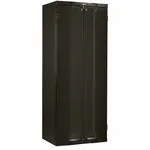
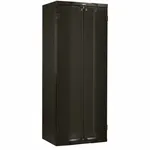
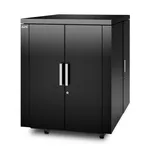
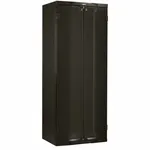
Network equipment enclosures, commonly known as server racks or network cabinets, are categorized primarily by their design and intended application. Standard open-frame racks, typically 2-post or 4-post configurations, offer maximum airflow and accessibility for environments with controlled climates like data centers, though they lack physical security. Enclosed cabinets, on the other hand, provide varying degrees of protection and security, ranging from general-purpose office racks to highly specialized industrial and outdoor enclosures. Wall-mount enclosures are designed for smaller deployments or edge computing where floor space is limited, while colocation cabinets offer isolated, lockable compartments within a larger enclosure for multiple tenants.
Key specifications such as Rack Units (RU), which define the vertical mounting space (1U = 1.75 inches), depth (typically 600mm to 1200mm), and width (standard 19-inch mounting, but also 23-inch for telecommunications), are crucial for ensuring compatibility with equipment. Load capacity, measured in pounds or kilograms, dictates the maximum weight the enclosure can safely support, a critical factor for densely populated racks with heavy servers and UPS units. Material composition, predominantly cold-rolled steel or aluminum, impacts durability, weight, and cost. Aluminum offers a lighter weight solution, while steel provides superior strength and rigidity for heavy-duty applications.
Advanced Thermal Management Solutions
Effective thermal management is paramount for the longevity and reliable operation of network equipment, especially with the increasing power density of modern servers and switches. Enclosures incorporate a range of cooling strategies. Passive ventilation relies on natural convection through perforated doors and panels, suitable for lower heat load environments. Forced air cooling utilizes integrated fan trays or individual fans to actively draw cool air in and exhaust hot air, often in a front-to-back airflow pattern matching most IT equipment. For high-density racks or environments with limited ambient cooling, active cooling solutions like rack-mounted air conditioning units or liquid cooling systems (direct-to-chip or rear-door heat exchangers) are employed to precisely control internal temperatures and remove significant heat loads. Hot aisle/cold aisle containment strategies are often implemented in conjunction with cabinet designs to prevent the mixing of hot and cold air streams, significantly improving cooling efficiency across entire data centers.
Security and Environmental Protection
Beyond thermal management, enclosures are critical for physical security and environmental protection. Robust locking mechanisms, including key locks, combination locks, and biometric readers, prevent unauthorized physical access to valuable equipment. Integration with electronic access control systems and environmental monitoring sensors (temperature, humidity, smoke, water leaks) provides real-time alerts and audit trails, enhancing overall security posture. For challenging environments, specialized enclosures feature Ingress Protection (IP) ratings (e.g., IP54, IP66) or NEMA classifications (e.g., NEMA 3R, NEMA 4X) indicating resistance to dust, water jets, corrosive agents, and even submersion, making them suitable for industrial floors, outdoor telecommunications, or harsh manufacturing settings. EMI/RFI shielding is another vital feature in sensitive environments, protecting critical data from external electromagnetic interference and preventing equipment emissions from affecting other devices.