

Technical Deep Dive: The Engineering Behind Automatic Hand Sanitization
Dispensing Technologies and Formulation Compatibility
Gel Dispensers
Gel-based automatic sanitizers utilize a pump mechanism designed to dispense viscous liquids. These systems often feature a more robust pumping action to handle the higher viscosity of gel formulations, delivering a measured globule suitable for comprehensive hand coverage. The internal pump design is critical for preventing clogging and ensuring consistent output over time, often incorporating anti-drip valves to maintain cleanliness and reduce waste. Compatibility with various gel viscosities is a key specification.
Foam Dispensers
Foam dispensers operate by mixing liquid sanitizer with air at the point of dispensing, creating a rich, airy foam. This method typically requires a specialized pump that incorporates an air-injection chamber, resulting in a lighter, more spreadable application which can sometimes lead to less product consumption per use. The intricate design of foam pumps necessitates precise engineering to ensure the correct air-to-liquid ratio, producing a consistent and satisfying foam texture. These units are specifically designed for foam-specific sanitizer refills.
Liquid Spray Dispensers
Liquid spray automatic dispensers are engineered for lower viscosity solutions, producing a fine mist or spray. These often employ a simpler, high-pressure pump or atomizing nozzle to deliver the sanitizer, ensuring broad coverage without oversaturation. The primary challenge for liquid spray units is preventing overspray and ensuring the correct droplet size for effective coverage without excessive evaporation or runoff. Materials within the pump and nozzle must be resistant to corrosive alcohol-based solutions to ensure longevity.
Sensor Technology and Power Management
Infrared Proximity Sensors
The core of an automatic sanitizer's touchless operation lies in its infrared (IR) proximity sensor. These sensors emit an infrared light beam and detect its reflection off a user's hands. When hands enter the detection zone, the reflected IR light triggers the dispensing mechanism. Key performance indicators include sensor response time (typically <0.2 seconds), detection range (often adjustable, e.g., 2-10 cm), and immunity to ambient light interference. Advanced units may incorporate dual-IR sensors or sophisticated algorithms to minimize false activations while ensuring reliable detection.
Power Solutions
Powering these dispensers primarily involves battery operation for maximum placement flexibility, with common options including D-cell, C-cell, or AA batteries. Battery life is a critical specification, often optimized through low-power standby modes and efficient motor drive circuits, extending operational periods from six months to over a year on a single set of batteries. Some models offer AC adapter ports for fixed installations, providing continuous power and eliminating battery replacement cycles. Rechargeable battery packs are also gaining traction for sustainable deployment.
Construction, Installation, and Maintenance
Material Durability and Aesthetics
Automatic sanitizer dispensers are constructed from materials chosen for durability, chemical resistance, and aesthetic integration. Common materials include high-impact ABS plastic, known for its robustness and ease of molding, and stainless steel, favored for its superior hygiene, corrosion resistance, and premium appearance in demanding environments. Anti-microbial coatings may also be applied to external surfaces to further enhance hygiene. Design considerations extend to tamper-resistant locks and clear viewing windows for sanitizer levels.
Installation Versatility and Refill Systems
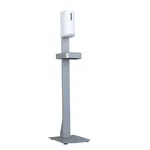
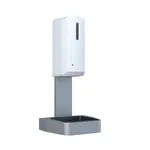
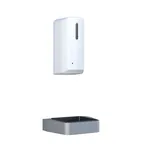
Installation options are diverse, encompassing wall-mounted units for space efficiency, freestanding floor stands for high-traffic areas, and compact countertop models. Wall-mounted units typically include a backplate and screw holes for secure attachment, while floor stands feature weighted bases for stability. Refill systems vary between proprietary sealed cartridges, which offer hygiene and prevent cross-contamination, and bulk-fill reservoirs, which provide cost savings and greater flexibility in sanitizer choice. Both systems require easy access for maintenance and quick refilling to minimize downtime.