


Advanced Power Rivet Tool Architectures and Performance Metrics
Understanding Power Rivet Tool Technologies
Power rivet tools are sophisticated fastening instruments designed to install blind rivets with precision and speed, forming secure, high-integrity joints. Unlike traditional fasteners, blind rivets are installed from one side of the workpiece, making these tools indispensable in applications where access to the rear is restricted. The core principle involves pulling a mandrel through the rivet body, causing the blind end to expand and form a secure 'blind side' head, while simultaneously compressing the workpieces together. This process requires significant, controlled force, which is precisely what power rivet tools deliver.
Types of Power Rivet Tools
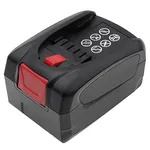
The market primarily features three main categories of power rivet tools, each suited for different operational environments. Pneumatic rivet tools, the most common in industrial settings, utilize compressed air to generate the necessary pulling force. They are robust, generally lightweight, and offer consistent performance, making them ideal for high-volume production lines where an air supply is readily available. Cordless battery-powered rivet tools provide unparalleled mobility, freeing operators from air hoses or power cords. Modern cordless units often feature brushless motors for increased efficiency and longevity, coupled with high-capacity lithium-ion batteries that offer extended runtimes. Electric corded rivet tools, while less common for blind rivets, offer continuous power without reliance on air compressors or battery charging, often found in fixed workstations or light-duty applications.
Critical Performance Specifications
Selecting the appropriate power rivet tool necessitates a close examination of several key performance metrics. The pulling force, typically measured in kilonewtons (kN), is paramount, indicating the maximum strength the tool can exert to set a rivet. This force must exceed the sheer strength required to break the mandrel of the largest and strongest rivet intended for use. Stroke length, measured in millimeters, defines the distance the pulling jaws travel, which must be sufficient to fully set the rivet and break the mandrel. Tools with adjustable stroke settings offer greater versatility. Furthermore, for cordless models, battery voltage and amp-hour (Ah) ratings directly impact power output and operational duration. For pneumatic tools, the required air pressure (PSI/bar) and air consumption (L/min) are crucial for infrastructure planning.
Rivet Compatibility and Nosepiece Precision
A power rivet tool's versatility is heavily dependent on its compatibility with various rivet types and sizes. While most tools handle standard blind rivets, specialized applications might demand compatibility with structural rivets, multi-grip rivets, peel rivets, or sealed rivets. Each rivet type has specific requirements for pulling force and nosepiece configuration. The nosepiece, the component that directly contacts the rivet and workpiece, is critical for correct rivet setting. A mismatched nosepiece can lead to improper rivet formation, workpiece damage, or premature tool wear. Manufacturers provide a range of interchangeable nosepieces to accommodate different rivet diameters and head styles, ensuring optimal performance and joint integrity.
Ergonomics, Durability, and Maintenance
For professional users, tool ergonomics and long-term durability are as vital as raw power. A well-balanced tool with an ergonomic grip reduces operator fatigue, especially during extended shifts, contributing to higher productivity and fewer repetitive strain injuries. The construction materials and internal mechanisms must be robust enough to withstand the rigors of industrial environments. Regular maintenance, including jaw cleaning, lubrication, and inspection of seals and springs, is essential for preserving the tool’s performance and extending its lifespan. Advanced features such as mandrel collection systems and digital force settings further enhance usability and process control, ensuring consistent, high-quality fastening operations.