




Deep Dive: Advanced Material Science and Ergonomic Engineering in Pencil Case Design
Material Science and Construction Integrity
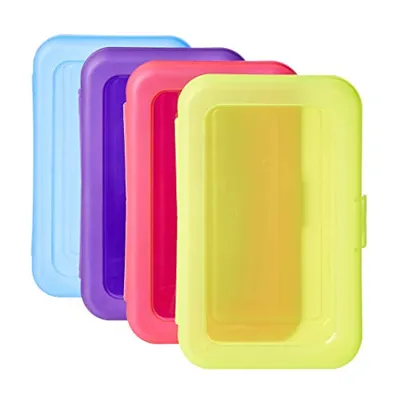
The foundational aspect of any high-performance pencil case lies in its material composition and the integrity of its construction. Industrial-grade polyesters, often specified by their denier count (e.g., 600D, 1200D), offer excellent abrasion resistance and tear strength, balancing durability with a lightweight profile. Ballistic nylon, revered for its exceptional toughness, provides superior resistance against punctures and severe wear, making it ideal for heavy-duty applications. For rigid or semi-rigid cases, molded EVA (Ethylene-vinyl acetate) foam or ABS plastic delivers robust impact protection, safeguarding delicate instruments from crushing forces. Stitching techniques are equally critical; double-stitched seams reinforce stress points, preventing premature failure, while bound interior seams enhance structural integrity and prevent fraying.
Fasteners and Access Mechanisms
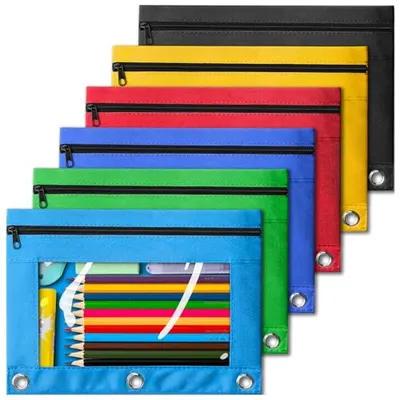
The reliability of a pencil case's access mechanism is paramount. High-quality zippers, particularly those from manufacturers like YKK, are preferred due to their consistent performance, robust tooth construction (coil, Vislon, or metal), and smooth operation. Self-repairing coil zippers, for instance, offer an advantage by allowing manual realignment of misaligned teeth. Puller design is also considered for ergonomic grip and ease of use, often incorporating metal, rubberized, or paracord elements. Beyond zippers, magnetic closures or heavy-duty snap fasteners are sometimes integrated for quick access, though typically reserved for specific design profiles or smaller compartments.
Internal Organization and Capacity Engineering
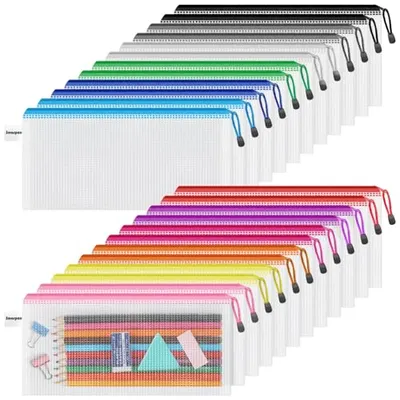
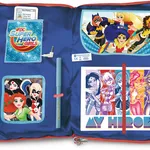
Effective internal organization transforms a simple container into a functional tool management system. Technical pencil cases often feature sophisticated internal architectures including elasticized loops designed to securely hold individual pens, pencils, or markers, preventing them from colliding and reducing lead breakage or scratching. Mesh pockets, often zippered, provide visibility and secure storage for smaller items like erasers, USB drives, or spare leads. Removable dividers or modular trays offer customization, allowing users to adapt the internal layout to varying tool sets. Capacity engineering extends beyond mere volume; it involves optimizing the internal geometry to accommodate specific tool lengths and diameters efficiently, ensuring maximum utility within a compact form factor.
Protective Features and Maintenance Protocols
Modern pencil cases incorporate various protective features. While full waterproofing is rare, many materials are treated with DWR (Durable Water Repellent) coatings, or laminated with PU (Polyurethane) to offer significant resistance against spills and light rain, protecting contents from moisture damage. Impact-absorbing layers, particularly in hardshell designs, mitigate shock from accidental drops. Some textiles are also engineered with stain-resistant properties, simplifying upkeep. For maintenance, materials like polyester and nylon generally permit spot cleaning with mild detergents, while rigid cases can be wiped down. Understanding these specifications ensures the pencil case maintains its functional and aesthetic integrity over its operational lifespan.