

A Deep Dive into Massager Technologies and Therapeutic Principles
Understanding Massager Mechanisms
The efficacy of a massager is fundamentally determined by its core mechanical principle. Percussive massagers, for instance, utilize a rapidly reciprocating head driven by a high-torque brush or brushless motor, delivering short, forceful pulses deep into muscle tissue. Key specifications here include the amplitude (the distance the head travels) and percussions per minute (PPM), which dictate the intensity and speed of the treatment. Advanced models often feature stall force ratings, indicating how much pressure can be applied before the motor stalls, ensuring consistent performance for deep tissue work. These devices are particularly effective for breaking up lactic acid and increasing blood flow to large muscle groups.
Shiatsu and Kneading Technologies
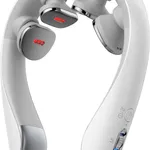
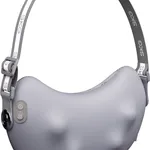
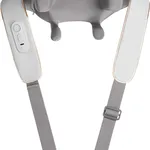
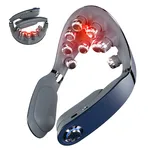
Shiatsu massagers replicate traditional Japanese finger-pressure massage through rotating nodes. These nodes are precisely engineered to mimic the circular or figure-eight motions of human hands, often incorporating varying sizes and textures. The internal mechanism typically involves multiple gear-driven motors or a single motor with a complex linkage system to control the nodes' independent and synchronized movements. Many Shiatsu massagers integrate localized heating elements, usually resistive coils, positioned directly behind the massage nodes to enhance muscle relaxation and amplify the therapeutic effect by increasing local circulation. Control systems allow for directional changes and speed adjustments, providing a customizable kneading experience.
Vibrational and Air Compression Systems
Vibrational massagers employ eccentrically weighted motors that generate high-frequency oscillations, primarily targeting surface muscles. These are effective for promoting blood circulation, relieving minor muscle tension, and providing a general sense of relaxation. The frequency (Hz) and amplitude of vibration are critical technical parameters. Air compression massagers, conversely, utilize an inflatable cuff system powered by a small air pump and solenoid valves. These cuffs sequentially inflate and deflate, applying rhythmic pressure to limbs to improve lymphatic drainage, reduce swelling, and enhance blood flow, particularly beneficial for post-exercise recovery or individuals with circulatory issues. Pressure levels and sequence timing are critical, often adjustable via an integrated controller.
Integrated Features and Ergonomics
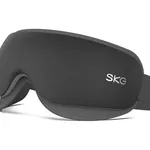
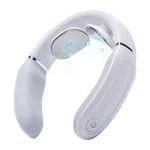
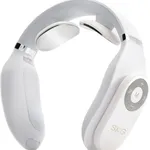
Beyond the core massage mechanism, several integrated features contribute to a massager's overall utility and user experience. Heating elements, whether infrared lamps or resistive coils, are meticulously placed to deliver therapeutic warmth without overheating, often coupled with thermostatic controls and auto-shutoff mechanisms for safety. Material selection is paramount; durable, skin-friendly fabrics and robust ABS or silicone plastics are chosen for contact surfaces and housing, ensuring longevity and hygiene. Ergonomics play a crucial role in usability, with designs optimized for specific body contours, weight distribution for handheld units, and intuitive control interfaces. Advanced massagers may incorporate lithium-ion battery technology for portability, offering extended runtimes and rapid charging cycles, along with sophisticated microcontrollers for pre-programmed massage modes and app-based connectivity for personalized adjustments.