Wiki Beauty and Hygiene

The Period After Opening (PAO) is a crucial label on cosmetic products, signified by an open jar icon with a numerical value (e.g., '12M'), denoting the product's usable lifespan after its initial unsealing. This metric is established through extensive stability and microbiological testing to ensure the product remains safe and effective against degradation and microbial contamination exacerbated by exposure to air, light, and handling.Manufacturers determine the PAO by assessing factors such as...

Aromatherapy harnesses the therapeutic properties of essential oils derived from plants. These volatile compounds interact with the olfactory system, sending signals to the brain's limbic system, influencing emotions, mood, and physiological functions. Key mechanisms involve neurochemical modulation and potential anti-inflammatory or antimicrobial effects.The practice utilizes various application methods, including diffusion for inhalation and diluted topical application for massage or skincare....
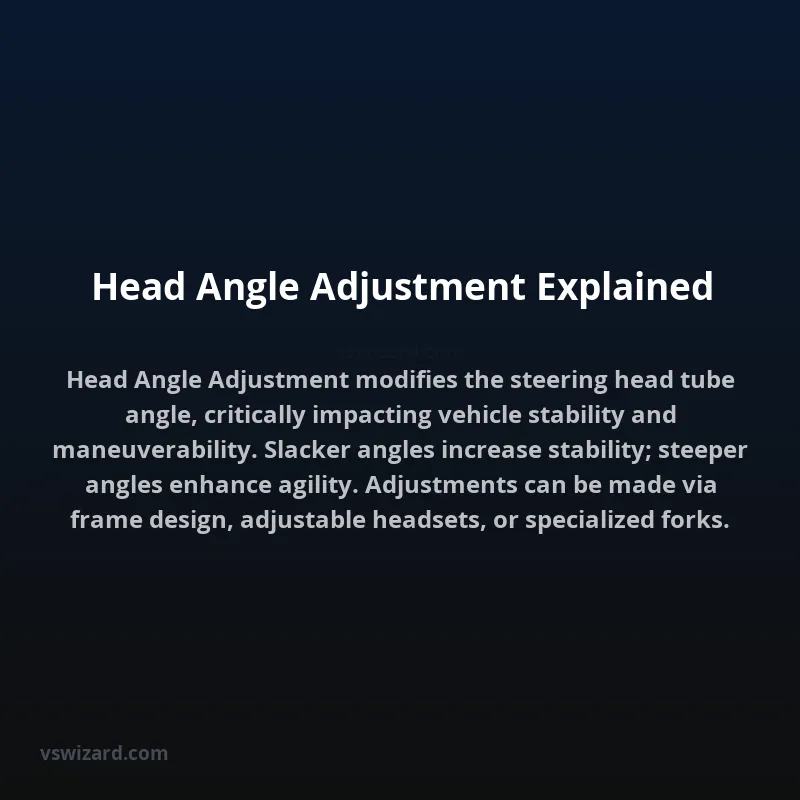
Head Angle Adjustment refers to the process of modifying the angle at which the steering head tube of a bicycle or motorcycle frame is oriented relative to the ground and the fork. This geometric parameter is a critical determinant of a vehicle's handling characteristics, influencing stability, maneuverability, and steering responsiveness. Variations in head angle directly impact trail, rake, and wheelbase, which in turn govern the forces acting on the handlebars during steering inputs and over...

Blade width, within the context of mechanical engineering and material science, specifically refers to the transverse dimension of a cutting tool's blade or a similar component designed for material removal or manipulation. This dimension is critical as it directly influences the chip load, the depth of cut, and the overall efficiency and precision of the machining operation. For rotating tools like milling cutters or saw blades, blade width, often synonymous with cutting width or effective cutt...

Connections and power source details delineate the fundamental aspects of how an electronic or electrical system interfaces with external entities and obtains the necessary energy for operation. This encompasses the physical connectors employed, their standardized specifications, pin configurations, data transfer protocols, and voltage/current requirements. Understanding these parameters is critical for ensuring interoperability, system integrity, and safety, particularly in complex integrated s...
The Cold Air Setting Button is a user interface element integrated into various airflow-generating appliances, most commonly hair dryers and sometimes air conditioners or dehumidifiers. Its primary function is to interrupt the heating element, thereby diverting ambient or cooled ambient air as the output medium rather than heated air. This action is facilitated by a momentary or latching switch that alters the electrical circuit controlling the heating coil. By disabling the heating element, the...

Heat airflow modes describe the distinct patterns and strategies employed in thermal management systems to facilitate the movement of thermal energy via fluid dynamics. These modes are critical for regulating temperature in enclosed environments, electronic devices, industrial processes, and automotive systems. They fundamentally dictate how heat is transferred from a source to a sink, influencing efficiency, component longevity, and operational stability. The classification of these modes often...
The term 'hypoallergenic' denotes a product or material designed to reduce the likelihood of causing an allergic reaction. This classification is not absolute but rather a relative descriptor indicating that the item has undergone specific formulation or manufacturing processes intended to minimize the presence of known common allergens. For instance, in cosmetics and personal care products, this often involves excluding common irritants such as fragrances, certain preservatives (like parabens o...
Motor Power Range quantifies the operational spectrum of electrical motors, defining the minimum and maximum continuous or peak power output a motor can reliably deliver under specified operating conditions. This parameter is fundamental in motor selection for electromechanical systems, dictating the capacity of the motor to perform work against resistive or dynamic loads. It encompasses considerations such as thermal limits, mechanical stress tolerances, and efficiency curves across the defined...
Sterilization is the complete elimination or inactivation of all forms of microbial life, including bacteria, viruses, fungi, and spores, from a product, device, or environment. This process transcends mere disinfection, which typically reduces the number of viable microorganisms to a level deemed safe by public health standards but does not necessarily eliminate all forms. Sterilization achieves an absolute reduction in microbial contamination, rendering the treated item incapable of causing in...