


Deep Dive into Personal Scale Technology and Features
Understanding Personal Scale Technology and Features
The Evolution of Weight Measurement
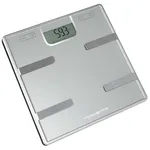
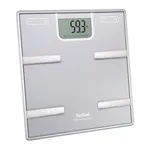
Modern personal scales have transformed from basic mechanical devices to highly sophisticated instruments, leveraging digital sensor technology for superior accuracy and expanded functionality. At their core, most contemporary digital scales utilize strain gauge sensors. These small, resistive sensors are precisely bonded to a metal beam or load cell within the scale. When weight is applied to the scale's platform, the load cell deforms slightly, causing the strain gauges to stretch or compress. This physical deformation alters the electrical resistance of the gauges, and this change is then converted into a digital signal that precisely corresponds to the applied weight. The precision of these sensors, often coupled with advanced microprocessors, allows for weight measurements with increments as fine as 50 grams (0.1 lbs), offering greater detail for tracking weight fluctuations.
Smart Scales and Body Composition Analysis (BIA)
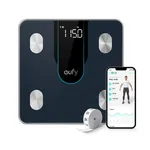
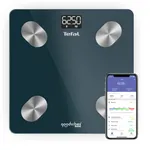
The most significant leap in personal scale technology is the integration of Bioelectrical Impedance Analysis (BIA) for body composition assessment. Smart scales equipped with BIA send a very low, safe electrical current through the body via electrodes on the scale's surface. Because different tissues (fat, muscle, bone, water) have varying electrical resistance, the scale can analyze the impedance (resistance to the current) to estimate body composition metrics. Muscle and water, being good conductors, offer less resistance, while fat tissue offers higher resistance. Advanced algorithms then use this data, combined with user input (age, height, sex, activity level), to calculate body fat percentage, muscle mass, bone mass, and body water percentage. Some high-end models feature segmental BIA, using additional hand-held electrodes to provide more detailed readings for individual body parts.
Key Features and Connectivity
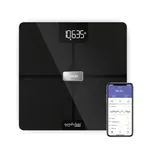
Beyond core measurement, modern personal scales offer a wealth of features designed to enhance user experience and health tracking. High-definition LED or backlit LCD displays ensure readability in various lighting conditions. Connectivity options, primarily Bluetooth or Wi-Fi, allow seamless synchronization with smartphone health applications (e.g., Apple Health, Google Fit, manufacturer-specific apps). This integration enables users to track weight and body composition trends over time, set goals, and gain insights through graphical data representation. Multi-user recognition, a common feature, allows the scale to identify different family members and store their data separately, making it a valuable tool for household health management. Athlete modes often adjust BIA algorithms for individuals with specific body compositions, such as lower body fat percentages and higher muscle mass, to provide more accurate readings. Power sources vary, from standard AAA/AA batteries to rechargeable lithium-ion cells or even solar power, offering flexibility and convenience. These elements collectively contribute to a device that is far more than a simple weight-measurer, becoming an interactive health companion.