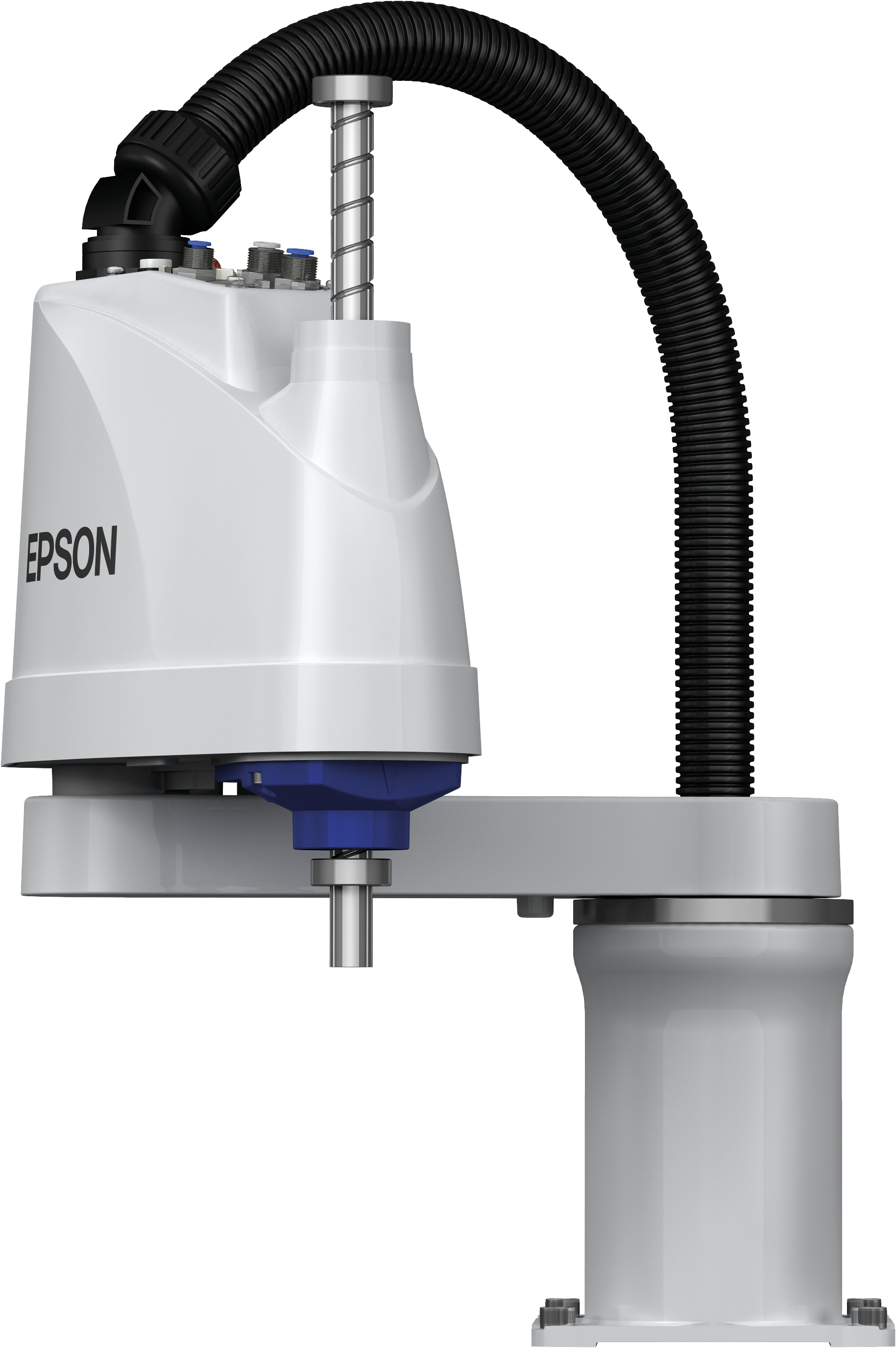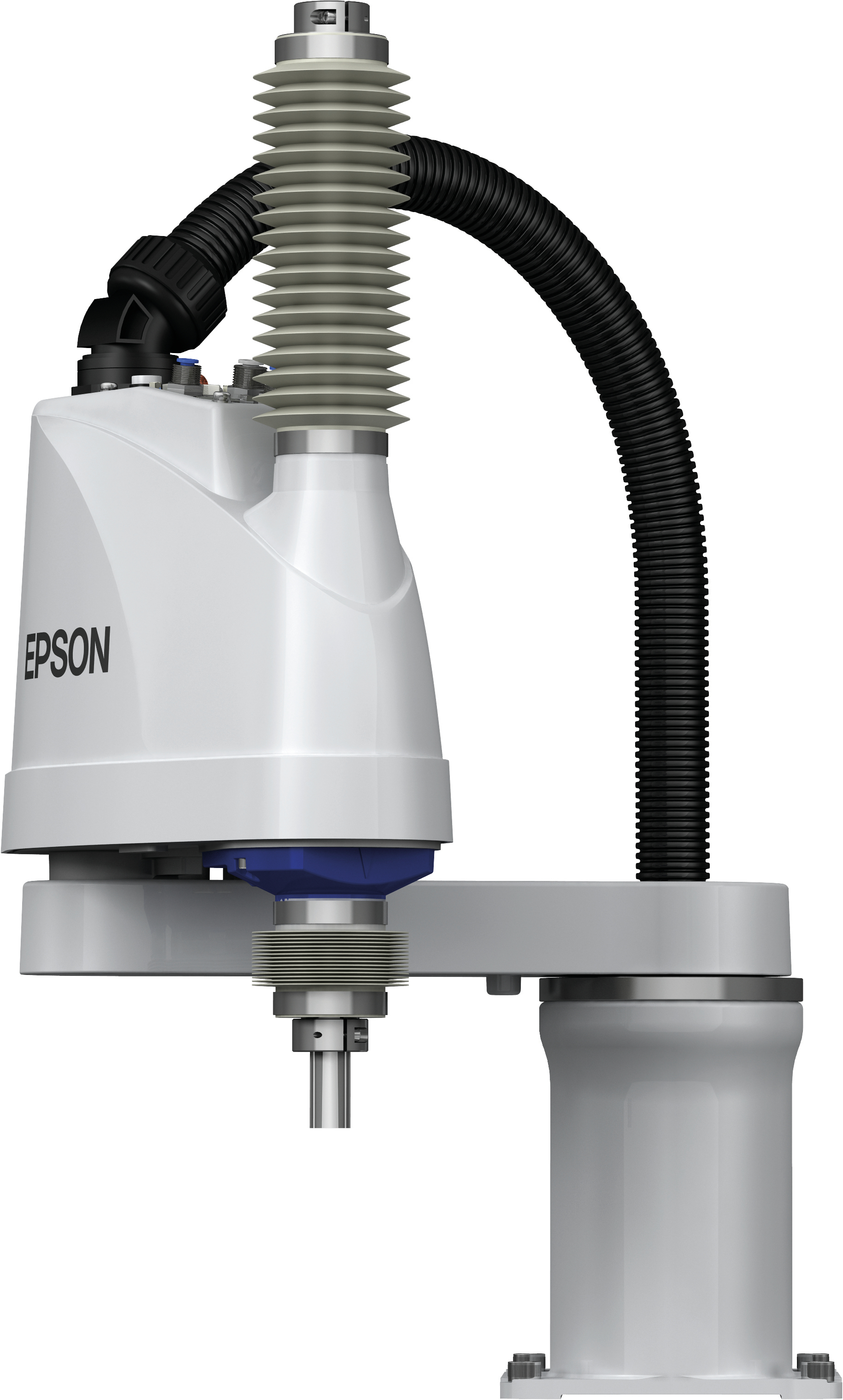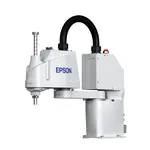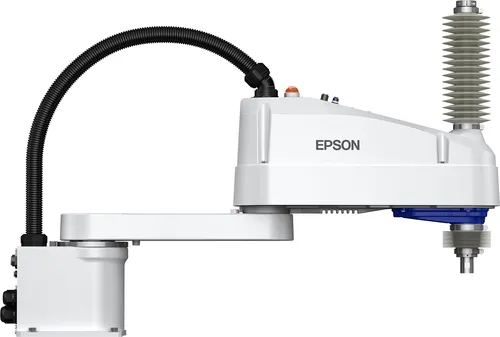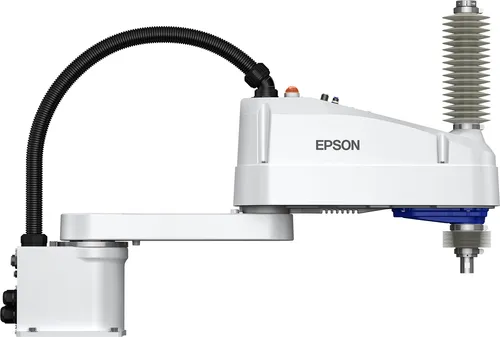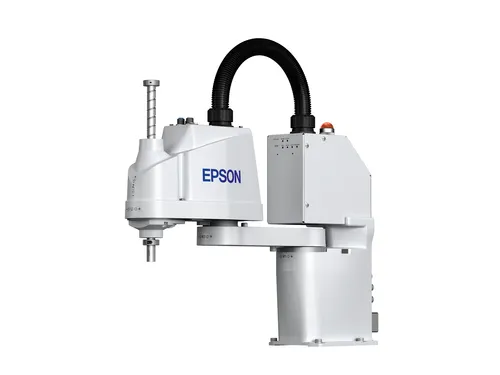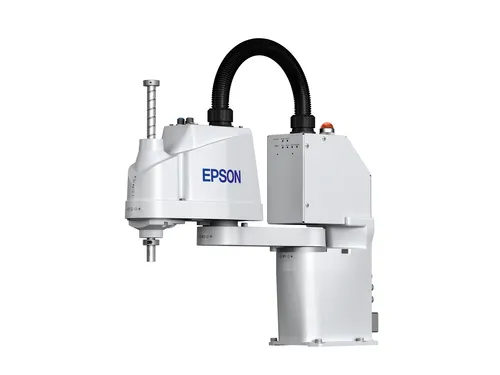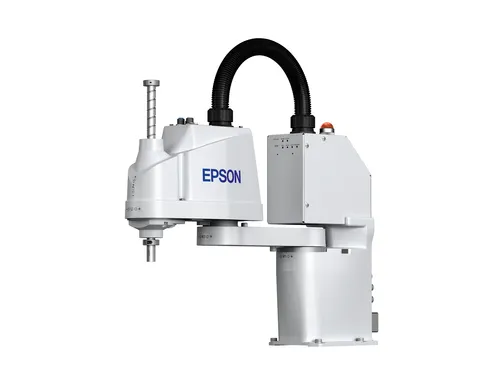


Epson R11N02G008 Industrial Robot
Specifications
Features
Features
| Product design |
SCARA (4 axis robot)
|
|---|---|
| Insertion force |
50 N
|
| Controller type |
RC180, RC620
|
| Payload |
0.5
kg
82% better than others
|
| Repeatability (horizontal) |
0.008
mm
42% better than others
|
| Repeatability (vertical) |
0.01
mm
25% better than others
|
| Repeatability (orientation) |
0.01°
|
| Inertia (nominal) |
0.0003 kg/m²
|
| Inertia (max) |
0.004 kg/m²
|
| Z-axis outside diameter |
8
mm
73% better than others
|
| Operating range (horizontal) |
225
mm
75% better than others
|
| Operating range (vertical) |
80
mm
31% better than others
|
| Operating range (orientation) |
360
64% better than others
|
| Operating range |
Axis 1: +/- 125 °, Axis 2: +/- 132 °, Axis 3: 80 mm
|
| Operating speed (max) |
J1,J2: +/- 3000 mm/s, J3: +/- 1200 mm/s
|
| Mounting type |
Tabletop
|
| ISO cleanroom class |
ISO 3
|
| Certification |
Machinery Directive: EN 60204-1, EMV: EN 55011, EMV: EN 60950, RoHS: 2002/92/EC, ANSI/RIA: R15.06-1999
|
Ports & interfaces
Ports & interfaces
| Pneumatic connectors |
3
|
|---|---|
| Number of DE-9 connectors |
1
|
| Number of DA-15 connectors |
1
|
Weight & dimensions
Weight & dimensions
| Weight |
8
kg
40% better than others
|
|---|---|
| Package weight |
55
kg
90% better than others
|
| Package depth |
1000
mm
62% better than others
|
| Package width |
760
mm
54% better than others
|
| Package height |
1030
mm
60% better than others
|
Technical details
Technical details
| Compliance certificates |
RoHS
|
|---|
Logistics data
Logistics data
| Country of origin |
Japan
|
|---|---|
| Quantity per pack |
1 pc(s)
|
Packaging content
Packaging content
| Cables included |
AC
|
|---|---|
| Installation instruction |
Yes
90% have it
|
Disclaimer: Information on this page may need review. If you notice any discrepancies, please report them

The Epson R11N02G008 stands as a notable contender within the competitive landscape of industrial robotics, offering a blend of precision and versatility designed to meet the rigorous demands of modern manufacturing and automation. While specific performance metrics such as payload capacity, reach, and repeatability are crucial for detailed application planning, the R11N02G008's positioning within Epson's established robotics portfolio suggests a commitment to reliability and advanced control systems. This unit is engineered to facilitate complex tasks, from intricate assembly processes to high-speed pick-and-place operations, making it a valuable asset for industries seeking to enhance productivity and operational efficiency.
Understanding the full potential of the R11N02G008 requires a deep dive into its operational envelope, joint torque capabilities, and integration possibilities with existing SCADA and PLC systems. As an industrial robot, its value proposition is intrinsically linked to its ability to execute programmed sequences with high accuracy and minimal downtime. The brand's reputation for quality in automation solutions further bolsters confidence in this model's robust construction and sophisticated motion control algorithms. For businesses evaluating automation upgrades, the R11N02G008 warrants consideration, particularly if its technical specifications align with the precise requirements of their target applications.
Pros & Cons
Pros
What we love about this product
- Robust Brand Reputation: Backed by Epson's established expertise in robotics and automation, ensuring a level of reliability and support.
- Versatile Application Potential: Designed for a range of industrial tasks, including assembly, pick-and-place, and potentially more specialized functions.
- Advanced Control Systems: Expected to feature sophisticated motion control for precise and repeatable movements, crucial for high-accuracy operations.
Cons
Points to consider before buying
- Limited Public Specification Detail: The provided basic information lacks critical technical data (e.g., payload, reach, speed, axes) needed for direct comparison and application suitability assessment.
- Potential Integration Complexity: As with most industrial robots, integration into existing factory automation systems may require significant engineering effort and specialized knowledge.