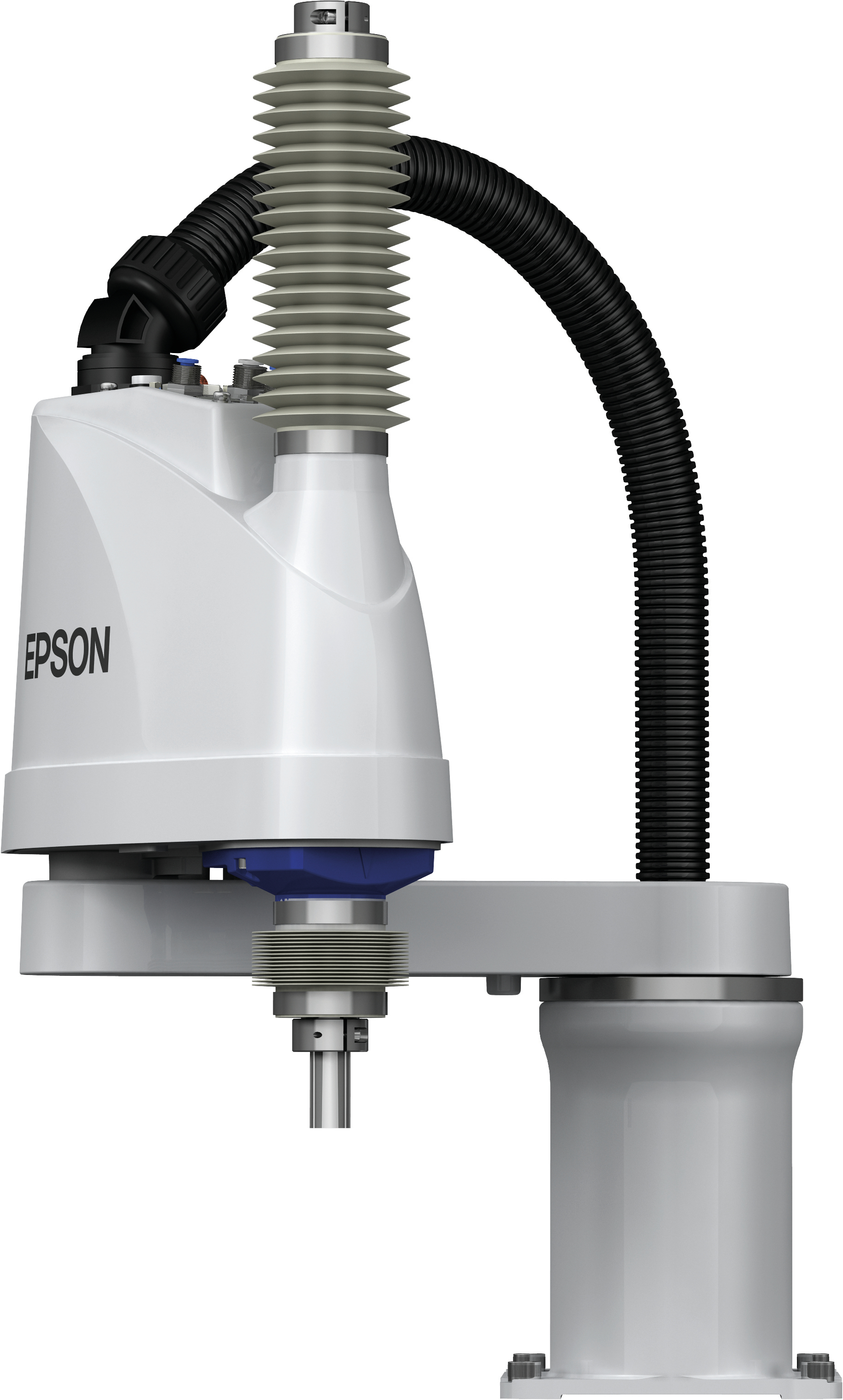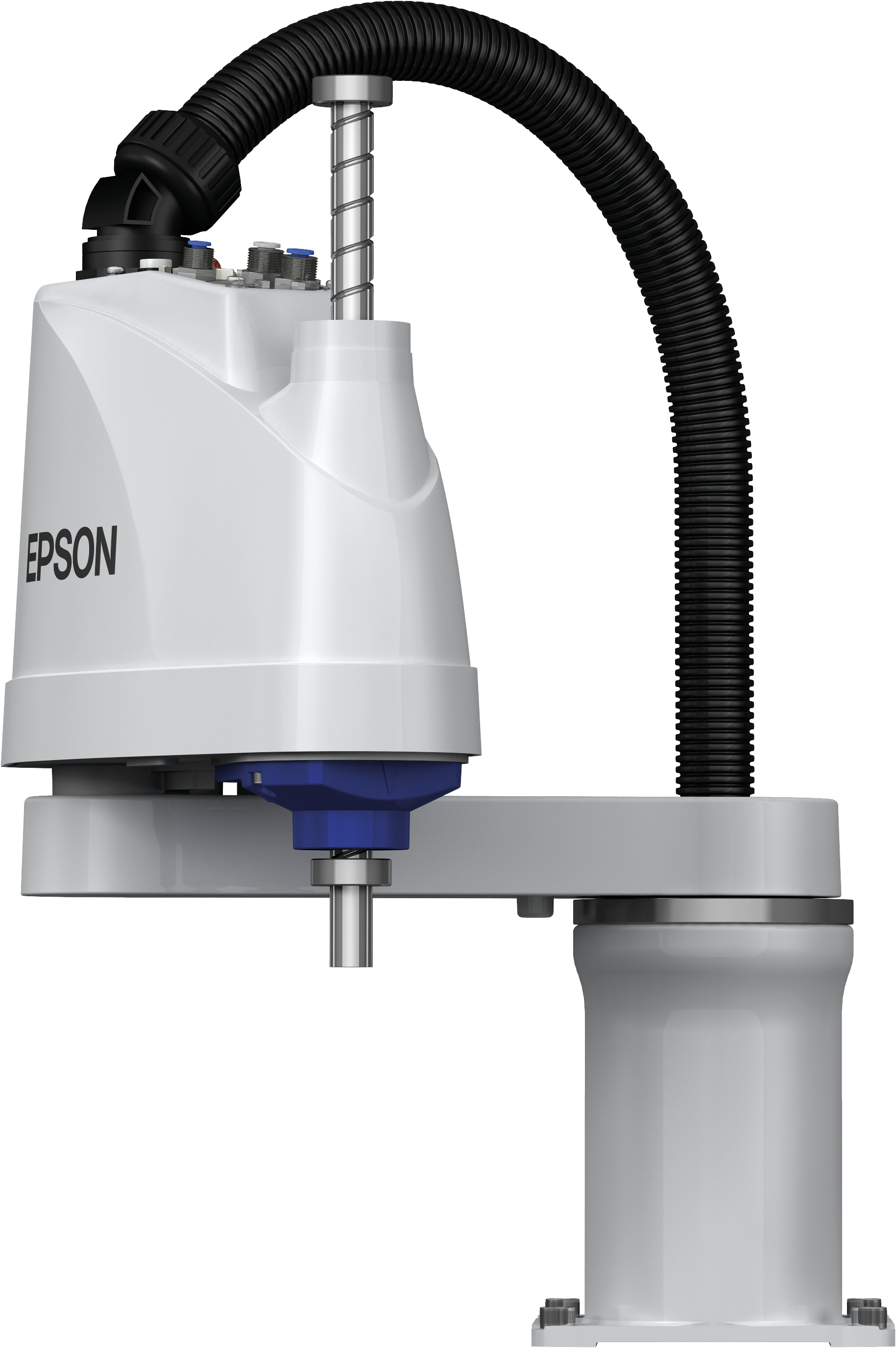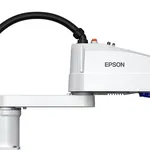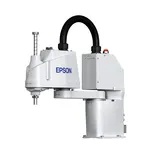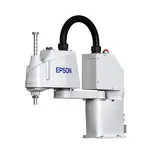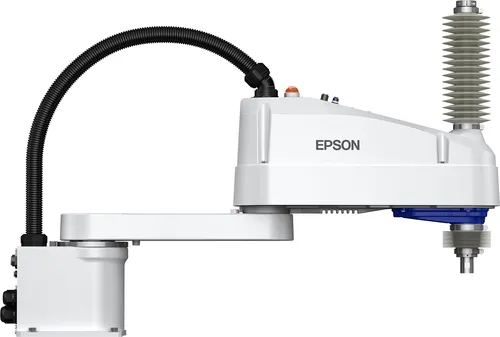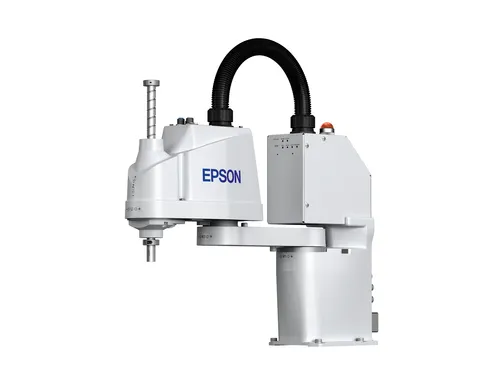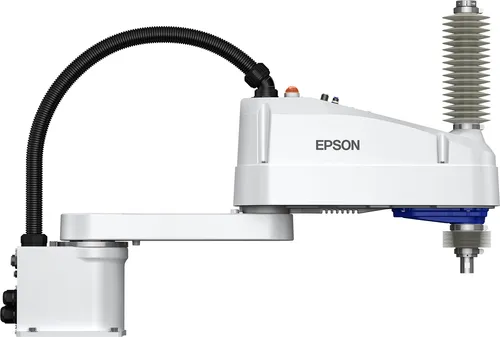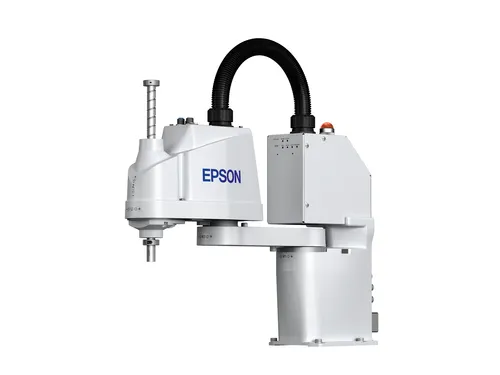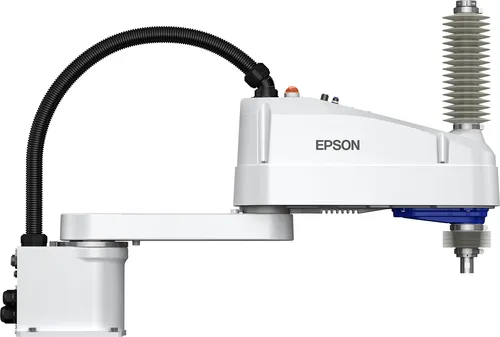


Epson R11N03R008 Industrial Robot
Specifications
Features
Features
| Product design |
SCARA (4 axis robot)
|
|---|---|
| Insertion force |
200 N
|
| Controller type |
RC90-B
|
| Payload |
5
kg
86% better than others
|
| Repeatability (horizontal) |
0.02
mm
19% better than others
|
| Repeatability (vertical) |
0.01
mm
55% better than others
|
| Repeatability (orientation) |
0.01°
|
| Inertia (nominal) |
0.02 kg/m²
|
| Inertia (max) |
0.3 kg/m²
|
| Z-axis outside diameter |
2.5
cm
18% better than others
|
| Z-axis inside diameter |
1.8
cm
17% better than others
|
| Operating range (horizontal) |
700
mm
42% better than others
|
| Operating range (vertical) |
170
mm
38% better than others
|
| Operating range (orientation) |
+/-360°
|
| Operating range |
Axis 1: +/- 132 °, Axis 2: +/- 150 °, Axis 3: 170 mm, Axis 4: +/- 360 °
|
| Operating speed (max) |
J1,J2: +/- 9800 mm/s, J3: +/- 1100 mm/s, J4: +/- 2500 °/s
|
| Mounting type |
Tabletop
|
| International Protection (IP) code |
IP20
|
| ISO cleanroom class |
ISO 4
|
| Certification |
EMV: EN 60950, CE Mark, ANSI/RIA R15.06-2012, NFPA 79 (2007 Edition), KC Mark, KCs Mark
|
Ports & interfaces
Ports & interfaces
| Pneumatic connectors |
3
|
|---|---|
| Number of DA-15 connectors |
1
|
Weight & dimensions
Weight & dimensions
| Weight |
22
kg
60% better than others
|
|---|---|
| Package weight |
56
kg
30% better than others
|
| Package depth |
910
mm
51% better than others
|
| Package width |
710
mm
15% better than others
|
| Package height |
830
mm
44% better than others
|
Logistics data
Logistics data
| Country of origin |
China
|
|---|---|
| Quantity per pack |
1 pc(s)
|
Operational conditions
Operational conditions
| Operating temperature (T-T) |
5 - 40 °C
|
|---|---|
| Operating relative humidity (H-H) |
10 - 80%
|
Disclaimer: Information on this page may need review. If you notice any discrepancies, please report them

The Epson R11N03R008 represents a significant entry into the industrial robotics sector, designed for precision and reliability in demanding manufacturing environments. While specific application details are not provided in the base specifications, the model number suggests a focus on robust performance and integration capabilities within automated production lines. Epson's established reputation in precision automation, particularly with its SCARA and 6-axis robots, indicates that the R11N03R008 likely inherits a legacy of high-quality engineering, advanced motion control, and user-friendly programming interfaces. This robot is poised to meet the needs of industries requiring consistent accuracy and high throughput, such as electronics assembly, automotive component manufacturing, and intricate material handling.
In the competitive landscape of industrial automation, the R11N03R008 aims to differentiate itself through a combination of technical prowess and operational efficiency. Its design likely emphasizes ease of maintenance, a compact footprint for flexible deployment, and seamless integration with existing factory systems and vision guidance. As manufacturers increasingly seek to optimize their operations, reduce errors, and enhance productivity, robots like the R11N03R008 are becoming indispensable tools. This review will delve into the potential strengths and considerations based on its classification as an industrial robot from a leading brand, analyzing its probable contributions to modern manufacturing paradigms.
Pros & Cons
Pros
What we love about this product
- High Precision: As an industrial robot from Epson, it is expected to offer high levels of repeatability and accuracy crucial for complex assembly tasks.
- Brand Reliability: Epson is a well-established leader in robotics, suggesting robust build quality and dependable performance.
- Integration Potential: Industrial robots are typically designed for seamless integration into existing automation systems and production lines.
- Versatile Application: Suitable for a wide range of industrial tasks including pick-and-place, assembly, and material handling.
Cons
Points to consider before buying
- Limited Public Specification Data: The provided data lacks detailed technical specifications (e.g., payload, reach, speed, axes) making a precise performance analysis difficult.
- Potential Integration Complexity: While designed for integration, specific compatibility with non-Epson systems may require additional investment or expertise.
- Cost Factor: High-end industrial robots often represent a significant capital investment, which may be a barrier for smaller operations.