

Advanced Pliers Engineering: Functionality, Materials, and Specialized Applications
Advanced Pliers Engineering: Functionality, Materials, and Specialized Applications
Pliers represent a cornerstone in any toolkit, their versatility stemming from fundamental mechanical principles applied to a vast array of specialized designs. At their core, pliers function as a Class 1 lever, where the pivot acts as the fulcrum between the applied force (handles) and the resistive force (jaws). The mechanical advantage gained is directly proportional to the ratio of the distance from the fulcrum to the handles versus the distance from the fulcrum to the jaws. This enables users to exert significant gripping or cutting forces with relatively modest hand pressure, making precise manipulation and powerful action possible across diverse applications, from fine electronics assembly to heavy-duty construction and automotive repair.
Fundamental Types and Their Technical Nuances
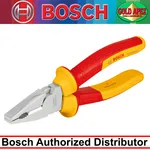
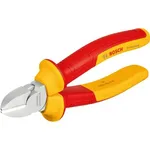
The engineering behind different pliers types is highly specialized. Combination pliers, often called lineman's pliers, integrate gripping, cutting, and sometimes crimping capabilities, making them a general-purpose utility tool. Their robust construction typically features hardened cutting edges capable of shearing copper and steel wire. Needle-nose pliers, conversely, prioritize precision and reach, featuring long, tapered jaws for intricate work in confined spaces, often with fine serrations to enhance grip on small components. Diagonal cutting pliers are specifically designed for clean wire cuts, utilizing a shear action with induction-hardened blades set at an angle for optimal leverage and minimal material deformation. Water pump pliers, or tongue-and-groove pliers, offer adjustable jaw capacity through a slip joint or box joint mechanism, accommodating a wide range of pipe and fastener sizes by varying the fulcrum point, thereby maximizing versatility and grip on cylindrical objects.
Materials, Construction, and Durability
The performance and longevity of pliers are intrinsically linked to their material science and manufacturing processes. Most high-quality pliers are forged from high-carbon alloy steels, such as chrome vanadium or chrome molybdenum, which provide exceptional tensile strength and toughness. These steels are often heat-treated through processes like induction hardening, specifically for cutting edges, to achieve Rockwell hardness ratings typically in the HRC 58-62 range. This targeted hardening ensures superior edge retention and resistance to blunting or chipping under repetitive stress, while the main body maintains ductility to prevent brittle fracture. Finishes like black oxide, chrome plating, or polishing not only enhance aesthetics but also provide crucial corrosion resistance, particularly important in humid or chemically aggressive environments. Joint construction is another critical element; precision-machined box joints offer greater stability and smoother action than simpler lap joints, minimizing side play and enhancing the tool's lifespan and accuracy.
Ergonomics, Safety, and Specialized Features
Modern pliers engineering extends beyond pure mechanical function to encompass user ergonomics and safety. Handle design is paramount for reducing hand fatigue and preventing repetitive strain injuries. Ergonomic grips often incorporate multi-component materials (e.g., a hard core for stability, a softer elastomer for comfort and anti-slip properties) molded to fit the hand's contours. For electrical applications, insulated pliers are critical, featuring VDE-certified handles designed to protect against up to 1000V AC, incorporating multiple layers of insulating material permanently bonded to the handle. Other specialized features include spring-loaded actions for reduced hand effort, locking mechanisms for hands-free gripping, and integrated wire strippers or crimpers for multi-functionality. The continuous innovation in pliers design focuses on optimizing the balance between raw mechanical power, precision, durability, and user-centric design to meet the evolving demands of professional and DIY tasks.
Key Technical Criteria for Pliers Selection
- Jaw Type and Profile: Evaluate the specific task (e.g., flat jaw for gripping sheets, serrated for round stock, needle nose for fine manipulation, diagonal for cutting). Consider jaw alignment, tip fineness, and gripping surface texture for slip resistance.
- Material Composition and Hardness: Prioritize high-carbon alloy steels (e.g., chrome vanadium) for strength and durability. Check Rockwell hardness ratings for cutting edges (typically HRC 58-62) to ensure edge retention and resistance to deformation under load.
- Handle Ergonomics and Insulation: Assess handle length for leverage, grip material (e.g., bi-material, molded PVC) for comfort and slip resistance, and insulation rating (e.g., VDE 1000V) for electrical safety when applicable.
- Joint Design and Action: Examine the pivot mechanism (e.g., lap joint, box joint, tongue and groove). A well-machined, smooth joint ensures precise action, minimizes play, and enhances longevity.
- Size and Reach: Match the overall tool length and jaw capacity to the workspace constraints and material dimensions, ensuring adequate leverage without compromising access.
- Finish and Corrosion Resistance: Look for protective coatings (e.g., black oxide, chrome plating, polished finish) to prevent rust and corrosion, extending the tool's lifespan in various environments.