


Deep Dive: Digital Body Thermometer Technologies and Usage
Understanding Digital Thermometer Core Technologies
Digital body thermometers primarily utilize one of two core technologies for temperature acquisition: thermistor-based contact sensing or infrared non-contact sensing. Thermistor thermometers, common in oral, rectal, and axillary applications, employ a small semiconductor device whose electrical resistance changes predictably with temperature. This change is precisely measured and converted into a digital temperature reading. Modern thermistors, often Negative Temperature Coefficient (NTC) types, offer high sensitivity and rapid response times, allowing for quick attainment of thermal equilibrium with the body site and subsequent accurate measurement.
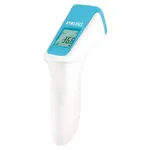
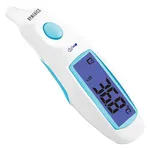
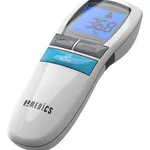
Infrared (IR) thermometers, conversely, measure thermal radiation emitted by the body. This technology is foundational for temporal artery (forehead) and tympanic (ear) thermometers. Temporal thermometers scan the skin over the temporal artery, interpreting the infrared energy radiated from the blood flow beneath the surface. Tympanic thermometers focus on the infrared energy emitted by the eardrum, which is considered a reliable proxy for core body temperature due to its proximity to the hypothalamus. Advanced IR sensors incorporate sophisticated algorithms to compensate for ambient temperature variations and emissivity differences, enhancing measurement accuracy.
Factors Influencing Measurement Accuracy
Achieving accurate temperature readings with a digital thermometer is contingent on several technical and procedural factors. For thermistor-based devices, proper probe placement and ensuring sufficient contact time are paramount. An insufficient insertion depth or premature removal will result in an erroneously low reading. Calibration stability of the thermistor circuit and the quality of the analog-to-digital converter are also critical hardware aspects influencing long-term accuracy. Many professional-grade devices undergo rigorous factory calibration to meet ISO and ASTM standards.
Infrared thermometers face unique challenges. For temporal scanners, variations in ambient temperature, user technique (e.g., scanning speed, angle), and even the presence of sweat or hair on the forehead can significantly impact results. Tympanic thermometers require correct probe alignment with the ear canal and an unobstructed view of the eardrum; cerumen (earwax) or anatomical variations can occlude the pathway, leading to inaccurate readings. Advanced models often feature guidance systems or multiple sensor points to mitigate these issues. Regular cleaning of the sensor lens is vital for both temporal and tympanic types to prevent debris from interfering with IR signal reception.
Advanced Features and Maintenance Considerations
Modern digital thermometers often integrate a suite of advanced features designed to enhance usability and data utility. These include fever alarms, typically an audible or visual alert when a specified temperature threshold is exceeded, and memory functions that store multiple previous readings, facilitating temperature trend analysis. Backlit displays improve readability in low-light conditions, while waterproof designs simplify sterilization and maintenance, particularly important for multi-user environments or pediatric use. Convertible scales (Celsius/Fahrenheit) and auto-shutoff functions contribute to user convenience and battery conservation.
Proper maintenance is essential for ensuring the longevity and continued accuracy of any digital thermometer. This involves regular cleaning of the probe or sensor according to manufacturer guidelines, typically with an alcohol wipe, and storing the device within its specified temperature and humidity ranges. Battery replacement should follow the recommended type and polarity. Periodic recalibration, while not always necessary for consumer-grade devices, may be recommended for clinical instruments or if persistent discrepancies are observed, ensuring the device continues to provide reliable health data over its operational lifespan.