

Deep Dive into Advanced Hearing Aid Technologies for Enhanced Accessibility
Understanding Form Factors and Functionality
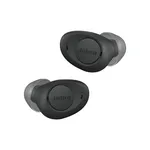
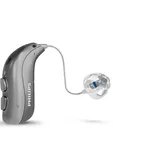
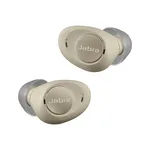
The selection of a hearing aid form factor is paramount for individuals with physical challenges, balancing aesthetic considerations with practical usability. Behind-The-Ear (BTE) models, often larger and more robust, offer easier handling of controls and battery doors, making them suitable for users with limited dexterity. Their greater power output also accommodates severe hearing losses. Receiver-In-Canal (RIC) devices provide a discreet profile while still offering advanced features and often superior sound quality due to the speaker's placement closer to the eardrum. In-The-Ear (ITE) or Completely-In-Canal (CIC) models, while highly discreet, can be challenging to insert, remove, and maintain for those with fine motor skill impairments, necessitating careful evaluation of the user's specific capabilities.
Digital Signal Processing and Environmental Adaptation
Modern hearing aids leverage sophisticated digital signal processing (DSP) platforms to analyze and optimize sound in real-time. This includes multi-channel compression, which processes different frequency bands independently to restore audibility without over-amplification. Adaptive noise reduction algorithms differentiate speech from background noise, enhancing clarity in challenging acoustic environments. Directional microphone technology, often automatic, dynamically focuses on sounds from the front, mitigating distractions from sides and rear. For users who might struggle with manual program changes, advanced automatic scene classification systems are invaluable, seamlessly transitioning between listening environments like quiet conversations, noisy restaurants, or outdoor settings.
Connectivity and Assistive Technology Integration
Seamless connectivity is a cornerstone for accessibility. Bluetooth Low Energy (LE) facilitates direct audio streaming from smartphones, tablets, and smart TVs, transforming hearing aids into personal wireless headphones for media consumption and phone calls. Telecoil (T-coil) technology remains vital, allowing users to connect wirelessly to public loop systems found in theaters, churches, and public transportation hubs, directly receiving amplified, clear audio free from reverberation. Furthermore, many contemporary devices integrate with dedicated remote controls or smartphone applications, offering intuitive control over volume, program changes, and even basic equalization, providing a significant advantage for users who find physical buttons difficult to manipulate. These applications often support geo-tagging, enabling automated program changes based on location, further simplifying the user experience. Robustness against drops and moisture, indicated by an IP (Ingress Protection) rating, is also a critical specification for active individuals, ensuring device longevity and consistent performance.