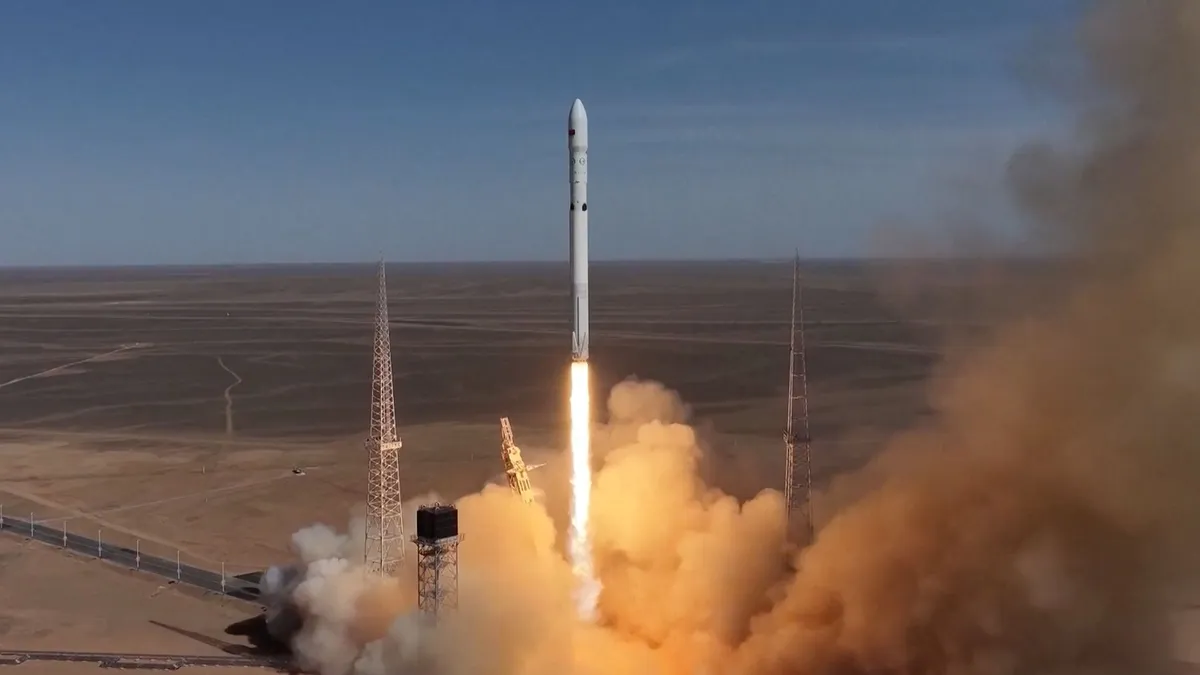
China has successfully conducted the inaugural flight of its Long March 12B rocket, a significant development in the nation's growing space capabilities. The launch, which took place on Monday, June 1, from the Jiuquan Satellite Launch Center in the Gobi Desert, was notable for its element of surprise. Unlike typical launch procedures that involve advance public notification, China did not issue airspace closure advisories prior to the liftoff, a departure from the standard safety practices observed by most spacefaring entities. This unannounced launch underscores a shift in operational transparency or potentially a new strategic approach to mission deployment.
Adding to the novelty of the mission, the Long March 12B carried functional payloads on its maiden voyage. Two satellites designated for the Qianfan internet megaconstellation were successfully deployed into low Earth orbit. This marks a critical step for China's ambitious satellite internet network, aimed at competing with global counterparts. The China Aerospace Science and Technology Corporation (CASC) confirmed the successful payload delivery in a recent update, highlighting the rocket's performance and the successful integration of its satellite passengers.
Long March 12B: Design and Capabilities
The Long March 12B rocket bears a striking resemblance to SpaceX's highly successful Falcon 9 launch vehicle. Standing approximately 230 feet (70 meters) tall, it is a two-stage rocket, with the first stage designed for potential reusability and powered by a cluster of nine engines. These engines utilize a kerosene and liquid oxygen propellant combination, mirroring the specifications of the Merlin engines that power the Falcon 9. This design choice suggests a focus on developing cost-effective and efficient launch solutions, drawing upon proven engineering principles in the field of reusable rocketry.
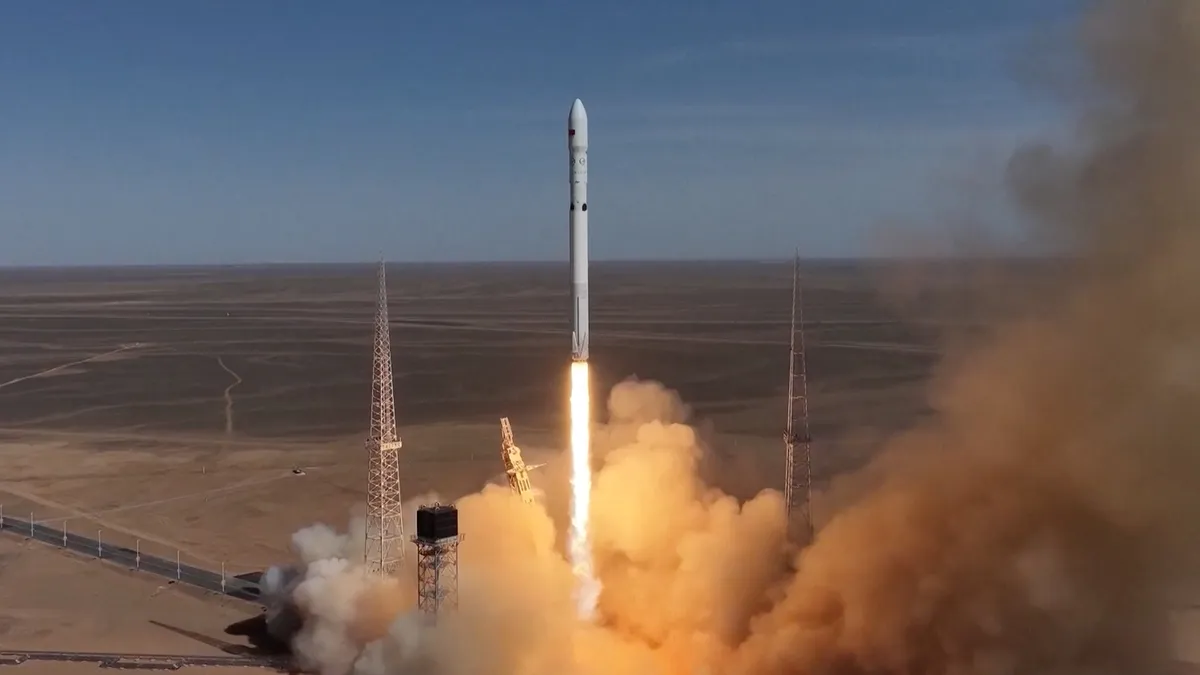 The visual similarities extend beyond general configuration to the specific engine layout and overall dimensions. However, CASC officials have indicated that the booster landing capability, a hallmark of the Falcon 9, will be implemented on future missions. For this debut flight, the focus was on achieving a successful ascent and payload deployment, rather than immediate stage recovery. This phased approach to reusability allows for rigorous testing and refinement of the rocket's systems before attempting complex landing maneuvers, which have been perfected by SpaceX through hundreds of successful recoveries.
China's Reusability Efforts and Competitive Landscape
The introduction of the Long March 12B signifies China's escalating commitment to developing reusable rocket technology. This endeavor is not isolated; CASC has been experimenting with reusable boosters on other Long March variants, such as the Long March 12A, which attempted a booster landing during its debut flight in December. Although that landing was unsuccessful, the rocket successfully reached orbit, demonstrating progress in the broader program.
Beyond state-backed initiatives, China's private space sector is also making strides in reusable rocket technology. Companies like Landspace, with its Zhuque-3 rocket, and Space Pioneer, with its Tianlong-3, have both conducted debut flights that, while facing landing challenges, showcased orbital insertion capabilities. These efforts collectively paint a picture of a rapidly advancing Chinese space industry, actively pursuing innovations in launch vehicle design and operational efficiency to compete on a global scale. Other notable projects in development include CAS Space's Kinetica-2, Galactic Energy's Pallas-1, and Deep Blue Aerospace's Nebula 1, all aiming to contribute to China's growing launch capacity with reusable or partially reusable systems.
Payloads and Future Implications
The successful deployment of two satellites for the Qianfan internet constellation is a critical step for China's global internet infrastructure ambitions. The Qianfan project, often compared to SpaceX's Starlink, aims to establish a comprehensive low Earth orbit satellite network to provide widespread internet access. The performance of the Long March 12B on this mission validates its capability to deliver substantial payloads, paving the way for future, more complex satellite deployments and potentially marking a new era for Chinese commercial space endeavors.
The future trajectory of China's launch capabilities, particularly with reusable technology, holds significant implications for the global space economy. As China expands its capacity for high-cadence, potentially lower-cost launches, it could reshape market dynamics and accelerate space exploration and commercialization efforts worldwide. The successful debut of the Long March 12B, despite its surprise launch and initial non-reusable configuration, demonstrates a clear and present advancement in China's strategic space program.