

Deep Dive: Understanding the Engineering and Efficacy of Advanced Skin Care Appliances
Understanding Core Technologies in Skin Care Appliances
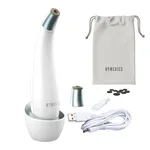
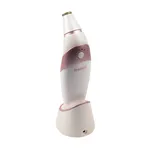
The efficacy of modern skin care appliances stems from their ability to deliver precise energy or mechanical action to the skin, targeting specific biological responses. For instance, facial cleansing brushes often employ sonic or ultrasonic pulsations, generating thousands of oscillations per minute. Sonic vibration typically operates at frequencies within the audible range, creating rapid side-to-side movements that dislodge impurities, exfoliate dead skin cells, and stimulate microcirculation without causing abrasive damage. Ultrasonic technology, conversely, uses frequencies above the audible range to create subtle vibrations that can enhance product penetration through sonophoresis, gently stimulating cells at a deeper level.
Microcurrent devices utilize low-level electrical currents that mimic the body’s natural bio-electric currents, specifically targeting the facial muscles. This electro-muscle stimulation (EMS) aims to re-educate muscles, providing a non-invasive lift and contouring effect. The precise amperage and waveform are crucial for effective and safe muscle contraction and ATP production, which is vital for cellular repair and collagen synthesis. Similarly, galvanic current devices use a direct current to either drive active ingredients deeper into the skin (iontophoresis) or draw impurities out (desincrustation), relying on the principle of charged ions.
Photon Therapy: LED Light & Its Applications
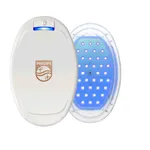
Light Emitting Diode (LED) therapy, a form of photon therapy, employs specific wavelengths of light to elicit therapeutic responses. Red light (typically 620-700 nm) penetrates deeply to stimulate fibroblasts, promoting collagen and elastin production, reducing inflammation, and accelerating wound healing. Blue light (around 400-470 nm) is primarily used for its antibacterial properties, effectively targeting Propionibacterium acnes (P. acnes) bacteria, making it beneficial for acne treatment. Near-infrared light (700-1000 nm), while often invisible, penetrates even deeper than red light, aiding in pain relief, cellular repair, and deeper anti-inflammatory effects. The power output, spectral purity, and uniform distribution of LED arrays are critical for optimal photomodulation.
Radiofrequency and IPL Hair Removal Systems
Radiofrequency (RF) technology generates heat in the dermal layers without significantly affecting the epidermis. This controlled thermal energy stimulates neocollagenesis (new collagen formation) and elastin production, leading to skin tightening and wrinkle reduction. Devices typically operate at frequencies between 0.5 to 10 MHz, with monopolar, bipolar, or multipolar configurations influencing penetration depth and treatment area. Intense Pulsed Light (IPL) devices, on the other hand, use a broad spectrum of light wavelengths to target chromophores in the skin, primarily melanin in hair follicles for hair removal or hemoglobin/melanin for treating vascular lesions and pigmentation. The energy, pulse duration, and filter selection are meticulously engineered to ensure selective photothermolysis, maximizing efficacy while minimizing collateral damage to surrounding tissues. Precision in calibration and the inclusion of cooling mechanisms are paramount for user safety and comfort.