For over four decades, the Islamic Republic of Iran has strategically positioned its regional influence by maintaining a significant buffer between its own territory and potential adversaries. This approach, involving substantial financial investment, has fostered an extensive network of proxy organizations, militias, intelligence apparatuses, and ideological movements spanning across Lebanon, Iraq, Syria, Gaza, and Yemen. This intricate structure has enabled Tehran to project power throughout the Middle East while deliberately avoiding direct military confrontation.
Key components of this strategy included Hezbollah, which served as the linchpin of Iranian regional operations, Hamas, providing persistent pressure on Israel, Shi'ite militias in Iraq extending Iranian influence into the Arab world, and Syria acting as a crucial geographic link for this entire network. For an extended period, this carefully constructed geopolitical architecture appeared robust, successfully creating what many Israeli and Western analysts termed a "ring of fire" encircling Israel and extending Tehran's sway across the Levant.
The Shifting Landscape of Iranian Regional Influence
However, the events that unfolded following October 7 may well be historically recognized not as a zenith of Iran's regional ambitions, but rather as the critical juncture where the inherent structural weaknesses of its strategy became undeniably apparent. Tehran's strategic calculation posited that igniting a broad regional conflict through its allied groups would effectively stall the burgeoning momentum of regional normalization, particularly the prospect of enhanced ties between Israel and Saudi Arabia. Iranian strategists operated under the assumption that a renewed cycle of warfare would alienate Arab governments from closer integration with Israel, re-establishing the Palestinian issue as the paramount political concern in the region. More critically, the regime aimed to unequivocally demonstrate that its "Axis of Resistance" retained the capacity to dictate the strategic rhythm of the Middle East through coordinated escalation and sustained instability.
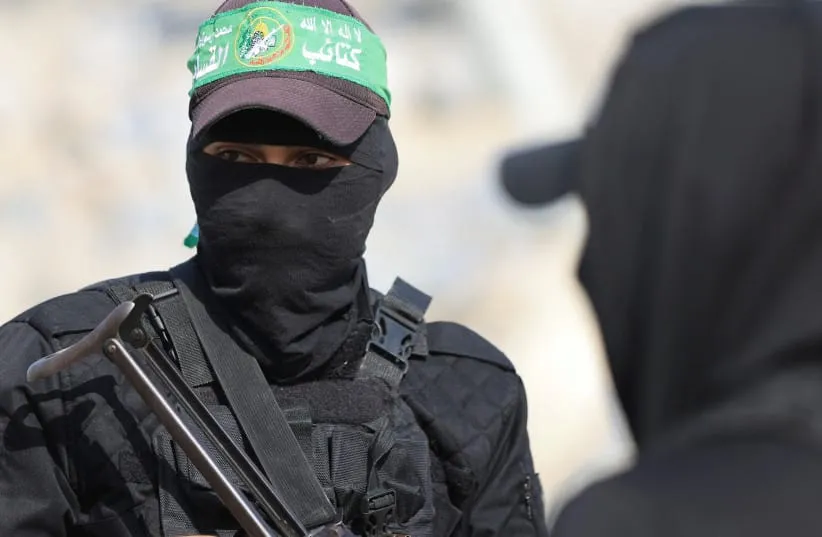
The subsequent reality proved to be the antithesis of these expectations. Hamas has sustained grievous military losses in Gaza, fundamentally weakening its operational capabilities. Hezbollah, long regarded as the preeminent non-state military actor in the region, is now confronting unprecedented strategic and psychological pressure. Across the Middle East, Iran's network of proxies increasingly appears overextended, fragmented, economically debilitated, and vulnerable to sustained military operations. What was envisioned by Tehran as a powerful display of strength has inadvertently exposed the inherent limitations of proxy warfare as a viable long-term regional strategy.
This significant reversal carries profound implications, as Iran's regional power has never been solely predicated on conventional military might. The Islamic Republic possesses neither the robust economic foundation, the advanced technological capacity, nor the extensive global reach characteristic of major world powers. Its influence has instead been a function of strategic geography, ideological appeal, plausible deniability, and the adept employment of asymmetrical warfare tactics. Tehran has long understood that any direct confrontation with Israel or the United States could pose an existential threat to the regime itself. Proxy warfare offered a sophisticated solution to this strategic dilemma.
The Erosion of the Proxy Shield
The coordinated actions of Hezbollah's rockets in Lebanon, the operations of Shi'ite militias in Iraq, Hamas's activities in Gaza, and the Houthi incursions in the Red Sea collectively served to create crucial strategic depth for Iran. Simultaneously, these actions compelled its adversaries to engage on multiple fronts, thereby diluting their focus and resources. This strategy effectively kept the battlefield beyond Iranian territory, allowing the regime to maintain a degree of plausible deniability and avoid the full spectrum of costs associated with direct warfare. However, this strategic shield is now demonstrably beginning to fracture.
The most significant shifts are currently unfolding in Lebanon. For decades, Hezbollah has functioned not merely as an armed faction but as the central pillar of Iranian influence within the Levant. Through its military dominance, political leverage, intelligence penetration, and extensive financial networks, Hezbollah effectively subjugated significant aspects of Lebanese sovereignty to Tehran's broader regional agenda. This dynamic resulted in Beirut often experiencing a state of perpetual paralysis whenever Lebanese national interests diverged from Iranian strategic priorities. Furthermore, Hezbollah's substantial missile arsenal played a critical role in regional deterrence, with the threat of catastrophic retaliation from Lebanon's northern front acting as a significant constraint on Israeli military decision-making and indirectly shielding Iran from direct retribution.
Presently, this established dynamic is undergoing a profound transformation. Israel's intensified operational campaigns since October 7 have substantially damaged Hezbollah's long-held aura of invincibility. While the organization undeniably retains formidable military capabilities, its psychological impact has been notably diminished. Concurrently, Lebanese society itself is exhibiting signs of profound exhaustion. Years of economic collapse, pervasive corruption, political gridlock, and societal decay have inflicted severe damage upon the nation. A substantial portion of the Lebanese populace no longer perceives perpetual confrontation with Israel as a viable path toward national dignity or survival. Instead, many are increasingly viewing Hezbollah's pervasive influence as a primary contributor to Lebanon's ongoing state of crisis and international isolation.
The economic realities confronting Lebanon are now emerging as a potent geopolitical force. The nation's continued viability is heavily dependent on external financial aid, particularly from Gulf Arab states and Western financial institutions. However, such assistance is unlikely to materialize without significant conditions. Saudi Arabia and its allied regional partners are improbable to commit to financing Lebanon's reconstruction efforts while Hezbollah continues to operate as an autonomous military entity aligned with Iran. Any credible process aimed at national recovery will invariably necessitate the strengthening of state institutions, more robust border control measures, a reduction in militia autonomy, and clear limitations on Iranian influence within Lebanese territory. While Lebanon may not formally align with the Abraham Accords in the immediate future, the overarching regional trajectory is steadily guiding Beirut towards a paradigm centered on economic integration, pragmatic security cooperation, and political stabilization, rather than continued revolutionary militancy.
From Tehran's perspective, this represents a significant strategic setback. Iran's established regional model fundamentally relied on maintaining a forward line of engagement far removed from its own borders. Hezbollah was not merely an ally but an integral component of Iran's external defense perimeter. Consequently, the weakening of Hezbollah has ramifications extending far beyond the borders of Lebanon itself.
Escalating Pressures and Shifting Deterrence
As the capabilities of Hamas diminish and Hezbollah faces escalating external pressures, Israel's strategic calculations are undergoing a corresponding evolution. For many years, the apprehension of massive retaliation emanating from Lebanon served as a crucial deterrent, effectively limiting direct confrontations with Iran. However, these constraints are progressively weakening. Israel's operational freedom across Syria and the wider region has demonstrably expanded. Iranian commanders, crucial weapons transfers, sensitive intelligence assets, and vital logistical networks are becoming increasingly exposed rather than shielded.
This evolving strategic landscape does not necessarily portend an imminent direct regional war. Nevertheless, it signifies a fundamental alteration in the dynamics of deterrence. The geographical distance between active battlefields and Iranian territory is demonstrably narrowing. Tehran can no longer operate under the assumption that proxy warfare alone will indefinitely contain conflicts beyond its borders. The regime is gradually losing the protective buffers it meticulously constructed over decades. Simultaneously, Iran is contending with escalating internal vulnerabilities, which amplify the dangers posed by its external strategic erosion.
The nation is grappling with severe economic hardship, rampant inflation, systemic corruption, political repression, widespread social discontent, and a palpable sense of generational exhaustion. A significant segment of the Iranian populace no longer perceives the regime's extensive regional engagements as indicators of strength. Instead, there is a growing sentiment that the government is expending vast resources to finance foreign militias while domestic living standards continue to decline. Historically, the Islamic Republic has managed internal instability by projecting confrontation outward. Regional escalation served to reinforce the regime's ideological narrative and simultaneously divert attention from pressing domestic crises.
However, as Iran's external strategic architecture weakens, internal pressures are increasingly intensifying rather than being diffused outward. This broader regional transformation is occurring at a time when a significant portion of the Middle East is charting a different strategic course. Arab governments are increasingly prioritizing economic modernization, technological advancement, energy diversification, infrastructure development, and overall strategic stability over protracted ideological conflicts. The Abraham Accords served as a clear demonstration that normalization with Israel could withstand political shocks that many had previously predicted would be insurmountable.
While public discourse across the region remains measured, the underlying trend is undeniable: major Arab states are now focused on economic resilience and long-term strategic competition, rather than perpetual revolutionary confrontation. Within this evolving geopolitical context, Iran's regional doctrine increasingly appears anachronistic. The Islamic Republic retains significant disruptive capabilities, including advanced missile programs, extensive intelligence networks, sophisticated cyber tools, remnants of its proxy forces, and a network of ideological adherents across multiple countries. Nevertheless, the perception of unstoppable Iranian expansionism that characterized much of the past two decades is steadily dissipating. The events of October 7 have demonstrably accelerated this process.
Impact Analysis
Tehran's strategic gamble that the conflict would halt regional integration and re-establish fear as the primary organizing principle of Middle Eastern politics has backfired. Instead, the war has starkly exposed the inherent fragility of the very system Iran spent decades meticulously building. For the first time in many years, the Islamic Republic increasingly projects the image of a regime struggling to preserve its dwindling spheres of influence amidst a rapidly changing geopolitical order, rather than that of a confident, ascending power. The ultimate legacy of October 7 may, therefore, not be the expansion of Iran's regional project, but rather the commencement of its gradual and prolonged unraveling.