



Advanced Technical Guide to Bedroom Vanity Design, Construction, and Integration
Materials and Construction Excellence
The foundational integrity and aesthetic longevity of a bedroom vanity are intrinsically linked to its material selection and construction methodology. Solid hardwoods, such as oak, maple, or cherry, offer superior durability, dimensional stability, and a rich, natural grain, though they typically represent a higher investment. Engineered wood products, including Medium-Density Fiberboard (MDF) and particle board, provide cost-effective alternatives, offering uniformity and excellent substrate for various finishes. MDF, known for its smooth surface and resistance to warping, is often veneered or painted. Particle board, while less dense, can be suitable for core structures when properly laminated. Finishes play a critical role, ranging from multi-layered lacquers that provide high resistance to moisture and abrasion, to natural oil finishes that enhance wood grain while allowing for easier repair. Robust joinery techniques, such as dovetail joints for drawers, dado joints for shelving, and mortise-and-tenon for frame construction, signify superior craftsmanship and contribute significantly to the vanity’s structural resilience over time.
Ergonomics and User Interface Design
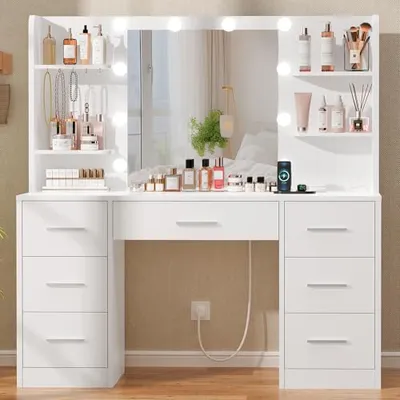
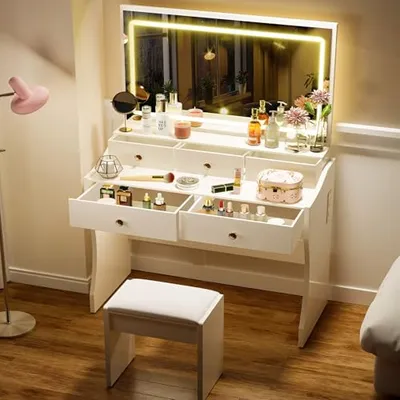
Optimal user experience with a bedroom vanity hinges on precise ergonomic considerations. Standard countertop heights typically range from 29 to 31 inches (74-79 cm) to accommodate comfortable seating with a standard vanity stool, ensuring sufficient legroom and allowing users to maintain a neutral posture. The depth of the vanity top is also critical, usually between 18 to 22 inches (46-56 cm), providing ample space for personal items without excessive reach. Mirror placement requires careful attention; its height and angle should allow for a full face view while seated. Integrated lighting systems, ideally positioned around the mirror or as dedicated task lighting, should minimize shadows and provide color-accurate illumination. LED lighting, with adjustable color temperatures (e.g., 2700K for warm ambient light to 5000K for clear task lighting) and dimming capabilities, enhances versatility and user comfort.
Storage Innovation and Organization
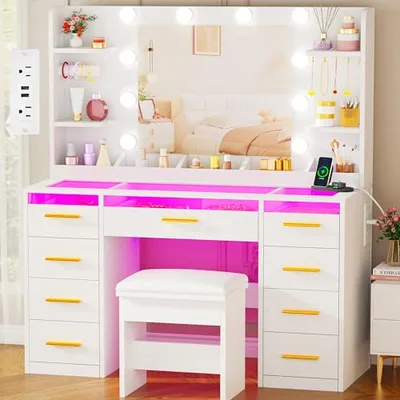
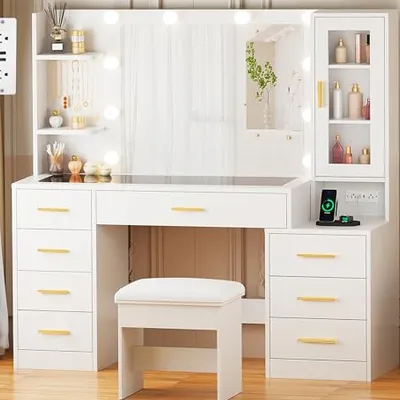
Effective storage is paramount for a functional bedroom vanity. Modern designs often incorporate a variety of solutions to organize cosmetics, tools, and accessories efficiently. Full-extension drawer glides ensure complete accessibility to drawer contents, preventing items from being lost at the back. Soft-close mechanisms are a premium feature that prevents slamming, reducing wear and tear while enhancing user comfort. Internal drawer dividers, adjustable shelves, and specialized compartments for brushes, jewelry, or styling tools maximize organizational potential. Some vanities integrate hidden compartments or lockable drawers for valuable items, adding an extra layer of security. The internal finishes of drawers, such as felt lining or smooth lacquers, protect stored items and facilitate cleaning.
Integrated Electrical and Smart Technologies
Contemporary bedroom vanities frequently incorporate electrical infrastructure to meet modern demands. Strategically placed integrated power outlets and USB charging ports eliminate the need for unsightly extension cords, providing convenient access for hair dryers, curling irons, phone chargers, and other electronic devices. Advanced vanities may feature touch-sensitive controls for mirror lighting, allowing users to adjust brightness and color temperature with ease. Smart mirrors, which can display time, weather, or even provide connectivity to smart home ecosystems, represent the vanguard of vanity technology, enhancing both utility and luxury. Ensuring compliance with electrical safety standards and proper grounding is critical for any integrated electrical components.