

Understanding Evaporative Coolers: A Technical Deep Dive
The Fundamental Principles of Evaporative Cooling
Evaporative cooling operates on the psychrometric principle of adiabatic saturation. Ambient air is drawn into the unit by a powerful fan, passing over specially designed pads that are continuously saturated with water by a circulating pump. As the dry air contacts the wet surface of the pads, a portion of the water evaporates. This phase change from liquid to vapor requires energy, which is absorbed from the sensible heat of the surrounding air. Consequently, the dry-bulb temperature of the air decreases significantly, while its relative humidity increases. This process converts sensible heat into latent heat, providing a natural and energy-efficient cooling effect without using refrigerants or complex compressor cycles.
Direct vs. Indirect Evaporative Cooling Architectures
Evaporative coolers are broadly categorized into direct and indirect systems based on their airflow paths. Direct evaporative coolers, the most common type, allow the supply air to directly mix with the humidified air from the evaporation process, resulting in a cooler but more humid airstream. These are simpler in design and highly efficient for their cooling output. Indirect evaporative coolers, conversely, employ a heat exchanger to cool the supply air without adding moisture. The humidified air from the evaporation process is exhausted, while the cooled, non-humidified air is delivered to the conditioned space. This offers drier cooling but at a higher complexity and typically lower cooling efficiency compared to direct systems.
Core Components and Their Operational Roles
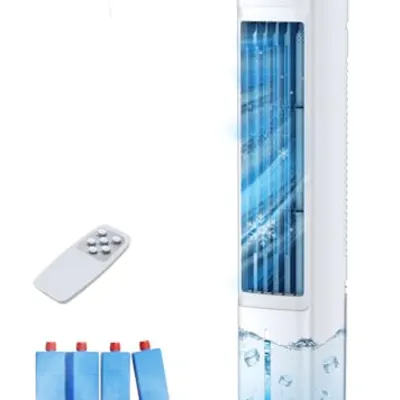
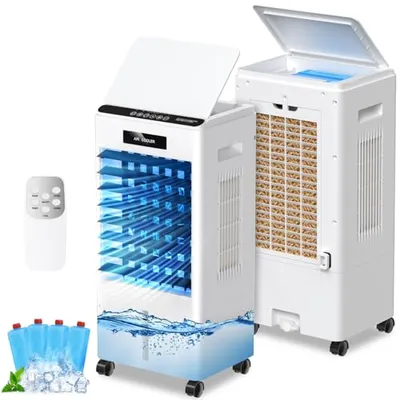
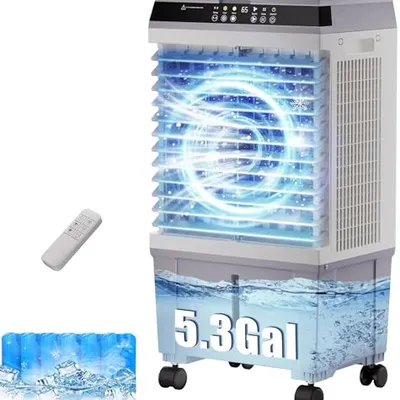
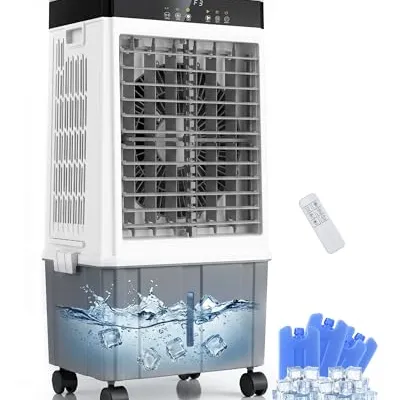
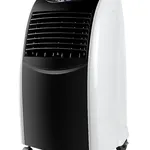
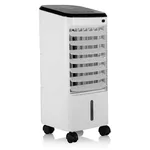
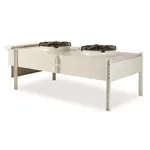
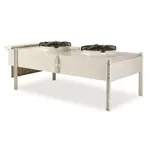
An evaporative cooler primarily comprises several key components working in concert. The most prominent is the fan or blower, responsible for drawing ambient air through the unit and distributing the cooled air. A water pump continuously circulates water from a reservoir to the top of the cooling pads. These cooling pads, which can be made from cellulose (often honeycomb-structured for high surface area) or aspen fibers, are the critical medium where water evaporation and heat exchange occur. The water reservoir, or tank, stores the necessary water supply for the cooling process, with its capacity determining the operational duration between refills. Filters may also be present to remove impurities from the air or water.
Performance Metrics and Environmental Impact
The effectiveness of an evaporative cooler is primarily measured by its airflow rate in Cubic Feet per Minute (CFM) and its cooling potential, often related to the ambient wet-bulb depression. A higher CFM ensures adequate air changes within a given space, calculated by dividing the room volume by the desired air changes per hour (typically 20-40 for residential). The wet-bulb depression, which is the difference between dry-bulb and wet-bulb temperatures, indicates the maximum theoretical cooling achievable; larger depressions signify greater cooling potential. These systems are highly energy-efficient, consuming up to 75% less electricity than compressor-based air conditioning units, largely due to their reliance only on a fan and a small pump. This translates to significantly lower operational costs and a reduced carbon footprint, making them an environmentally friendlier choice in suitable climates.
Essential Maintenance Protocols for Longevity
To ensure optimal performance and extend the lifespan of an evaporative cooler, regular maintenance is crucial. This includes routine cleaning of the water reservoir and internal components to prevent mold, mildew, and bacterial growth. Cooling pads should be inspected and replaced annually or biennially, depending on water quality and usage, as mineral buildup and deterioration can significantly reduce efficiency. In areas with hard water, descaling solutions may be necessary to prevent mineral deposits on the pads, pump, and water distribution system. During seasonal shutdowns, it is imperative to drain, thoroughly clean, and dry the unit to inhibit microbial growth and prepare it for storage, thereby maintaining hygiene and operational readiness for the next cooling season.