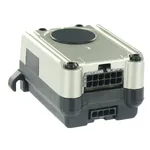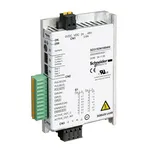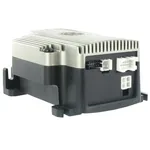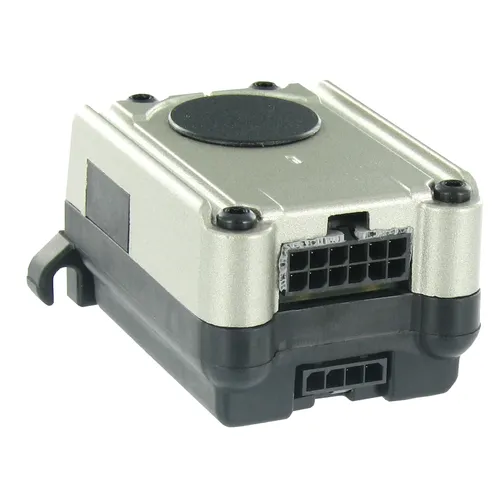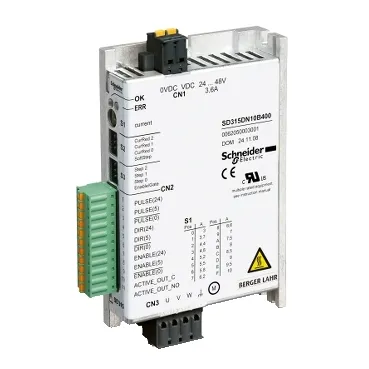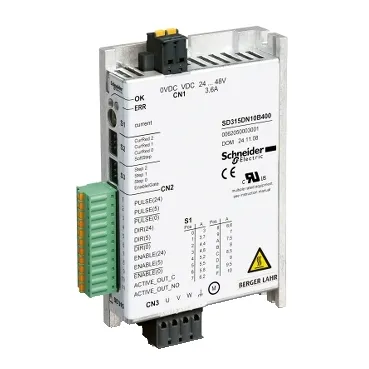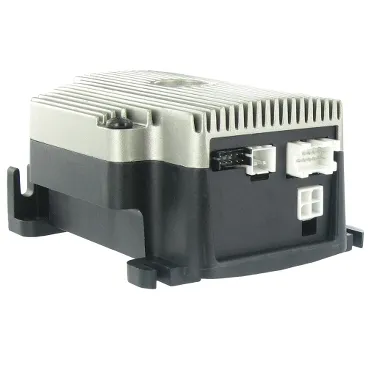


Schneider Electric SD218 Industrial Robot Controller
Specifications
Weight & dimensions
Weight & dimensions
| Width |
45
mm
25% better than others
|
|---|---|
| Depth |
59
mm
86% better than others
|
| Height |
33
mm
26% better than others
|
| Weight |
80
g
84% better than others
|
| Package width |
205
mm
43% better than others
|
| Package depth |
135
mm
95% better than others
|
| Package height |
82
mm
51% better than others
|
| Package weight |
228
g
76% better than others
|
Features
Features
| Operating temperature (T-T) |
0 - 50 °C
|
|---|
Technical details
Technical details
| Warranty period |
1.5 year(s)
|
|---|
Disclaimer: Information on this page may need review. If you notice any discrepancies, please report them

The Schneider Electric SD218 stands as a robust and capable solution within the demanding landscape of industrial robot control. Designed for integration into complex automated systems, this controller offers a compelling blend of performance, reliability, and scalability, making it a noteworthy contender for manufacturers seeking to enhance their operational efficiency and precision. Its architecture is engineered to handle the intricate motion planning and real-time feedback required for sophisticated robotic tasks, ensuring consistent and accurate execution across a wide range of applications.
In a market where uptime and adaptability are paramount, the SD218 positions itself as a strategic investment. Its specifications suggest a controller built for longevity and ease of integration into existing infrastructure, a critical factor for businesses looking to upgrade their automation capabilities without extensive disruption. The focus on industrial-grade performance underscores Schneider Electric's commitment to delivering solutions that meet the rigorous standards of modern manufacturing environments, from automotive assembly lines to intricate electronics production.
Core Functionality and Performance
At its heart, the SD218 is engineered to provide precise control over industrial robotic arms. While specific processing cores or memory configurations are not detailed in the provided context, the controller's designation implies a powerful processing unit capable of managing complex kinematic chains, sensor inputs, and communication protocols essential for advanced automation. Its design likely prioritizes low latency and high throughput to ensure seamless coordination between the robot's movements and external system events.
Connectivity and Integration
The integration capabilities of the SD218 are crucial for its value proposition. Industrial environments demand versatile connectivity options, and this controller is expected to support a variety of fieldbus protocols (such as EtherNet/IP, PROFINET, or Modbus TCP) for seamless communication with PLCs, HMIs, vision systems, and other automation components. This interoperability is key to building cohesive and intelligent automated workcells, allowing for centralized monitoring and control.
Reliability and Industrial Hardening
Schneider Electric's reputation in the industrial sector is built on reliability, and the SD218 is no exception. It is designed to operate within harsh environmental conditions, featuring robust construction to withstand vibration, temperature fluctuations, and electrical noise commonly found in factory floors. This industrial hardening ensures consistent performance and minimizes the risk of unexpected downtime, a critical consideration for production continuity.
Pros & Cons
Pros
What we love about this product
- Robust Industrial Design: Built to withstand demanding factory environments, ensuring reliability and longevity.
- Scalable Control Architecture: Designed to integrate into complex automation systems, supporting a wide range of robotic applications.
- High Performance Potential: Capable of handling intricate motion planning and real-time feedback for precise robotic movements.
- Versatile Connectivity Options: Expected support for multiple industrial fieldbus protocols, facilitating integration with existing automation infrastructure.
Cons
Points to consider before buying
- Limited Public Specification Detail: Absence of specific processor, memory, and I/O count details makes direct performance benchmarking challenging.
- Potential Integration Complexity: While versatile, deep integration may require specialized Schneider Electric expertise or software.