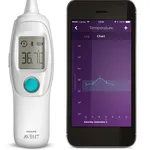
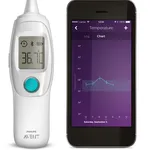
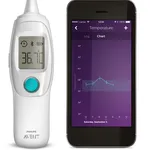
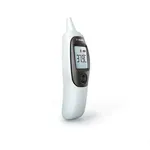
Navigating the complexities of monitoring a child's health often requires precision and ease of use, especially when it comes to temperature readings. The Philips AVENT uGrow Smart Ear Thermometer SCH740/86 enters this critical market segment as a digital ear thermometer designed for accuracy and user-friendliness. Its core functionality centers on providing quick and reliable temperature measurements, a vital feature for parents and caregivers needing to track fevers or general well-being.
Leveraging advanced sensor technology, the SCH740/86 aims to simplify the often stressful process of taking a child's temperature. The 'uGrow' designation suggests integration within a broader smart health ecosystem, potentially offering connectivity and data logging capabilities that go beyond traditional thermometers. This review will delve into the specifications of the Philips AVENT uGrow Smart Ear Thermometer SCH740/86 to assess its performance, features, and overall value proposition in the competitive digital thermometer landscape.
Key Features and Performance Analysis
The Philips AVENT uGrow Smart Ear Thermometer SCH740/86 is engineered for rapid and accurate temperature detection. Its infrared technology allows for non-invasive measurement directly from the ear canal, a method generally preferred for infants and young children due to its speed and comfort. The device promises a swift reading, typically within seconds, which is crucial for minimizing discomfort and ensuring cooperation from the child.
A standout aspect of this model is its potential smart capabilities, hinted at by the 'uGrow' branding. While specific connectivity protocols are not detailed in the provided specifications, smart thermometers often integrate with companion apps via Bluetooth. Such integration typically enables users to log temperature readings over time, track trends, and even receive personalized health insights or alerts. This data-driven approach can be invaluable for understanding illness progression and sharing accurate information with healthcare professionals. The design likely prioritizes an ergonomic grip for stable handling during measurement, and a clear, easy-to-read display is essential for immediate feedback. The focus on the ear canal also implies a need for a hygienic probe cover system to prevent cross-contamination and ensure accurate readings with each use.