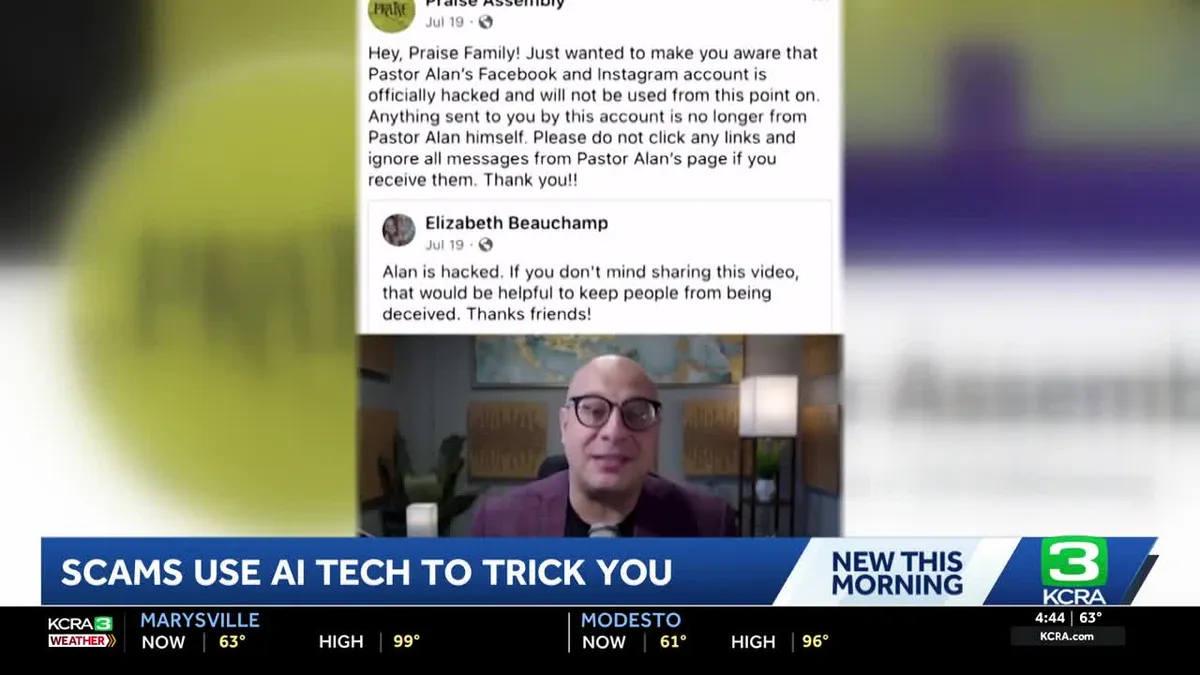
The rapid advancement of Artificial Intelligence (AI) presents a double-edged sword, offering incredible benefits while simultaneously empowering malicious actors. Scammers are increasingly leveraging sophisticated AI technologies to craft more convincing and pervasive fraudulent schemes, leading to unprecedented financial losses for individuals worldwide. From hyper-realistic voice cloning to AI-generated phishing content, the methods are evolving at an alarming pace, making it more challenging than ever for consumers to distinguish between legitimate interactions and sophisticated deception. This escalation in AI-driven fraud underscores a critical need for enhanced awareness and robust protective measures.
The sheer scale of financial losses attributed to these AI-enhanced scams is staggering, with reports indicating billions of dollars lost annually. These aren't just simple email scams; they are complex operations designed to exploit human psychology and trust. AI's ability to analyze vast amounts of data allows scammers to personalize their attacks, making them appear highly credible and targeted. As AI tools become more accessible, the barrier to entry for creating these deceptive campaigns lowers, potentially leading to an even greater surge in AI-powered fraud in the near future.
The Evolving Landscape of AI-Driven Scams
One of the most alarming trends is the use of AI in voice cloning. Scammers can now replicate the voice of a trusted individual, such as a family member or a bank representative, with remarkable accuracy. This allows them to conduct highly convincing phone scams, often impersonating urgent situations that require immediate financial action. For instance, a scammer might call claiming to be a relative in distress, using a cloned voice to solicit funds. Similarly, impersonating financial institutions or government agencies with synthesized voices lends an air of authority and legitimacy to fraudulent requests.
 The sophistication extends to text-based scams as well. AI models can generate highly personalized and grammatically correct phishing emails, text messages, and social media posts. These messages are often tailored to the victim's perceived interests or vulnerabilities, increasing the likelihood of engagement. Phony job listings that promise lucrative opportunities are another common tactic, with AI being used to create detailed descriptions and even fabricate employee testimonials, luring individuals into providing personal information or paying upfront fees for non-existent positions.
Deepfake Technology and Identity Theft
Deepfake technology, powered by AI, enables the creation of fabricated audio and video content that is difficult to detect. Scammers can use deepfakes to impersonate individuals in video calls, further enhancing the credibility of their fraudulent personas. This is particularly concerning in scenarios involving identity verification or sensitive transactions, where visual or auditory confirmation is typically relied upon. The potential for deepfakes to facilitate sophisticated identity theft schemes is immense, allowing criminals to bypass security measures and gain unauthorized access to personal accounts and financial assets.
 The implications for identity theft are profound. By combining AI-generated content with stolen personal data, scammers can construct highly believable false identities or gain access to existing ones. This can lead to fraudulent loan applications, unauthorized credit card usage, and even more complex financial crimes. The speed and scale at which AI can process and generate this type of information significantly amplify the threat compared to traditional identity theft methods.
The Financial Impact and Consumer Vulnerability
The financial ramifications of AI-powered scams are substantial, impacting millions of consumers globally. The sheer volume of fraudulent attempts, coupled with their increasing sophistication, means that more people are falling victim. Reports indicate a significant rise in the amount of money lost to these schemes, a trend that is expected to continue as AI technology becomes more integrated into everyday tools and accessible to a wider range of actors. This creates a challenging environment for consumer protection agencies and financial institutions.
 Consumers are particularly vulnerable due to a lack of awareness about the capabilities of modern AI in fraudulent activities. The convincing nature of AI-generated content can easily bypass a person's natural skepticism. Educational initiatives and technological countermeasures are crucial in equipping individuals with the knowledge and tools to identify and avoid these evolving threats. The financial sector also faces the challenge of adapting its security protocols to detect and prevent AI-driven fraud in real-time.
Defensive Strategies and Future Outlook
Combating AI-powered scams requires a multi-faceted approach involving technological innovation, consumer education, and regulatory oversight. Financial institutions are investing in AI-powered fraud detection systems that can identify anomalies and suspicious patterns indicative of AI-generated deception. These systems analyze transaction data, communication patterns, and behavioral biometrics to flag potentially fraudulent activities before significant damage occurs.
 Furthermore, public awareness campaigns are essential. Educating consumers about the various forms AI scams can take, such as voice cloning and deepfakes, empowers them to be more vigilant. Encouraging critical thinking and verification steps, like independently contacting known contacts through verified channels rather than relying on incoming calls or messages, can significantly reduce the success rate of these scams. As AI technology continues to advance, the development of AI-powered defense mechanisms will be paramount in staying ahead of fraudulent actors.
Impact Analysis
The increasing prevalence and sophistication of AI-driven scams represent a significant challenge to global cybersecurity and consumer trust. This trend necessitates a proactive and adaptive response from individuals, corporations, and governments alike. Failure to address this escalating threat could lead to further erosion of financial security for individuals and increased operational risks for businesses. Continuous innovation in AI detection and defense, coupled with widespread public education, will be critical in mitigating the impact of these evolving fraudulent tactics.