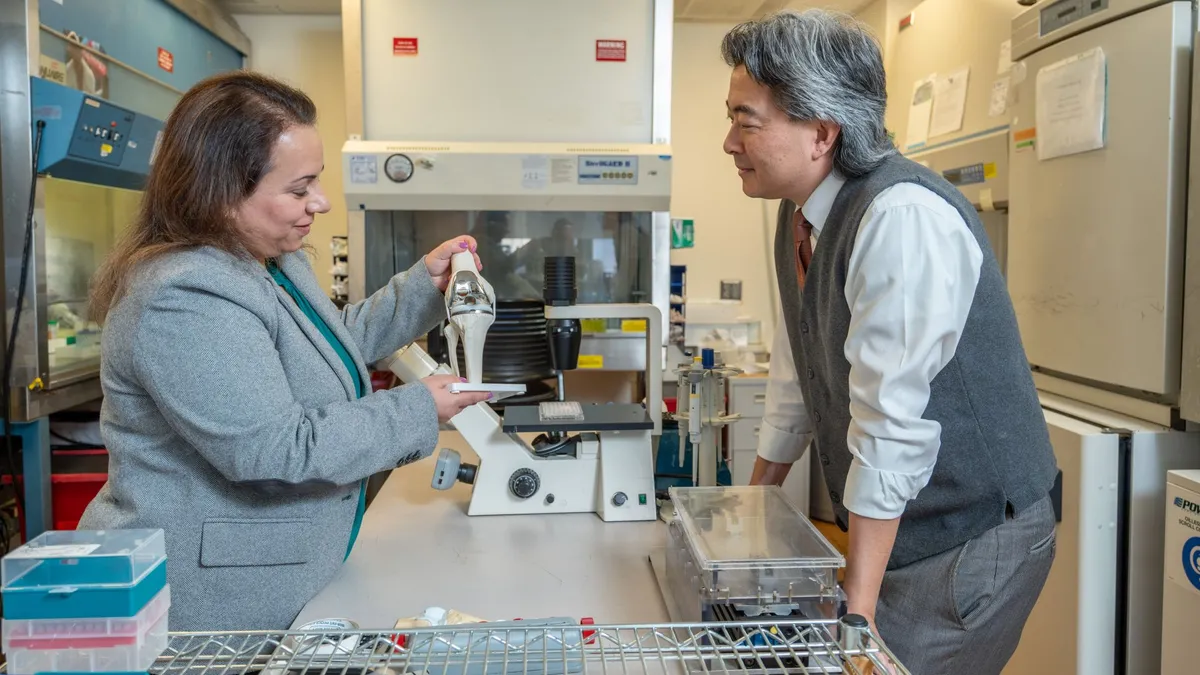
A groundbreaking development in orthopedic medicine is on the horizon, promising a new era for patients suffering from debilitating knee conditions. Researchers at Columbia University and the University of Missouri are spearheading the creation of NOVAKnee, a 'living' knee replacement implant designed to biodrugradually integrate with the patient's body. Unlike traditional metal and plastic implants, NOVAKnee utilizes a biodegradable scaffold infused with stem-cell-derived bone and cartilage. The ultimate goal is for the scaffold to dissolve over time, replaced by the patient's own regenerated tissue, fostering a more natural and potentially longer-lasting solution than current artificial joints.
This innovative approach addresses a critical unmet need, particularly for younger patients who often outlive conventional implants, necessitating painful and complex revision surgeries. The limitations of current prosthetics, which typically last 15-20 years, leave many individuals facing a difficult choice: undergo early replacement with the likelihood of future revisions, or endure years of pain and limited mobility while waiting for a later-stage surgery. NOVAKnee aims to circumvent this dilemma by offering a biological solution that could potentially be a one-time, lifelong replacement.
The NOVAKnee Innovation
The challenges posed by conventional knee implants are significant, especially for younger demographics. Dr. Clark Hung, a professor at Columbia University, explained that while current metal and plastic implants function well, their material limitations lead to failure within 15 to 20 years. This necessitates revision surgeries, which become more complex and risky with each subsequent procedure, as bone quality may degrade and bone loss can increase.
Dr. Nadeen Chahine, also a professor at Columbia, highlighted the particular difficulties faced by younger patients. They are often advised to delay knee replacement surgery, managing pain with medications and other interventions. However, this waiting period can lead to years of reduced quality of life. NOVAKnee offers a potential alternative, aiming to provide a living replacement that could last a lifetime, thereby restoring function and eliminating pain more permanently than existing technologies.
Addressing the Limitations of Current Treatments
The development of NOVAKnee is part of a larger initiative supported by the federally funded program, Novel Innovations for Tissue Regeneration in Osteoarthritis (NITRO). This program aims to explore diverse strategies for joint repair, including biological solutions. While other research within NITRO focuses on injectable therapies for bone and cartilage regeneration, the NOVAKnee team believes their implant approach is particularly suited for cases with significant joint damage.
Dr. Chahine noted that while injectables might offer pain relief or stimulate some regeneration, they may not be sufficient for patients with advanced articular surface damage, where much of the cartilage is already lost. In such severe cases, a structural implant that can provide immediate support and guide tissue regeneration, like NOVAKnee, may be more appropriate. The research team acknowledges the potential for competing technologies but maintains that their solution could still be vital for patients requiring revision surgeries or those with extensive cartilage loss.
The Science Behind the Living Implant
The design of the NOVAKnee scaffold is crucial to its function. Dr. Chahine explained that the scaffold is engineered to elicit a controlled biological response, guiding the body's natural healing processes. It is designed to gradually biodegrade, making way for newly synthesized bone and cartilage that integrates seamlessly with the patient's natural skeletal structure. The ambition is to create an implant that not only looks and acts like a knee but is composed of living, natural tissues.
The stem cells used in the NOVAKnee implant can be sourced from the patient themselves (autologous) or from donors (allogeneic). The autologous approach involves isolating the patient's own stem cells, cultivating them into bone and cartilage cells, and then seeding the scaffold before implantation. The allogeneic option, using donor cells, is being considered for patients who may not be ideal candidates for autologous therapy or have diminished regenerative capacity. Determining the optimal workflow for choosing between autologous and allogeneic sources is a key area of ongoing research.
Preclinical Development and Future Trials
Predicting the exact timeline for scaffold degradation and new tissue formation in humans is challenging. Current studies in lab animals provide insights into biodegradation rates and matrix synthesis, but the influence of mechanical loading—the stress placed on the knee during use—on these processes is still under investigation. The large animal studies, mandated by the NITRO program to simulate osteoarthritis, are critical for understanding how NOVAKnee performs under conditions similar to those in human patients.
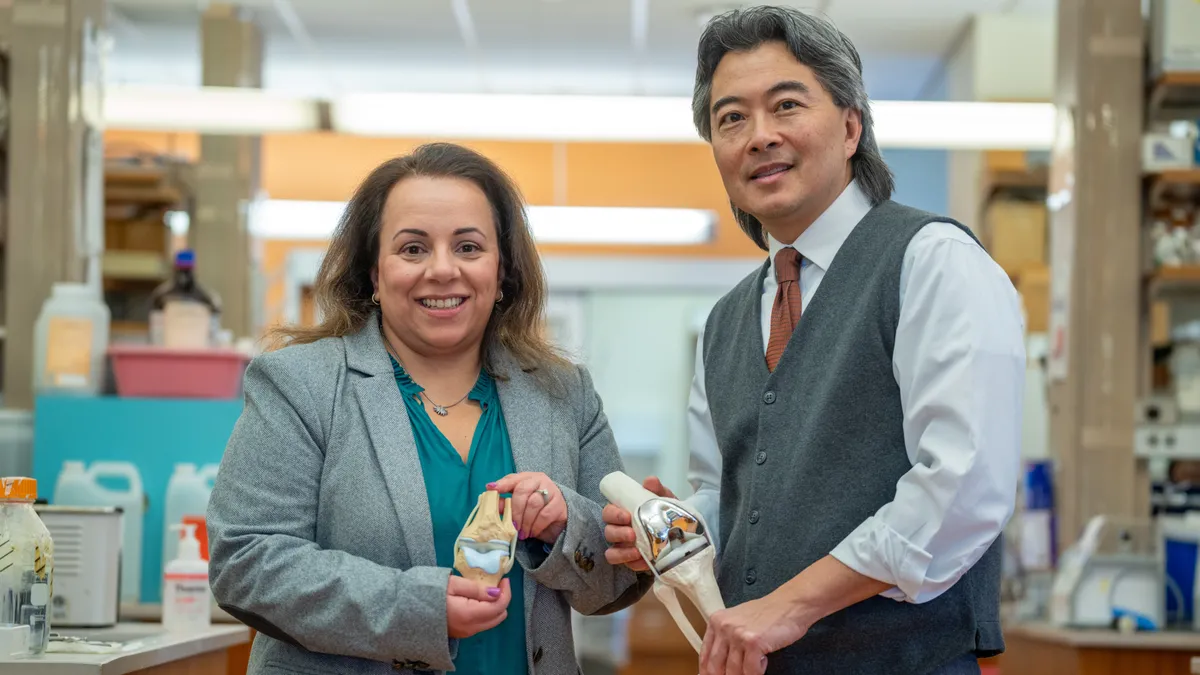 Dr. Hung highlighted that the research is progressing through a structured five-year program, including initial R&D, extensive large animal studies, and planned Phase I clinical trials for safety. If animal studies yield positive results and regulatory approval is obtained, human trials could commence within approximately 18 to 24 months, marking an ambitious but achievable timeline for this cutting-edge technology.
Patient Interest and Broader Applications
There is significant patient interest in NOVAKnee, with many individuals inquiring about participating in upcoming trials and whether they should postpone existing knee replacement plans. The research team acknowledges this enthusiasm and plans to provide updates through their website. The personal stories from individuals experiencing knee pain and disability underscore the urgent need for such advanced medical solutions.
Beyond the knee, the researchers envision NOVAKnee as a platform technology with potential applications for other major joints, and even smaller joints like the thumb. They noted that while the knee presents significant mechanical challenges, its widespread need made it a logical starting point. The potential to regenerate joints using a patient's own living tissues could revolutionize orthopedic care across a range of conditions, addressing the growing burden of osteoarthritis, particularly with an aging global population and increased reliance on digital devices contributing to thumb joint issues.
 The development of living joint replacements represents a paradigm shift in treating degenerative joint diseases, moving from purely mechanical solutions to biologically integrated therapies that aim to restore natural function and eliminate the long-term complications associated with artificial implants.