

A Deep Dive into Ice Cream Maker Engineering and Performance
Understanding the Core Technologies of Ice Cream Production
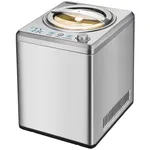
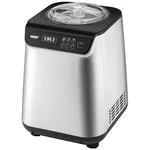
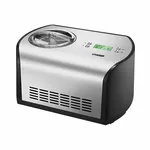
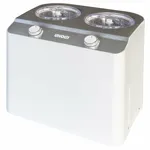
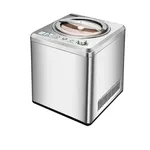
The engineering behind efficient ice cream production in home appliances centers on two primary mechanisms: active refrigeration via a compressor or passive cold transfer from a pre-frozen bowl. Compressor-based ice cream makers integrate a complete refrigeration cycle, typically using an R600a refrigerant, a compressor, condenser, expansion valve, and evaporator coil. This system continuously extracts heat from the churning mixture, maintaining temperatures consistently below freezing, often down to -25°C. The advantage is immediate use without pre-planning and the ability to produce multiple batches consecutively, making them ideal for frequent or high-volume users. The precise temperature control of these units also minimizes the formation of large ice crystals, which is paramount for achieving a smooth, creamy texture. Compressor models are inherently more complex and costly due to their sophisticated internal machinery.
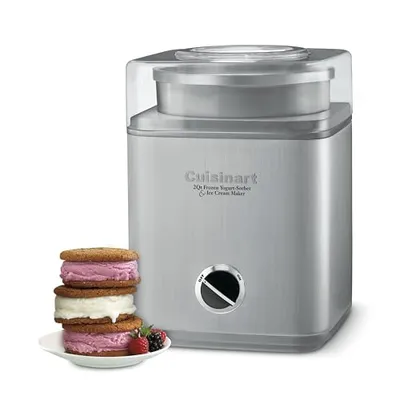
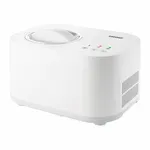
Conversely, freezer bowl models rely on a double-walled bowl filled with a non-toxic coolant, typically a saline or glycerol solution, which is pre-frozen in a standard freezer for 12-24 hours. When the machine operates, the cold energy stored in this eutectic solution is passively transferred to the ice cream base. While simpler and more affordable, their performance is contingent on the freezer bowl's initial temperature and its thermal capacity, which depletes during churning. This often limits them to a single batch production before requiring another lengthy refreeze cycle. The efficiency of heat exchange in these models is crucial, with materials like anodized aluminum or food-grade plastics used for the bowl interior to facilitate optimal thermal conductivity.
Motor Dynamics and Churning Precision
The motor is the heart of an ice cream maker, dictating its ability to consistently churn the mixture and incorporate air, a process known as overrun. A robust motor, typically a universal AC or DC motor, provides the necessary torque to agitate increasingly viscous mixtures as they freeze. Cheaper models often feature lower torque motors that can struggle or even seize when the mixture thickens, leading to inconsistent texture and potentially damaging the unit. High-quality machines employ powerful, often gear-driven, motors designed to maintain a consistent RPM (revolutions per minute) even under load. The churning paddle, often made from durable plastic or stainless steel, is meticulously designed to scrape the frozen layer from the inner wall of the bowl, ensuring uniform freezing, while simultaneously folding air into the mixture. This aeration is critical for achieving the light, fluffy consistency characteristic of premium ice cream, preventing it from becoming a dense, icy block.
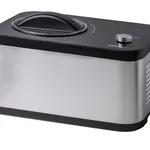
Beyond basic churning, advanced ice cream makers incorporate features like automatic sensors to detect optimal consistency, preventing over-churning which can lead to buttering or a loss of desired texture. Some units also include pre-cooling functions for compressor models, rapidly chilling the bowl before the mixture is added, or a 'keep cool' function that maintains the dessert at serving temperature for an extended period after churning. Material selection for internal components, particularly the churning paddle and mixing bowl, significantly impacts both performance and longevity. Stainless steel bowls offer superior thermal transfer and durability compared to plastic, while robust, food-grade plastics are often chosen for paddles due to their non-stick properties and ease of cleaning, ensuring hygiene and facilitating efficient processing without damaging the bowl's surface.