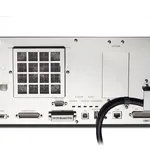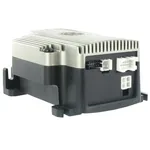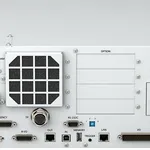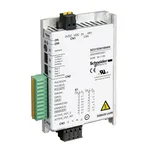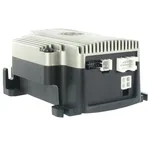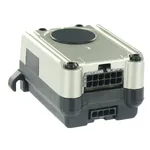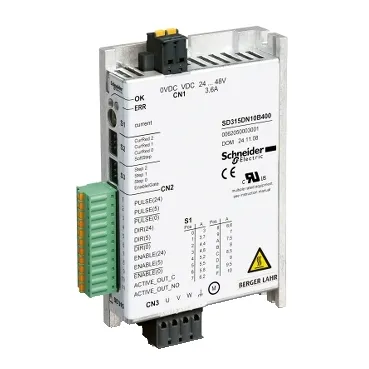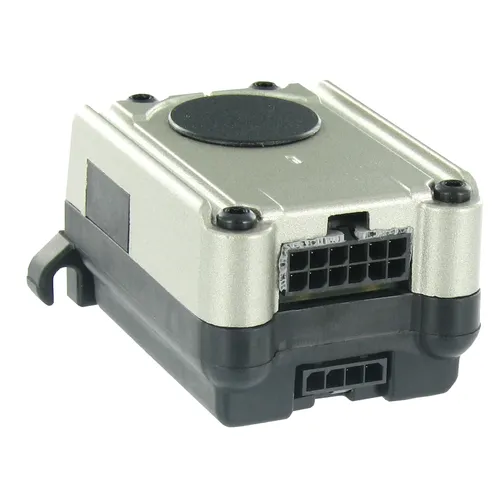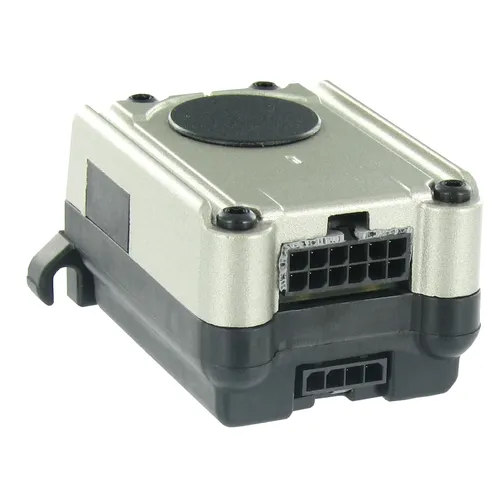


Schneider Electric SD215 Industrial Robot Controller
Specifications
Weight & dimensions
Weight & dimensions
| Width |
76
mm
55% better than others
|
|---|---|
| Depth |
99
mm
63% better than others
|
| Height |
54
mm
21% better than others
|
| Weight |
340
g
59% better than others
|
| Package width |
197
mm
54% better than others
|
| Package depth |
134
mm
20% better than others
|
| Package height |
90
mm
59% better than others
|
| Package weight |
478
g
58% better than others
|
Features
Features
| Operating temperature (T-T) |
0 - 50 °C
|
|---|
Technical details
Technical details
| Warranty period |
1.5 year(s)
|
|---|
Disclaimer: Information on this page may need review. If you notice any discrepancies, please report them

The Schneider Electric SD215 Industrial Robot Controller represents a significant advancement in automated manufacturing, designed to meet the rigorous demands of modern industrial environments. This controller is engineered for precision, reliability, and seamless integration within complex production lines. Its robust architecture supports advanced motion control algorithms, enabling sophisticated robotic operations across a wide spectrum of applications, from intricate assembly tasks to heavy-duty material handling.
Distinguished by its comprehensive feature set and adherence to high-performance standards, the SD215 is poised to become a cornerstone for businesses seeking to enhance productivity and operational efficiency. Its compatibility with various robotic platforms and its intuitive programming interface further solidify its position as a versatile and powerful solution for industrial automation challenges. The controller's design prioritizes ease of maintenance and long-term operational stability, making it a strategic investment for forward-thinking enterprises.
Key Features and Performance
At its core, the Schneider Electric SD215 is built for demanding industrial settings. While specific processor or memory details are not provided in the base specifications, the controller's classification implies a high level of computational power necessary for real-time trajectory planning, sensor data processing, and multi-axis coordinated motion control. Its industrial-grade construction ensures resilience against environmental factors such as dust, vibration, and temperature fluctuations, crucial for uninterrupted operation on the factory floor.
The controller's strength lies in its adaptability. It is designed to interface with a broad range of industrial robots and peripheral equipment, including vision systems, safety devices, and other automation components. This interoperability is facilitated by support for standard industrial communication protocols, ensuring smooth data exchange and system integration. The programming environment, though not detailed here, is expected to offer a balance of power and user-friendliness, catering to both experienced automation engineers and those new to advanced robotics programming.
Pros & Cons
Pros
What we love about this product
- Industrial-Grade Durability: Engineered for harsh environments, ensuring reliability in demanding factory settings.
- Versatile Integration: Designed for compatibility with a wide array of robotic systems and peripheral equipment.
- Advanced Motion Control: Supports sophisticated algorithms for precise and coordinated multi-axis robot movements.
- High Performance: Capable of handling complex real-time processing for demanding automation tasks.
Cons
Points to consider before buying
- Limited Public Specification Detail: Lack of detailed technical specifications (e.g., processor, memory, I/O count) makes in-depth technical comparison challenging.
- Potential Integration Complexity: While versatile, advanced integration may require specialized expertise and significant configuration.