The rapid advancement of Artificial Intelligence (AI) has sparked widespread debate across numerous industries, prompting questions about job displacement and the future of creative professions. As a fashion photographer, the emergence of sophisticated AI image generators naturally raises concerns about the longevity of my career. To address these anxieties directly, I undertook an experimental approach, subjecting several leading AI image generation platforms to a rigorous test. The objective was to ascertain the immediate threat posed by AI to my profession and to identify areas where human creativity and technical expertise remain indispensable. My findings suggest that while AI is a powerful tool, its current capabilities, particularly in complex creative fields like fashion photography, do not render human professionals obsolete.
My testing methodology centered on replicating real-world client scenarios. I utilized existing campaign imagery I had previously shot, feeding these references into AI generators with specific prompts to create new campaign visuals or lifestyle shoots. The aim was to assess if AI could produce viable, cost-effective alternatives to traditional high-production shoots, which often involve significant expenses for location, model fees, and travel. The potential cost savings for clients are substantial, making AI's purported efficiency a compelling prospect. However, the practical execution revealed significant limitations, indicating that the economic advantage is not as straightforward as it might initially appear.
Assessing AI's Current Capabilities in Fashion Photography
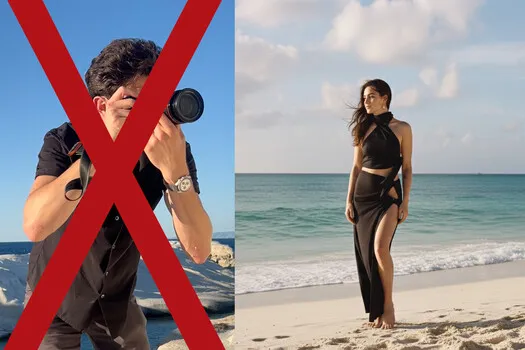
The initial phase involved providing an AI generator with an original fashion photograph and a detailed prompt requesting the same outfit on a different model, set against a new backdrop—specifically, a beach in Mexico. The AI produced an image that, while lower in resolution than ideal for professional use, demonstrated a basic grasp of the prompt. The outfit was rendered correctly, and the model's pose appeared natural, complemented by plausible lighting and simulated wind effects in the hair. This suggests AI can interpret and replicate fundamental elements of a photograph. However, the output's resolution limitations are a significant drawback for high-quality commercial applications. 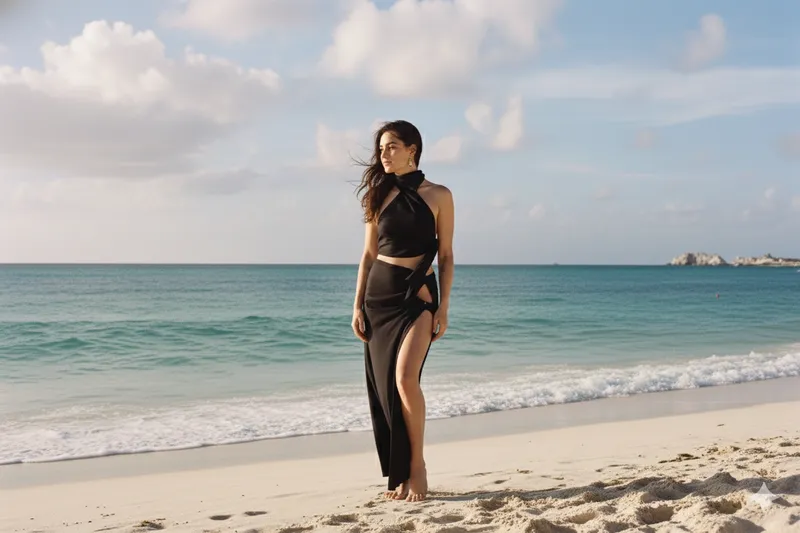
A subsequent test involved generating an image of two models interacting, wearing different outfits, and oriented in a vertical format suitable for social media. Utilizing the Nano Banana Pro AI, the initial output depicted two friends, seemingly holding hands. A notable issue was the AI's tendency to replicate tattoos present on the original reference model, suggesting a literal interpretation of the provided data rather than creative synthesis. This indiscriminate copying of details, like tattoos, across different elements of the image highlighted a lack of nuanced understanding. Refining the prompt to exclude the tattoo and alter the models' interaction proved challenging, with the AI repeatedly producing similar, unsatisfactory results, even after multiple attempts and variations in prompting techniques.
Challenges with Consistency and Detail Accuracy
The attempts to generate a specific scene with two models walking side-by-side, without holding hands, and in a vertical orientation, proved consistently problematic. Despite rigorous and technically precise prompting, the AI frequently failed to meet the specified criteria. Even when seeking advice from the AI itself on how to improve results and reapplying its suggestions, the output remained stubbornly similar to previous failed attempts. Introducing a different vertical reference image led to the AI adopting the vertical format but altering the background to one of the earlier reference images and changing the outfit, demonstrating a lack of coherent data integration.
As a fashion photographer, maintaining the integrity of the clothing presented is paramount. Advertising imagery must accurately reflect the product's appearance. My experiments showed that AI struggled with this fidelity. With each iterative prompt, the clothing rendered by the AI began to deviate further from the original designs. Even when directed to reference the original outfit precisely and place the models in a new setting, such as an Italian street, the AI continued to exhibit inconsistencies. Specific requests for framing (three-quarter body shot, mid-thigh crop, adequate headroom) were often ignored or misinterpreted. This led to scenarios where models appeared as twins, wore incorrect outfits, or produced images that were starkly different from the initial prompt's intent. 
The Limitations of AI in Creative Workflows
The iterative process of refining prompts to achieve even a semblance of the desired outcome underscored a critical limitation: consistency. While AI can be instructed to prioritize consistency, its performance tends to degrade over multiple revisions. Subtle alterations in model appearance and clothing details, which might be minor in a single output, compound significantly through AI-generated revisions. This often results in outputs that diverge from, rather than converge towards, the user's objective. A key observation was that AI might adhere to one aspect of a complex prompt while completely disregarding others, leading to a fragmented and unreliable creative process.
The practical utility of AI-generated images, based on my tests, is currently limited to basic applications. The resolution issues observed mean that prints are not feasible, and even digital use is restricted to lower-resolution platforms like social media or basic website elements. The effort required to achieve even a marginally acceptable result was substantial, often exceeding the time a conventional photoshoot would take. Furthermore, many of the generated images still bore the unmistakable hallmarks of AI creation, lacking the polished authenticity that clients expect.
AI as a Tool, Not a Replacement
The question of whether to abandon traditional photography is premature. AI, in its current state, functions more effectively as an ancillary tool that can be integrated into an existing workflow rather than a complete replacement for creative professionals. The Coca-Cola commercial example, which required extensive prompting over a month for a short sequence, illustrates the significant investment of time and iterative effort still needed to achieve professional-grade results with AI. While AI will undoubtedly improve, and users will become more adept at prompting, the need for human direction and creative oversight remains critical.
The fashion industry, like many others, benefits from the decades of experience and nuanced understanding that seasoned creative professionals bring. The ability to conceptualize, direct, and execute complex visual narratives is a skill that AI has yet to master. Moreover, the very act of prompting AI effectively creates a new niche for professionals skilled in guiding these tools. These individuals will translate creative visions into prompts, ensuring that AI serves as a powerful assistant, enhancing rather than replacing human creativity and expertise.