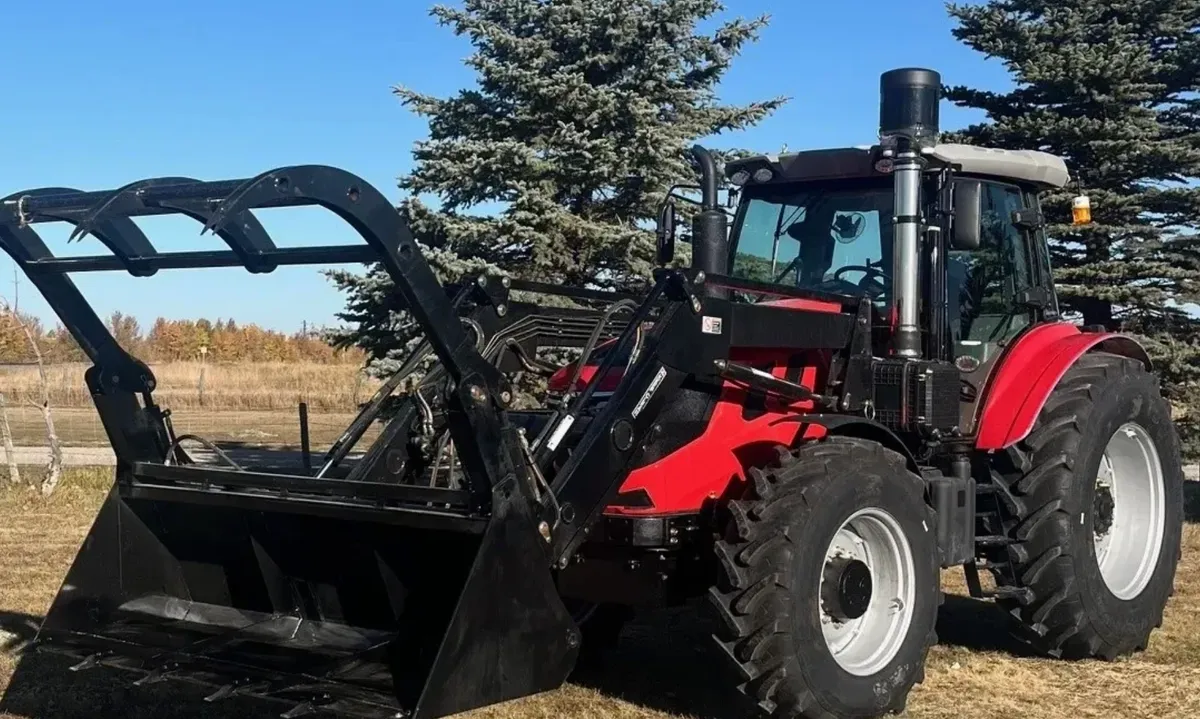
The agricultural sector is witnessing a significant shift as farmers increasingly seek alternatives to the high-tech, repair-restricted machinery that has become commonplace. For years, the secondary market for older, simpler John Deere tractors has seen a surge in demand. This trend is driven by the desire for machinery that farmers can repair themselves, bypassing the complex and often costly repair monopolies established by major manufacturers. Recognizing this widespread pain point, Canadian company Ursa Ag has introduced a new line of tractors designed with repairability and simplicity at their core, challenging the prevailing industry norms.
Ursa Ag's initiative stems from direct feedback from farmers experiencing considerable frustration. Issues such as digital rights management systems locking users out of their own equipment, minor sensor failures rendering tractors inoperable, and critically, crops perishing during harvest seasons due to lengthy repair delays, have fueled the demand for change. The company’s approach echoes a broader consumer movement seen in sectors like consumer electronics, where brands like Fairphone and Framework are championing modularity and repairability in response to manufacturer control over device maintenance and upgrades.
The Ursa Ag Tractor: A Return to Simplicity and Reliability
Ursa Ag markets its tractors as “no frills” and “built to last,” emphasizing a design philosophy centered on essential functionality and ease of maintenance. Doug Wilson, a representative from Ursa Ag, stated that the company was motivated by a clear market need for new machinery that eschews excessive technology and is straightforward to service. This aligns with observations that many farmers, even in the current technological landscape, are actively seeking out older models, such as those from 1987, specifically because they lack integrated computer systems. The core philosophy behind Ursa Ag's tractor is to provide a reliable workhorse that can be easily operated and maintained throughout the farming day.
The introduction of the Ursa Ag tractor has generated substantial buzz within agricultural communities. Following its showcase at a Canadian farm show, where it garnered attention from Farms.com, the company reported being contacted by over a thousand farmers from approximately 30 countries. This widespread interest, including a unique handwritten inquiry from a French farmer who does not use computers, underscores the global nature of the demand for repairable and less technologically dependent farm equipment. 
Addressing the Repair Monopoly Challenge
For years, the issue of manufacturer repair monopolies, particularly exemplified by John Deere's control over parts, software, diagnostics, and repair guides, has been a significant concern. Critics have long urged farmers to "vote with their wallets" by choosing alternative manufacturers. However, a viable alternative offering similar repairability standards has been largely absent until now. Ursa Ag is effectively filling this void by providing a new tractor that offers a clear alternative to the dominant repair practices in the industry. This move could potentially inspire other manufacturers to develop and offer low-tech, repairable versions of various farm implements and machinery.
Wilson further commented on the broader trend away from unnecessary technological integration. He noted that a significant portion of his customer base still uses basic flip phones, indicating a consumer preference for practicality over advanced features in everyday tasks. This sentiment, he believes, is transferable to other household appliances and gadgets, such as refrigerators equipped with screens that display internal contents, which many may find to be an unnecessary complication. The core principle is that technology should serve a functional purpose and not introduce complexity for its own sake.
The Role of Technology in Modern Farming
While Ursa Ag champions simplicity, there is an acknowledgment that advanced technology has its place in specific agricultural applications. Wilson conceded that the sophisticated technology found in high-end, million-dollar tractors, such as those from John Deere, offers significant value for certain complex farming operations. However, he stressed that this advanced technology is often only essential for a small fraction, perhaps 5%, of a farm's total activities. For the vast majority of common tractor applications on a farm, the intricate technological components are simply not required. He drew an analogy to calculators, noting that the level of technology embedded even in a simple calculator often far exceeds what is necessary for most farming tasks.
Ursa Ag has produced fewer than 100 tractors to date but is actively working to triple its production capacity in response to the overwhelming demand observed over recent months. The company's strategy addresses a fundamental need for reliable, maintainable agricultural equipment, suggesting a potential market shift towards prioritizing durability and user-serviceability alongside performance.
Impact Analysis
Ursa Ag's approach to manufacturing repairable, low-tech tractors has significant implications for the agricultural industry and potentially for other sectors reliant on complex machinery. By directly challenging the established repair monopolies, the company not only provides a much-needed alternative for farmers but also intensifies the debate around the right-to-repair movement. This could lead to increased pressure on major manufacturers to adopt more open repair policies, offer more accessible parts and diagnostic tools, and potentially develop their own lines of simpler, more repairable equipment. The success of Ursa Ag may serve as a catalyst for innovation in product design, encouraging a broader industry trend toward sustainability and consumer empowerment through enhanced product longevity and user control.