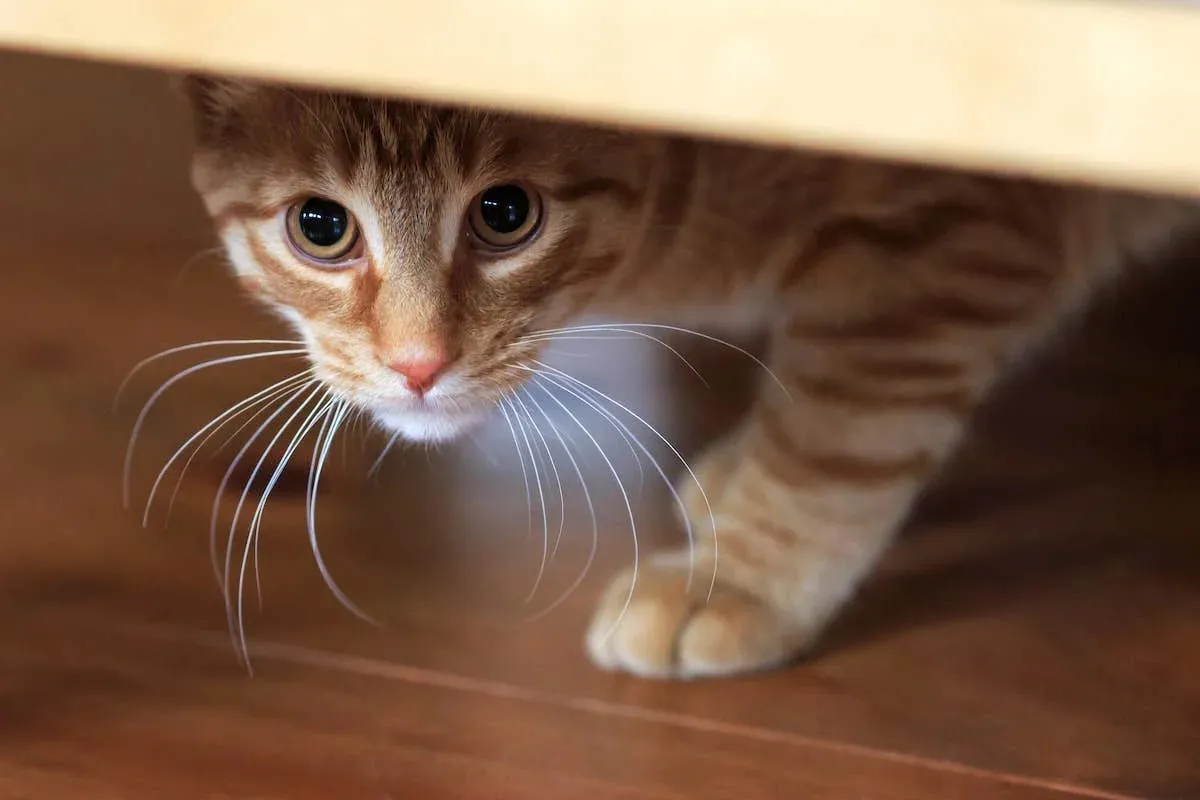
A heartwarming video has captured the attention of pet enthusiasts worldwide, showcasing an unlikely duo – a senior cat and a young puppy – engaging in a playful game of hide-and-seek. The feline, despite its age, demonstrates remarkable agility and enthusiasm for the game, initiated by its much smaller canine companion. The footage highlights the surprising interspecies bonds that can form between different animals, challenging common assumptions about cat and dog relationships.
The game unfolds as the cat strategically retreats behind a door, disappearing from the puppy's view. The puppy, driven by curiosity and a clear desire to interact, diligently searches for its feline friend. The cat, in turn, emerges only to be quickly outmaneuvered by the puppy’s search, prompting a swift return to its hiding spot. This gentle back-and-forth dynamic underscores the potential for playful interaction between species, proving that age and species differences need not be barriers to friendship and fun.
The Dynamics of Interspecies Play
Cats and dogs, while both popular companion animals, possess distinct evolutionary histories and behavioral tendencies. Dogs, as descended from pack animals, often exhibit social behaviors geared towards group interaction and cooperative play. Their communication styles, including tail wagging and body posture, are typically more overt and readily interpreted by humans and other dogs. Cats, on the other hand, evolved from more solitary hunters, valuing independence and employing subtler communication cues. A high tail, for instance, can signal friendliness in dogs but caution or arousal in cats, while a wagging tail often indicates excitement in dogs but agitation in cats. This fundamental difference in communication can sometimes lead to misunderstandings during play.
Despite these inherent differences, the video serves as a compelling example of how cats and puppies can not only coexist but also engage in complex, coordinated play. The success of such interactions often hinges on early socialization and careful introductions. Providing a safe and predictable environment where both animals can explore and interact at their own pace is crucial. This includes ensuring each animal has access to personal space where they can retreat and decompress, fostering a sense of security that underpins positive social engagement.
Can Cats and Puppies Form Friendships?
The notion of cats and dogs being natural adversaries is largely a misconception. While their evolutionary paths and communication methods differ significantly, positive interspecies relationships are not only possible but common. Success often depends on the individual personalities of the animals, their prior experiences, and the manner in which they are introduced and integrated into a shared living space.
Experts suggest that early socialization is key. Introducing a puppy to a resident cat, or vice versa, during the formative developmental stages can significantly increase the likelihood of a harmonious relationship. Gradual introductions, supervised play sessions, and positive reinforcement for calm interactions help build trust and mutual respect. Creating separate territories within the home, where each animal can feel secure and undisturbed, is also vital for managing potential conflicts and promoting overall well-being.
Developmental Milestones in Play Behavior
The ability of a puppy to engage in a game like hide-and-seek, especially with a much older and different species, indicates a significant developmental milestone. This type of play requires cognitive abilities such as object permanence (understanding that the cat still exists when out of sight) and an understanding of interactive game rules. For a young puppy, this demonstrates advanced social learning and an eagerness to engage with its environment and companions.
Similarly, the cat's participation suggests a level of comfort and trust with the puppy, as well as a capacity for playful interaction that transcends typical solitary feline behaviors. The cat's strategic hiding and re-emergence point to an understanding of the game's mechanics and an engagement with the puppy's efforts to find it. This reciprocal engagement is a testament to the adaptable and social nature of both species when provided with the right circumstances.