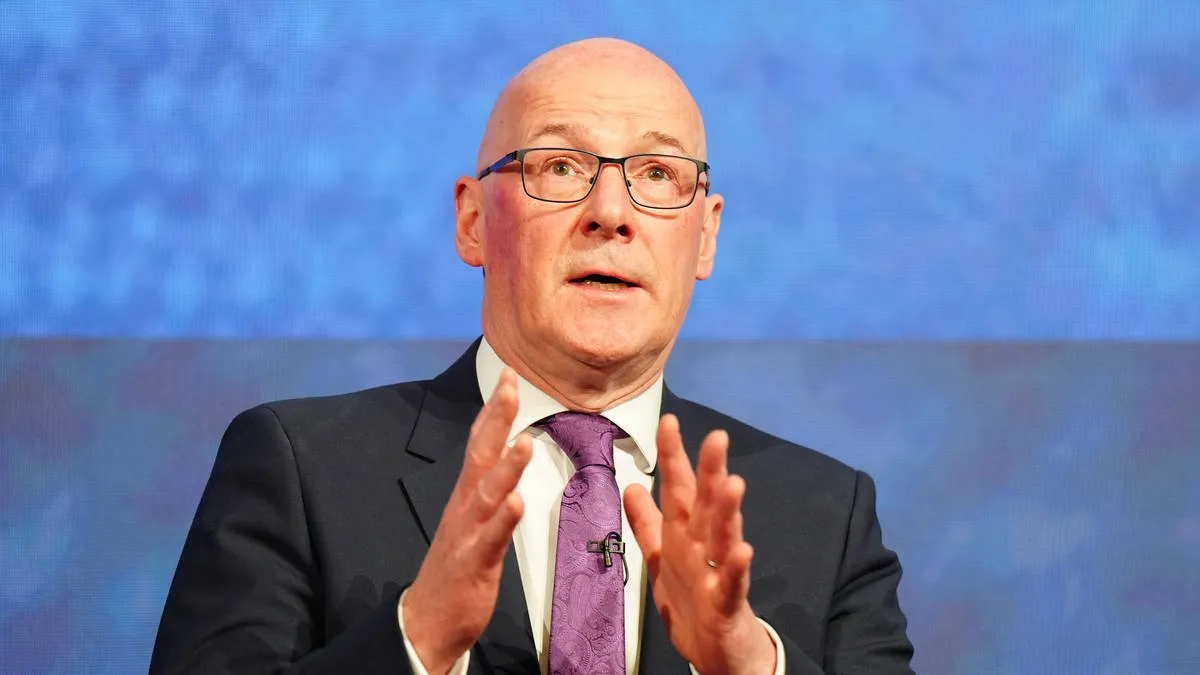
CBI Scotland, a prominent business organization, has issued a stark call to action for the new Scottish Government, urging First Minister John Swinney to make economic growth the paramount priority. Facing a projected budget deficit nearing £5 billion by the end of the decade, the group emphasizes that Scotland is in a critical 'race against time' to stimulate its economy. This imperative is underscored by mounting pressures on public finances, necessitating a concerted and urgent effort to foster sustainable prosperity.
The business confederation has outlined a comprehensive five-point strategy designed to invigorate Scotland's economic landscape and set it firmly on a path toward recovery and expansion. This initiative comes at a pivotal moment for the Scottish Government, as it seeks to navigate complex fiscal realities and capitalize on emerging opportunities. CBI Scotland stresses that collaborative efforts between the government, other political parties, and the business community are essential to achieving robust and inclusive growth.
CBI Scotland's Five-Point Plan for Economic Revitalization
Reforming the Business Rates System
A central tenet of CBI Scotland's proposal is the urgent reform of the current business rates system, which the organization deems 'broken.' The existing framework is criticized for penalizing investment and hindering growth, creating an environment that is less conducive to business expansion. A modernized system is envisioned to incentivize, rather than deter, the entrepreneurial activities crucial for economic advancement.
The current structure of business rates is seen as a significant impediment, discouraging companies from undertaking new projects and expanding their operations. By overhauling this system, CBI Scotland aims to create a more equitable and supportive environment that encourages investment in infrastructure, technology, and workforce development, thereby fostering a more dynamic business ecosystem.
Streamlining Planning Processes
The business group also highlights the need for significant reform within the planning system, describing it as 'cumbersome' and a major 'brake on economic growth.' Numerous projects are reportedly stalled or delayed due to bureaucratic inefficiencies, preventing their timely initiation and contribution to the economy. Addressing these bottlenecks is presented as a critical step in unlocking Scotland's development potential.
Implementing more agile and efficient planning procedures will enable businesses to bring projects to fruition more quickly, from new housing developments to commercial infrastructure. This acceleration is expected to stimulate job creation, attract further investment, and contribute to broader economic uplift across various sectors.
Closing the Tax and Regulatory Gap
CBI Scotland advocates for closing the existing tax and regulatory disparities between Scotland and the rest of the United Kingdom. The organization argues that these differences create an uneven playing field, making Scotland a less attractive destination for both talent and investment. Harmonizing these aspects is seen as vital to enhancing Scotland's competitiveness on a national scale.
By aligning tax policies and regulatory frameworks more closely with those of the wider UK, Scotland can present a more unified and appealing proposition to potential investors and skilled workers. This parity is expected to encourage businesses to establish or expand their presence, fostering a stronger, more integrated national economy.
Investing in Transformative Infrastructure
The plan also calls for substantial commitment to 'transformative infrastructure' projects, specifically mentioning initiatives like the Clyde Metro and comprehensive rail electrification. These large-scale developments are viewed as essential for modernizing Scotland's transportation networks and enhancing its connectivity, thereby 'getting Scotland moving again' and facilitating economic activity.
Significant investment in modern, efficient infrastructure is crucial for supporting business operations, improving the movement of goods and people, and attracting foreign direct investment. Projects such as widespread rail electrification and the development of integrated urban transit systems like the Clyde Metro are key components of a forward-looking economic strategy.
Developing a National Skills Strategy
Finally, CBI Scotland proposes the creation of a national skills strategy coupled with reforms to the apprenticeship levy. The objective is to better align the skills system with current and future labor market demands, moving away from reactive 'year-to-year firefighting.' This strategic approach aims to equip the workforce with the necessary competencies for evolving industries and technological advancements.
A well-defined national skills strategy, supported by a flexible and effective apprenticeship levy system, will ensure that Scotland's workforce is prepared for the demands of high-value, innovative sectors such as AI, life sciences, and the energy transition. This proactive stance on skills development is vital for maintaining a competitive edge in the global economy.
Government Response and Future Outlook
First Minister John Swinney affirmed that achieving higher levels of sustainable economic growth is a foundational objective for his government, stating that many other key policy goals, including poverty reduction and public service enhancement, are contingent upon increasing national wealth. He indicated that his newly appointed cabinet reflects this commitment, and the government will utilize all available instruments to support Scotland's success.
The CBI Scotland director, Michelle Ferguson, underscored the urgency, emphasizing that in a climate of rising costs and global instability, economic growth is the sole critical objective. She highlighted Scotland's inherent strengths in talent, innovation, and expertise, suggesting that with the right backing for people and businesses, this potential can be translated into tangible improvements in living standards and community well-being across the country.
Impact Analysis
The assertive stance taken by CBI Scotland highlights a critical juncture for Scotland's economic policy. The emphasis on growth as the primary driver for achieving broader social objectives, such as poverty reduction and improved public services, signals a potential shift in governmental focus. The success of Swinney's administration may well be measured by its ability to implement the ambitious reforms proposed by the business community, particularly in areas like fiscal management, infrastructure development, and skills training. Failure to address these issues could exacerbate existing fiscal challenges and hinder Scotland's long-term economic prospects, while successful implementation could unlock significant potential for sustainable prosperity.