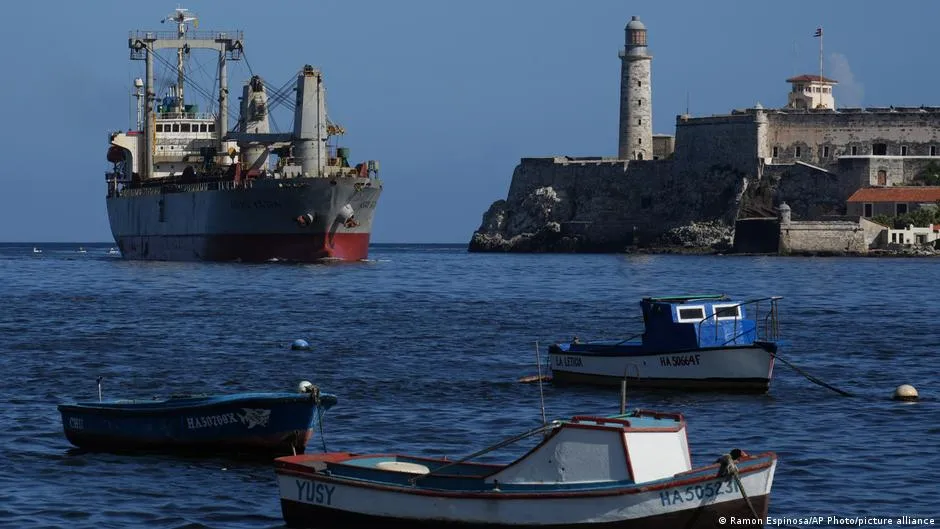
Cuba has received a critical shipment of 15,000 tons of rice from China, marking the first of several promised deliveries aimed at alleviating severe food shortages plaguing the Caribbean nation. The arrival at Havana's port on Sunday was personally acknowledged by Cuban President Miguel Diaz-Canel, who described the donation as a "noble gesture of solidarity" that will benefit millions of consumers and essential institutions like healthcare and education facilities. The Chinese ambassador to Cuba highlighted the shipment as the largest food aid contribution from China in recent years, underscoring the strengthening bilateral ties between the two nations during challenging times.
This crucial aid arrives as Cuba grapples with an escalating economic crisis, significantly worsened by the cessation of oil exports from Venezuela. The disruption of these vital shipments, previously a cornerstone of Cuba's energy supply, has exacerbated existing vulnerabilities. The Communist Party-led government is contending with widespread power outages, with a substantial portion of the island experiencing simultaneous blackouts. This energy deficit is a stark indicator of the severe economic pressures facing the nation, prompting an urgent need for external support and internal reforms.
Cuba's Worsening Energy Crisis and Economic Strain
The severity of Cuba's energy situation has reached critical levels, with reports indicating that up to 64% of the island was slated for simultaneous blackouts on Sunday. The state-run Electric Union (UNE) has acknowledged the "acute," "critical," and "extremely tense" state of the nation's power grid. These outages, some lasting over 22 hours in the capital, Havana, have had a profound impact on daily life and economic activities. Last week, a record was set when 70% of Cuban territory experienced simultaneous power loss during peak demand, illustrating the precarious balance of the energy infrastructure.
The Cuban government attributes its current predicament largely to the intensified U.S. oil embargo, which it labels as "genocidal" and claims is actively "suffocating" the island. Cuba's daily energy requirements are estimated at 100,000 barrels of oil, with domestic production only meeting about 40,000 barrels. Independent analyses suggest that revitalizing the Cuban energy system would necessitate an investment between $8 billion and $10 billion, a sum far beyond the nation's current financial capacity. The reliance on external support, such as the rice donation from China, highlights the immediate challenges in addressing basic needs while simultaneously seeking long-term solutions for economic stability.
Geopolitical Pressures and Cuba's Resilience
Amidst the economic turmoil, Cuba faces continued political pressure from the United States, fueled by hardline Cuban-American factions advocating for regime change. The Trump administration has intensified its efforts to isolate and destabilize the Cuban government. However, analysts suggest that ousting President Miguel Diaz-Canel is a more complex undertaking than recent political shifts in Venezuela. The Cuban security apparatus is noted for its systematic dismantling of opposition forces, and the military remains a cohesive and ideologically unified entity, posing a significant challenge to any foreign intervention.
Furthermore, Havana's historical ties and ongoing cooperation with global powers like the Soviet Union during the Cold War and, more recently, with China, have equipped it with advanced surveillance and intelligence capabilities. These factors contribute to Cuba's resilience in the face of external political and economic pressures. While the immediate challenge remains alleviating food and energy shortages, the broader context involves navigating complex geopolitical dynamics and securing sustainable economic development pathways.
Impact Analysis
The substantial rice donation from China offers immediate, albeit temporary, relief to the Cuban population facing acute shortages and underscores the growing economic interdependence between Cuba and China. This aid is crucial for stabilizing the domestic situation and mitigating widespread social unrest that could arise from severe food scarcity. Simultaneously, the ongoing energy crisis, exacerbated by U.S. sanctions, highlights the fragility of Cuba's economy and its vulnerability to external geopolitical factors.
The situation reflects a broader trend of shifting geopolitical alliances in Latin America, with China increasingly positioning itself as a key economic partner for nations seeking alternatives to traditional Western influence. The U.S. embargo continues to be a significant impediment to Cuba's economic recovery, while also serving as a rallying point for anti-American sentiment within the island and among its international allies. The long-term economic viability of Cuba will depend on its ability to diversify its economy, attract foreign investment, and navigate the complex interplay of international relations and U.S. policy.