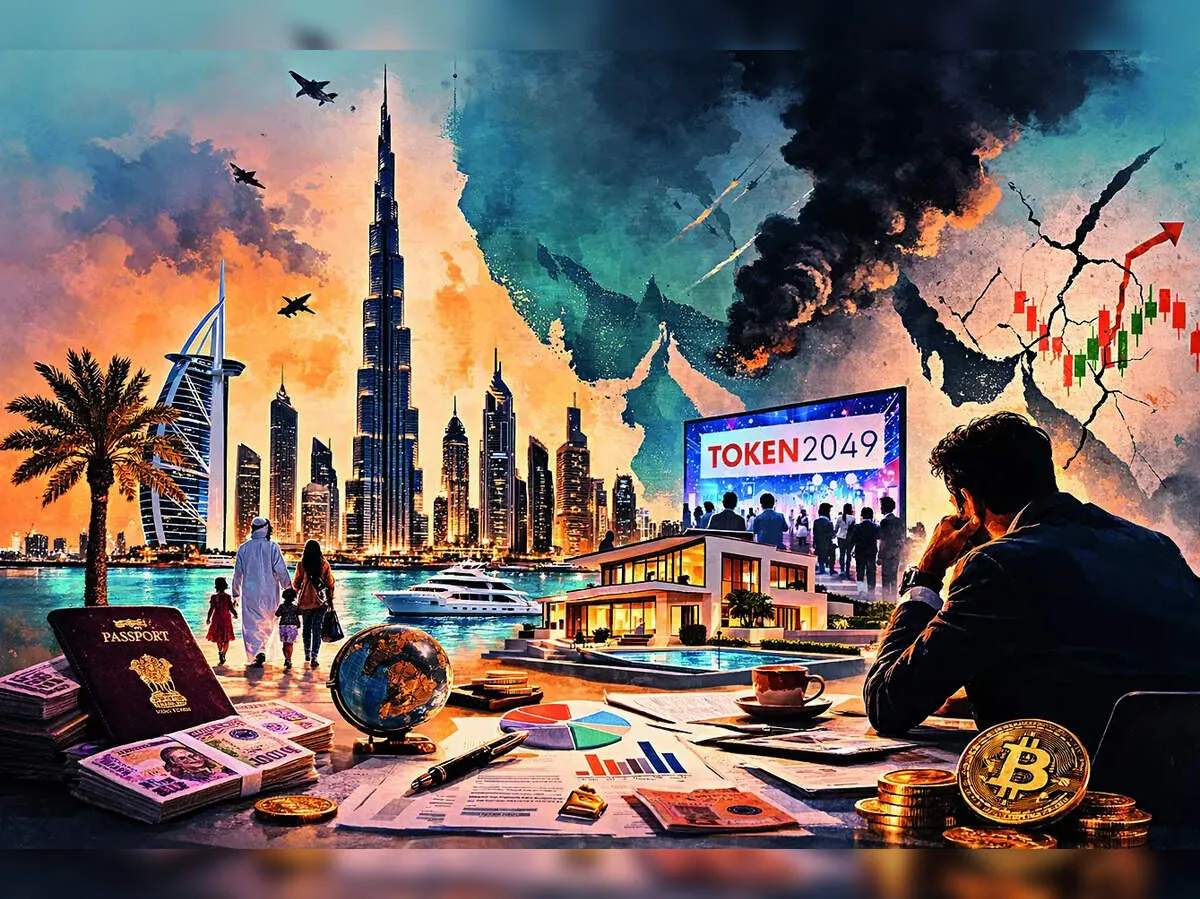
Dubai's reputation as a global hub for luxury real estate and business investment is facing unprecedented scrutiny as geopolitical tensions escalate. The emirate, long favored by affluent Indian buyers for its tax advantages and lifestyle, is at a crossroads. With significant investments from India, particularly in the booming property market, questions are arising about potential market corrections, the attractiveness of residency programs, and the future of its burgeoning cryptocurrency sector. Recent geopolitical events have spurred a re-evaluation among Indian investors and businesses, prompting discussions in living rooms and boardrooms about the stability and future prospects of Dubai as a prime destination for wealth and relocation.
The city's real estate sector, which saw record transactions exceeding $250 billion in 2025, with Indian buyers accounting for approximately 20-22%, is particularly sensitive to shifts in global confidence. These buyers were drawn by attractive rental yields, a hedge against currency depreciation, and a lifestyle free from personal income tax. However, the specter of conflict and potential economic repercussions is leading some to consider renegotiating contracts or seeking distressed asset opportunities. Legal experts caution that overseas property acquisitions remain subject to regulations like India's Liberalised Remittance Scheme (LRS), which imposes limits on remittances and prohibits leverage, adding a layer of complexity for potential investors navigating these uncertain times.
Dubai's Real Estate Market Dynamics
The surge in Dubai's property market, partly fueled by a migration of individuals and Non-Resident Indians (NRIs) seeking alternatives to stringent tax regimes elsewhere, has been a significant driver of economic growth. Developers have capitalized on this demand, with offerings like extended payment plans during festive seasons. However, market analysts suggest that developers might resort to offering discounts or holding onto inventory, waiting for market stabilization. The current climate could lead to attractive investment opportunities for astute buyers, though the timeline for such stabilization remains a key consideration for all stakeholders involved in the lucrative Dubai property market.
Off-plan sales, a segment particularly sensitive to market sentiment and economic uncertainty, are expected to be impacted. Reports of price dips, ranging from 10-20% in some high-end properties, are circulating, although the extent of this impact is yet to be fully ascertained. The Dubai government's proactive approach in managing crises, including providing emergency visas and logistical support, has historically bolstered confidence. Nevertheless, the prolonged impact of geopolitical instability could test the resilience of its real estate sector and the broader economic appeal of the emirate.

The allure of Dubai as a second home and a tax-efficient domicile has been a significant factor for many Indian families and businesses. The absence of personal income tax and the relative ease of obtaining long-term visas compared to other global cities like Singapore have been major draws. For businesses, the UAE has served as a strategic hub for international trading arms, facilitating sales in African and Gulf markets and allowing profits to be parked in Dubai, thus offering tax savings. However, recent global developments may prompt a reconsideration of these relocation and investment strategies, potentially leading some to explore alternatives or bring capital back to their home countries.
Impact on Indian Investors and Businesses
Anxious inquiries from Indian families contemplating a return and considering parking funds in foreign currency accounts within India's GIFT City are becoming more frequent. The decision to relocate or repatriate assets is complex, especially for first-generation NRIs who have established roots and significant holdings abroad. Challenges such as customs regulations on bringing back gold, which currently have strict limits on quantities permitted, can influence such decisions. The current economic and geopolitical climate necessitates a careful evaluation of these factors by individuals and corporations alike, weighing the established benefits of Dubai against emerging global uncertainties.
For established Indian businesses with decades of trading operations centered in the UAE, the current turmoil presents a period of pause. Plans for expansion or new ventures might be put on hold until the geopolitical landscape clarifies. This strategic hesitation is driven by the desire to mitigate risks associated with potential market volatility and regulatory changes that might arise from shifting global alliances and economic pressures. The careful assessment of these risks is paramount for maintaining business continuity and long-term strategic objectives in the region.
The Crypto Hub and Future Outlook
Dubai has actively cultivated its image as a leading cryptocurrency capital, with crypto kiosks, property transactions using digital assets, and widespread use of stablecoins for remittances. The upcoming TOKEN2049 event, a major global cryptocurrency conference, is seen as a critical test of the city's ability to maintain its status as a digital asset hub amidst global economic uncertainties. A successful hosting of such a prominent event would signal resilience and reaffirm Dubai's commitment to fostering innovation in the blockchain and cryptocurrency space, crucial for sustaining investor confidence.
While some foresee potential price corrections and distress opportunities in the real estate market, others remain optimistic about Dubai's inherent strengths, including its infrastructure, lifestyle, and strategic location. The UAE government's demonstrated ability to ensure security and provide support during crises offers a degree of comfort. Many investors are likely to adopt a 'wait and watch' approach, anticipating that the situation will normalize as flights resume and the government issues reassuring statements. The crypto community, much like the real estate sector, hopes for stability, with the success of events like TOKEN2049 playing a pivotal role in bolstering confidence in Dubai's burgeoning digital economy.
Impact Analysis
The confluence of geopolitical instability and heightened investor caution poses a significant challenge to Dubai's economic model, which has heavily relied on attracting foreign capital and talent. A sustained downturn in the real estate market could have ripple effects across related industries, impacting construction, hospitality, and retail sectors. Furthermore, if Dubai's appeal as a tax-friendly domicile and a burgeoning cryptocurrency hub diminishes, it could lead to a diversification of investment away from the emirate. The government's ability to navigate these challenges through strategic policy interventions and robust international relations will be critical in preserving its status as a global financial and lifestyle center.