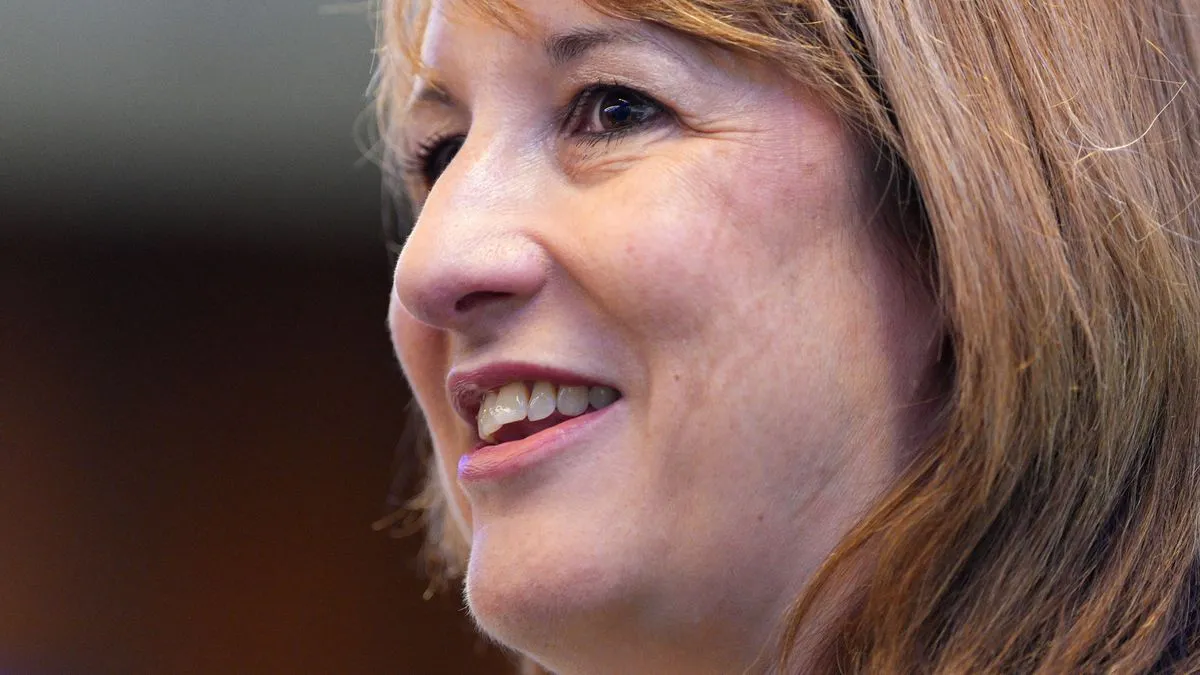
Chancellor Rachel Reeves has articulated a strong conviction in the Labour party's economic strategy, asserting it is precisely what the nation needs amidst evolving global economic pressures. In a recent address, she highlighted several key indicators of economic progress under her tenure. Reeves pointed to the Bank of England's six interest rate cuts since the general election, and a consistent rise in real wages month-on-month. Furthermore, she noted the Office for National Statistics' confirmation that UK inflation fell faster than anticipated in April, positioning the UK as the sole G7 nation to experience a deflationary trend during that period. Reeves acknowledged that while the domestic economic plan is robust, international conflicts, particularly in the Middle East, present significant challenges to the global economy, including the UK's.
The Chancellor also took a firm stance on international affairs, expressing her criticism of the war in the Middle East, which she described as a mistake that impacts global economic stability. To address immediate economic pressures on households and bolster the hospitality sector, Reeves announced the "Great British Summer Savings" scheme. This initiative involves a significant, temporary reduction in Value Added Tax (VAT) on a range of summer attractions.
Economic Relief Measures and VAT Reduction
The "Great British Summer Savings" scheme is set to implement a temporary cut in VAT for summer attractions, lowering the rate from the standard 20% to 5%. This reduction will be in effect throughout the summer holidays, aiming to make leisure activities more affordable for families and provide a much-needed boost to businesses in the hospitality and tourism sectors. The scope of this VAT cut is comprehensive, covering ticket prices for both adults and children for a variety of venues and events.
Specifically, the reduced VAT rate will apply to admissions for fairs, theme parks, zoos, and museums. Beyond these attractions, the scheme extends to children's entertainment, including tickets for cinemas, concerts, soft play areas, and theatres. Additionally, the measure will reduce the VAT on children's meals served in restaurants and cafes to the 5% rate. While the Office for Budget Responsibility will provide a final costing for these measures in the upcoming budget, the Treasury has preliminarily estimated the total cost of the initiative to be around £300 million.
Details of the Great British Summer Savings Scheme
The VAT reduction aims to provide tangible financial relief to consumers during the summer months. By lowering the tax burden on entertainment and hospitality, the government hopes to stimulate consumer spending, which can have a positive ripple effect on the economy. The inclusion of a wide array of attractions and services demonstrates a broad approach to supporting both families' budgets and businesses facing operational costs.
The specific categories benefiting from the 5% VAT rate include entry fees to popular leisure destinations such as zoos and museums, as well as tickets for entertainment venues like theme parks and fairs. Furthermore, the scheme is designed to support family outings by reducing the cost of cinema, concert, theatre, and soft play tickets for children. The extension to restaurant and cafe meals for children underscores a commitment to easing the financial strain on parents during school holidays.
Economic Context and Inflation Management
Chancellor Reeves's statements highlight a broader economic narrative focused on managing inflation and fostering growth. The mention of falling inflation rates and rising real wages suggests a strategy centered on improving household disposable income and economic stability. The government's focus on consumer spending, particularly through initiatives like the summer savings scheme, aligns with efforts to maintain economic momentum.
The acknowledgement of global economic headwinds, such as geopolitical conflicts, indicates an awareness of external factors that could impact domestic economic performance. The strategy appears to be one of proactive economic management, utilizing fiscal tools like tax adjustments to mitigate pressures on consumers and support key economic sectors, while simultaneously navigating an uncertain international landscape. The estimated £300 million cost of the scheme will be detailed further by the Office for Budget Responsibility.
Impact Analysis
The 'Great British Summer Savings' initiative represents a targeted fiscal intervention designed to provide immediate economic relief to households and stimulate activity within the leisure and hospitality sectors. By temporarily reducing VAT from 20% to 5% on a broad range of attractions and children's entertainment, the government aims to boost consumer confidence and spending during the peak summer season. This measure is expected to not only make family outings more affordable but also support businesses that have faced significant challenges in recent years. Economically, this could lead to increased patronage of attractions, higher revenue for businesses, and potentially job retention or creation in these sectors. However, the £300 million cost highlights a trade-off, as this spending will need to be financed, impacting public finances. The success of this scheme will depend on its ability to effectively translate into increased consumer demand and provide a meaningful boost to the UK's economic activity during the summer months.