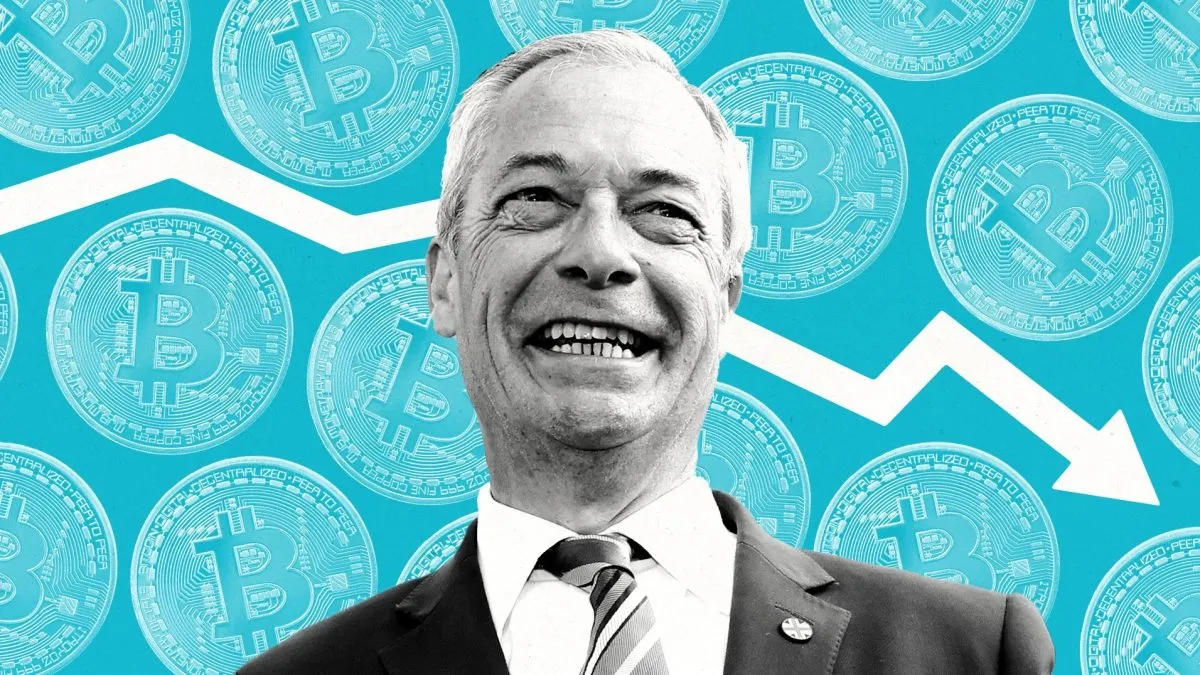
Economists have voiced significant concerns regarding the cryptocurrency policies proposed by Reform UK, labeling them as "crazy" and potentially detrimental to the United Kingdom's economy. The party's platform includes proposals such as integrating Bitcoin into the UK's official reserves, enabling tax payments in cryptocurrencies, and reducing capital gains tax on crypto transactions. These ideas, while potentially benefiting crypto investors like party leader Nigel Farage and major donors, are seen by experts as a considerable gamble with public funds, risking economic instability, a depreciation of the pound, and an increase in illicit financial activities.
Nigel Farage's personal investment in the crypto firm Stack BTC, which recently acquired a substantial amount of Bitcoin, has drawn particular scrutiny. His involvement, alongside significant donations from crypto investors to the party, raises questions about the motivations behind these policy proposals. The core of the concern lies in the inherent volatility of cryptocurrencies like Bitcoin and their suitability for national economic frameworks that prioritize stability and security.
Economic Ramifications of Reform UK's Crypto Proposals
Bitcoin's Volatility and National Reserves
The proposal to include Bitcoin in the UK's official reserves is a central point of contention. These reserves, managed by the Bank of England, are crucial for economic stability during crises. Economists like Willem Buiter, a former member of the Bank of England's Monetary Policy Committee, have strongly criticized this idea, stating that it demonstrates a "spectacular kind" of economic illiteracy. The extreme volatility of Bitcoin, which has seen value drops of up to 60%, makes it an unsuitable asset for a national reserve meant to be a safeguard.
David Aikman, director of the National Institute of Economic and Social Research, echoed these sentiments, highlighting that the UK holds stable currencies like the US dollar and Euro due to their reliability and consistent demand. If Bitcoin were to experience a significant downturn while part of the reserves, the burden of the shortfall would fall upon taxpayers. This move could also erode international confidence in the British economy, as financial markets might question the rationale behind such a speculative investment.
Taxation and Public Finances
Reform UK's plan to allow tax payments in cryptocurrencies, using the GBP exchange rate at the time of payment, has also drawn criticism. Experts warn that accepting volatile digital assets for tax liabilities poses a significant risk to the public balance sheet. If the value of the crypto assets falls before they can be converted to sterling, or if they are added to the Treasury's reserves without immediate conversion, it could create a fiscal deficit requiring taxpayer-funded bailouts.
Furthermore, the conversion of cryptocurrencies to sterling involves transaction fees, adding to the cost. Economists suggest that encouraging the use of non-state currencies for tax payments undermines the national currency, potentially reducing the Bank of England's profits, which are ultimately transferred to the Treasury. This policy could also signal to global markets that the UK government lacks confidence in the stability of its own currency, aligning it with countries like El Salvador that adopt Bitcoin due to economic instability.
Capital Gains Tax Reductions and Economic Growth
The proposal to significantly lower the capital gains tax on crypto sales from a range of 18-23% to a flat 10% has been deemed "completely crazy" by economists. Willem Buiter argues that such a measure would undoubtedly reduce Treasury revenues by incentivizing a shift of investment into cryptocurrencies, away from more productive UK assets. This contradicts the broader economic goal of fostering domestic investment and boosting economic growth.
While Reform UK suggests that lower taxes would spur onshoring and increase transactions, thereby boosting revenue, economists like David Aikman remain skeptical. They argue that this premise is not guaranteed and that the focus should be on encouraging investments within the UK rather than speculative digital assets. Moreover, a reduced capital gains tax on crypto could create unfairness for other businesses and individuals who do not hold such assets, potentially pressuring the government to reduce capital gains taxes across the board.
Concerns Over Money Laundering and Criminal Activity
Increased Risk of Illicit Finance
The use of cryptocurrencies, particularly by those seeking to evade traceability, presents a significant risk of money laundering. Aikman specifically warned that accepting cryptocurrencies for tax payments could be a "recipe for running into money laundering issues." Many illicit actors utilize the pseudo-anonymous nature of cryptocurrency transactions to obscure the origins of funds. This could expose the UK to greater financial crime risks.
Beyond money laundering, the volatility and anonymity associated with some cryptocurrencies can also facilitate their use in evading sanctions and funding criminal enterprises. The inherent difficulty in tracing transactions makes regulatory oversight challenging, a factor that concerns international financial watchdogs and domestic economic policymakers alike. This policy shift could therefore compromise the UK's efforts to maintain a robust anti-financial crime framework.
Cybersecurity Threats
Accepting cryptocurrencies also exposes the Treasury to cybersecurity risks. Digital assets are vulnerable to hacking and theft, with documented instances of crypto wallets being compromised. If the UK's treasury or tax authorities were to hold or transact with cryptocurrencies, they could become targets for sophisticated cyberattacks, potentially leading to significant financial losses and breaches of sensitive financial data.
The secure management of digital assets requires specialized infrastructure and constant vigilance against evolving cyber threats. The proposed policy shift could necessitate substantial investment in cybersecurity measures to protect these assets, adding another layer of cost and complexity to the government's financial operations. The potential for a breach could have far-reaching consequences, impacting national security and public trust in the government's ability to manage digital assets securely.
Potential Benefits for Reform UK's Donors
Financial Windfalls for Investors
Economists and financial analysts have pointed out that Reform UK's proposed crypto policies would disproportionately benefit individuals and entities who are already invested in cryptocurrencies. These policies, including tax reductions and the potential increase in demand driven by government acceptance, could lead to significant price appreciation for digital assets, thereby enriching investors who are also major party donors.
Nigel Farage's personal financial interests in crypto firms, along with substantial donations from figures like Christopher Harborne and Oscar Townsley to Reform UK, fuel concerns about conflicts of interest. Critics argue that these proposals appear designed to serve the financial interests of a select few rather than the broader public good, raising ethical questions about the influence of political donations on policy development.
Perception of Government Trust in Sterling
By promoting the use of cryptocurrencies for tax payments, the government might inadvertently signal a lack of confidence in its own currency, sterling. This move could align the UK with developing economies that adopt cryptocurrencies out of necessity due to unstable national currencies. Such a perception could damage sterling's international standing and investor confidence in the UK's economic governance.
The implications extend to the stability of the pound itself. If widespread adoption of cryptocurrencies for transactions and reserves were to occur, it could reduce demand for sterling, potentially leading to its devaluation on international markets. This would, in turn, increase the cost of imports and contribute to inflationary pressures, directly impacting the cost of living for UK citizens.
Expert Reactions and Cautions
The consensus among interviewed economists is that Reform UK's crypto agenda is fraught with peril. Willem Buiter explicitly called the policies "economic illiteracy," while David Aikman warned of a "gamble" with taxpayer money. Paul Mortimer-Lee highlighted the potential for increased inflation if the Bank of England were forced to print more sterling to compensate for losses in crypto reserves.
Steve Goodrich of Transparency International UK emphasized the public's right to question policies that financially benefit party leaders and major donors. Jim Dickson, a Labour MP, labeled the proposals as "reckless" and potentially creating a "more volatile landscape" by promoting assets with links to crime and money laundering. The underlying message from these experts is that while embracing innovation is important, doing so without rigorous economic analysis and robust safeguards can lead to severe unintended consequences.
Impact Analysis
Reform UK's proposed cryptocurrency policies, if enacted, could lead to significant economic instability. The primary risks include a devaluation of the British Pound, increased inflation, and a substantial financial burden on taxpayers to cover potential losses in national reserves. The acceptance of volatile digital assets for tax payments and their inclusion in official reserves, coupled with reduced capital gains tax, could attract illicit financial activities and undermine confidence in the UK's financial system. While proponents argue for fostering innovation, economists universally caution against the inherent risks, suggesting that such policies could benefit a select group of investors and donors at the expense of national economic well-being and stability.