

Deep Dive into Advanced Liquid Cooling Architectures
Understanding Liquid Cooling Modalities
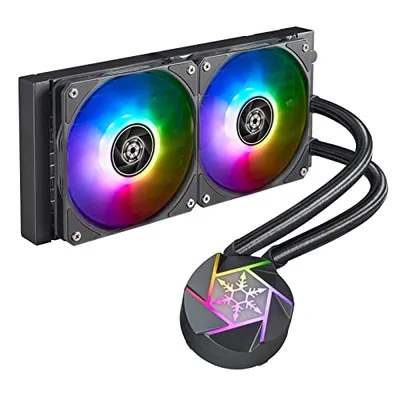
Liquid cooling systems broadly bifurcate into All-In-One (AIO) closed-loop solutions and custom Open-Loop configurations. AIOs offer a self-contained, pre-filled, and relatively maintenance-free option, ideal for users seeking enhanced performance over air cooling without the complexities of custom assembly. These typically consist of a CPU block with an integrated pump, flexible tubing, and a radiator with attached fans. While convenient, their expandability is often limited to the CPU or sometimes a specific GPU variant, and performance ceilings are generally lower than well-optimized custom loops.
Custom open-loop systems represent the pinnacle of thermal management for enthusiasts, professionals, and high-performance computing applications. They provide unparalleled customization, superior thermal performance, and the flexibility to cool multiple components simultaneously, including CPUs, GPUs, chipsets, and even RAM modules. A custom loop involves individual selection of a powerful pump, a coolant reservoir, one or more radiators, specific CPU and GPU water blocks, various fittings, tubing (hard or soft), and a specialized coolant. This approach allows for meticulous material selection to prevent galvanic corrosion, precise flow rate management, and aesthetic integration.
Key Components and Considerations for Open Loops
The pump is the heart of an open loop, responsible for driving the coolant through the entire system. D5 and DDC pumps are industry standards, recognized for their reliability, adjustable flow rates, and longevity. Reservoirs are crucial for coolant volume, facilitating the air bleeding process during filling, and contributing significantly to the loop's aesthetic. Radiators, predominantly crafted from copper or brass, transfer heat from the circulating coolant to the ambient air via an extensive network of fins and attached fans. Their total surface area directly correlates with cooling capacity; larger or multiple radiators significantly enhance thermal dissipation capabilities.
Water blocks, typically machined from copper, nickel-plated copper, or transparent acrylic for visual appeal, are engineered with intricate micro-fin arrays to maximize surface area contact with the component's heat spreader. This design facilitates highly efficient heat transfer from the hot component into the circulating coolant. Fittings connect the tubing to all other components; options include compression, barb, and quick-disconnect types, each offering different levels of security, ease of installation, and serviceability. Tubing can be soft (PVC, EPDM) for simpler installation and flexibility, or hard (PETG, acrylic, copper) for a cleaner, more rigid aesthetic, requiring precise bending and specialized fittings. The choice of coolant is equally critical, with formulations containing anti-corrosion additives and biocides paramount for system longevity and performance, preventing algae growth, particulate deposition, and material degradation. Understanding the thermal conductivity, specific heat capacity, and viscosity of the chosen coolant is essential for optimizing overall loop efficiency and pump longevity. Furthermore, ensuring a proper bleed process during initial filling and subsequent maintenance is vital to eliminate air pockets, which can impede flow, introduce noise, and reduce thermal transfer efficiency.