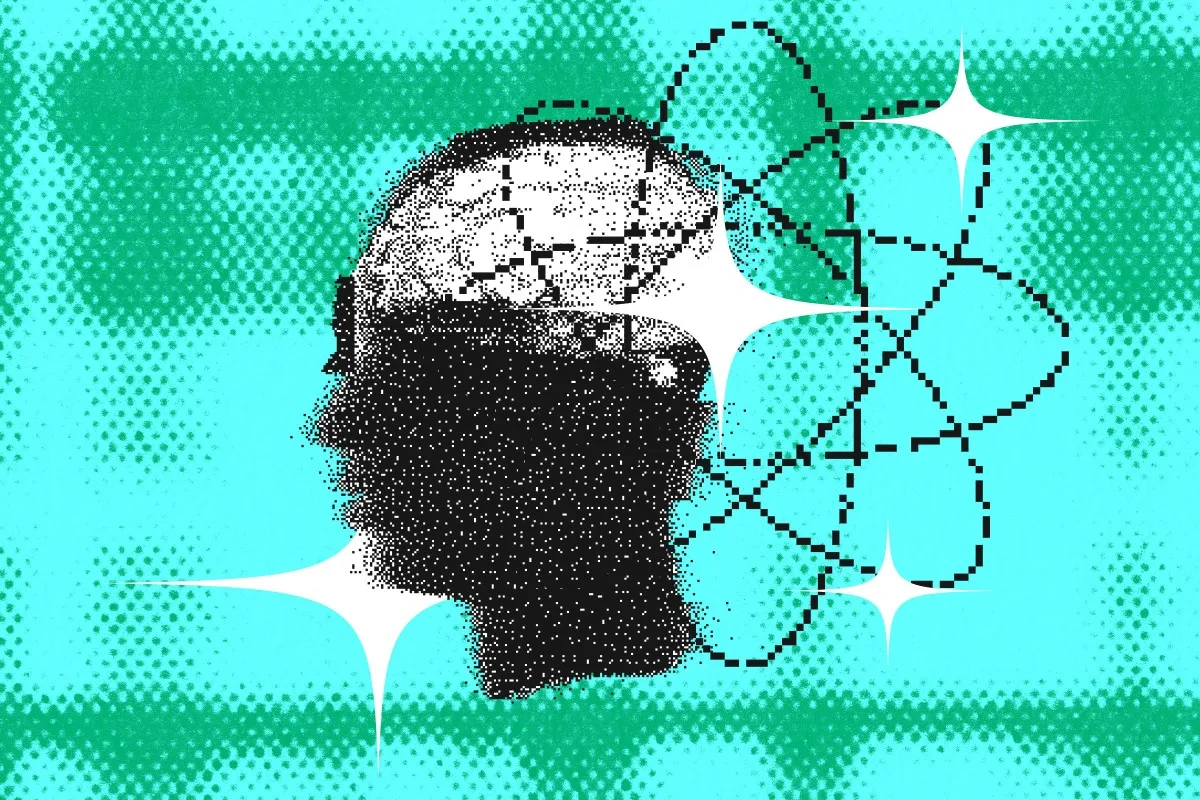
The increasing integration of Artificial Intelligence into daily life presents a unique paradox: as AI tools become more adept at remembering information for us, there's a potential for diminished human recall. This trend is observed in AI notetakers and advanced features like ChatGPT's memory capabilities, where outsourcing information retention might inadvertently lead to a decline in our own cognitive retention. The allure of "productivity" through AI-driven memory assistance could be subtly undermining our innate ability to recall and process information.
This phenomenon has prompted an examination of alternative AI applications, specifically those that augment rather than replace human memory functions. The core idea is to harness AI as a tool to reinforce cognitive processes, rather than as a passive repository. Recent explorations have revisited foundational principles of memory, such as the concept of relevance, to find a more symbiotic relationship between human cognition and AI.
Reimagining AI as a Memory Augmentation Tool
Elon Musk's articulation of the "Relevance Rule" – the principle that the human brain prioritizes and retains information it perceives as significant or applicable – offers a compelling framework for this reevaluation. This perspective suggests that the effectiveness of memory recall is directly correlated with the perceived importance or utility of the information. By applying this principle, the goal is not to offload the act of remembering to AI, but to leverage AI to imbue information with greater personal relevance, thereby strengthening natural memory pathways.
The application of this philosophy involves crafting specific prompts for AI models like ChatGPT. Instead of requesting the AI to simply store data, the strategy focuses on prompting it to explain the 'why' behind information, connect it to existing knowledge, and facilitate active recall through testing or summarization. This approach transforms AI from a mere digital notepad into an active partner in cognitive enhancement, making the process of retaining information more engaging and effective.
The 'Why Does This Matter?' Prompt for Prioritization
Information overload is a significant challenge in modern life, making it difficult for individuals to retain details that may not immediately seem critical. The "why does this matter?" prompt directly addresses this by asking AI to articulate the relevance of a given task or topic in relation to personal goals, stress levels, or daily life. This encourages a deeper engagement with the information, fostering a sense of importance that aids retention.
For instance, recalling a mundane but necessary task, such as submitting a school form on time, can be reframed by understanding its consequence – avoiding a last-minute rush. This strategic framing, facilitated by AI, helps solidify the information in memory by linking it to a tangible benefit or a reduction in negative outcomes. 
Connecting New Information to Existing Knowledge
The human brain naturally makes connections between new and existing data to build a cohesive understanding of the world. The "connect it to something I know" prompt leverages this cognitive bias by asking the AI to explain a new topic by drawing parallels to concepts the user already comprehends. This method significantly enhances information assimilation and long-term retention.
By attaching new information to established neural pathways, the AI helps users build a richer, more interconnected knowledge base. This technique transforms the learning process from rote memorization to meaningful integration, making it easier for the brain to recall the information later. 
Overcoming the Challenge of Remembering Names
Recalling names is a common struggle, often leading to awkward social or professional situations. The "name memory prompt" is designed to counteract this by asking the AI to create a memorable association between a person's name and their role or a distinctive characteristic. This can involve generating a brief mental image or a short narrative that links the name to a memorable hook.
By immediately associating a name with a relevant piece of information or a vivid mental image, the AI assists in creating a stronger, more accessible memory trace. This simple yet effective technique can dramatically improve a person's ability to recall names accurately, even in busy environments. 
Enhancing Meeting Recall and Preparation
Meetings can often be information-dense, making it challenging to extract and retain key takeaways. The "meeting recall prompt" focuses on distilling essential information for both preparation and post-meeting review. It asks the AI to identify critical points to remember and formulate a pertinent question, thereby structuring the user's focus and recall.
This prompt transforms passive note-taking into an active recall strategy. By having AI pre-emptively identify key discussion points and potential questions, users can approach meetings with greater clarity and preparedness, leading to improved comprehension and retention of the material discussed. 
Utilizing Retrieval Practice with the 'Test Me' Prompt
Active recall, or retrieval practice, is a scientifically proven method for strengthening memory. The "test me prompt" prompts AI to quiz the user on a specific topic, simulating an exam scenario. This process forces the brain to actively retrieve information, reinforcing neural connections and improving long-term memory consolidation.
Whether used for academic subjects or professional development, this prompt leverages the power of testing to enhance learning. By regularly quizzing oneself, individuals can identify knowledge gaps and solidify their understanding in a manner that passive review cannot achieve. 
Consolidating Daily Learnings with the 'End-of-Day Save' Prompt
The rapid pace of daily life can lead to a sense of time blurring, where significant events or learnings are easily forgotten. The "end-of-day save prompt" encourages reflection by asking AI to identify the most important achievements or learnings from a list of daily activities and explain why they should be remembered. This helps in creating a meaningful narrative of the day.
This practice helps users consolidate their experiences, recognizing the impactful moments and ensuring they are not lost in the daily grind. It fosters a sense of accomplishment and aids in retaining the lessons learned throughout the day for future application. 
Setting Daily Priorities with the 'Tomorrow Trigger' Prompt
Mornings can often be a period of mental fog and frantic activity. The "tomorrow trigger prompt" aims to mitigate this by asking AI to suggest the top three priorities for the next day, based on the information discussed or processed throughout the current day. This pre-emptive planning provides a clear starting point for the day.
By establishing clear priorities before the day even begins, this prompt helps reduce morning stress and enhances focus. It ensures that individuals start their day with a directed purpose, making them more efficient and less prone to getting sidetracked by less critical tasks. 
Impact Analysis
The integration of AI-driven memory enhancement techniques, particularly those aligned with the 'Relevance Rule,' signifies a shift from viewing AI as a mere data storage solution to recognizing its potential as a cognitive augmentation partner. This approach addresses the growing concern of information overload and its impact on human memory by fostering deeper engagement and personalization with information. By prompting AI to explain the 'why,' connect to existing knowledge, and facilitate active recall, individuals can cultivate stronger, more resilient memories. This method not only helps in overcoming specific memory challenges, such as recalling names or meeting details, but also promotes a more mindful and effective approach to learning and information retention in an increasingly digital world. The ultimate benefit lies in using AI to enhance human cognitive capabilities rather than allowing it to diminish them, leading to a more informed and capable populace.