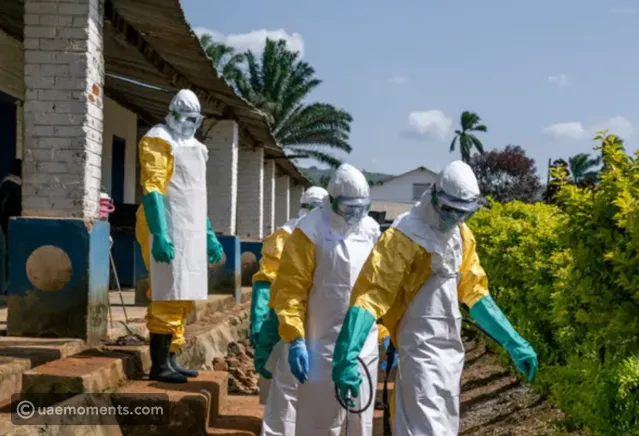
The United Arab Emirates Ministry of Health and Prevention (MoHAP) has issued a definitive statement assuring the public that no cases of the Ebola virus have been detected within the country. This clarification follows international reports concerning a traveler who had visited the UAE before testing positive for the virus upon arrival in Uganda. The ministry's swift response underscores its commitment to public health vigilance and adherence to global health security protocols.
MoHAP detailed that the individual in question did not seek medical attention at any healthcare facility during their stay in the UAE. Upon notification, national health authorities immediately implemented the country's robust public health preparedness plan. This plan includes comprehensive risk assessments, meticulous contact tracing, and the deployment of approved precautionary measures, all conducted in strict accordance with international health standards. The ministry emphasized its continuous monitoring of global health developments and its unwavering commitment to maintaining the highest levels of preparedness and surveillance.
Health Ministry's Proactive Stance and International Cooperation
National Preparedness and Surveillance Systems
The UAE's Ministry of Health and Prevention has long prioritized robust health surveillance systems to detect and respond to potential public health threats. In response to the international Ebola outbreak, the ministry confirmed the activation of national response protocols. This involved immediate risk assessment and diligent contact tracing to identify any potential exposures. The proactive stance ensures that the nation remains vigilant against the introduction and spread of infectious diseases, reinforcing its position as a secure travel hub.
 The ministry's statement serves to alleviate public concern while highlighting the effectiveness of the UAE's public health infrastructure. The emphasis on international cooperation, particularly with the World Health Organization (WHO) and Ugandan health authorities, demonstrates a coordinated global effort to manage and contain the virus. This collaborative approach is crucial for understanding transmission dynamics and preventing further spread.
WHO Acknowledges UAE's Collaboration
Dr. Tedros Adhanom Ghebreyesus, the Director-General of the WHO, publicly commended the collaborative efforts between the UAE and Ugandan health sectors. He highlighted the WHO's active engagement with both nations to gather crucial information, assess potential exposure risks associated with the traveler's journey, and facilitate comprehensive contact tracing. This international partnership is vital for mapping the extent of the virus's spread and implementing targeted containment strategies.
The WHO's recognition underscores the UAE's role as a responsible global health partner. By sharing information and cooperating with international health bodies, the UAE contributes significantly to the collective effort to combat the Ebola outbreak. This cooperation is essential for maintaining global health security and ensuring timely responses to emerging health crises.
Global Health Context and Travel Advisories
Current Ebola Outbreak Landscape
The MoHAP indicated that the current Ebola outbreak is primarily confined to the Democratic Republic of the Congo (DRC) and Uganda. The WHO has assessed the overall global public health risk associated with this outbreak as 'low,' though it acknowledges the situation's dynamic nature. The reported numbers reflect ongoing efforts to accurately track and verify cases, with recent data showing a decrease in suspected cases in the DRC, partly due to rigorous reassessments ruling out many initial infections. The specific strain involved, the Bundibugyo Ebolavirus, poses a unique challenge due to the current absence of a specific vaccine.
The effective management of the outbreak relies on a multi-faceted approach, including swift diagnosis, isolation of infected individuals, and the implementation of safe burial practices, which are critical for preventing further transmission. The UAE's commitment to these measures, even in the absence of domestic cases, reflects its dedication to global health solidarity and its role in mitigating international health risks.
UAE Travel Recommendations
In light of the prevailing health situation, the UAE issued a travel advisory on Saturday, strongly advising its citizens and residents to postpone non-essential travel to the DRC, Uganda, and South Sudan. For those already in these regions, the advisory urges heightened caution, strict adherence to local health directives, and registration with the 'Twajudi' service for consular assistance. This measure aims to protect UAE nationals abroad and minimize potential risks associated with international travel during an active outbreak.
The advisory serves as a crucial public health communication tool, empowering travelers with the information needed to make informed decisions. By encouraging prudence and providing support mechanisms like the Twajudi service, the UAE demonstrates its commitment to the safety and well-being of its citizens and residents, whether domestically or internationally.
Understanding Ebola Virus Disease
Transmission and Symptoms
Ebola virus disease (EVD) is a severe and often fatal illness that originates in animal populations, with fruit bats being a primary reservoir. The virus can transmit to humans through direct contact with infected animals. Human-to-human transmission occurs through direct contact with the blood, secretions, or other bodily fluids of infected individuals, and also through contact with contaminated environments and surfaces. Initial symptoms often resemble those of influenza, including fever, severe headache, muscle pain, weakness, fatigue, and chills. As the disease progresses, more severe symptoms can manifest, such as vomiting, diarrhea, hemorrhaging, and multi-organ failure.
The incubation period for Ebola can range from two days to three weeks after exposure, meaning individuals can travel unknowingly while potentially infectious. This underscores the importance of robust international surveillance and rapid response mechanisms. Early detection and isolation are paramount to controlling the spread of the virus, especially considering the challenges posed by the absence of a vaccine for certain strains like the Bundibugyo Ebolavirus.
Containment Strategies and Public Health Importance
Effective containment of Ebola outbreaks relies heavily on public health interventions such as rapid case identification, prompt isolation of infected individuals, and safe, dignified burial practices. The UAE's proactive health surveillance, even in the absence of reported cases, is a testament to its readiness and its role in the global health security architecture. By maintaining high levels of preparedness and international cooperation, the UAE aims to safeguard its population and contribute to global efforts to eradicate the threat of Ebola.
The continuous monitoring of global health trends and the rigorous application of international health regulations are cornerstones of the UAE's public health strategy. These measures not only protect the nation but also reinforce its commitment to international health cooperation, ensuring a coordinated and effective response to potential pandemics and epidemics worldwide.